How to Find Cost-Effective Long-Distance Auto Transport
freight
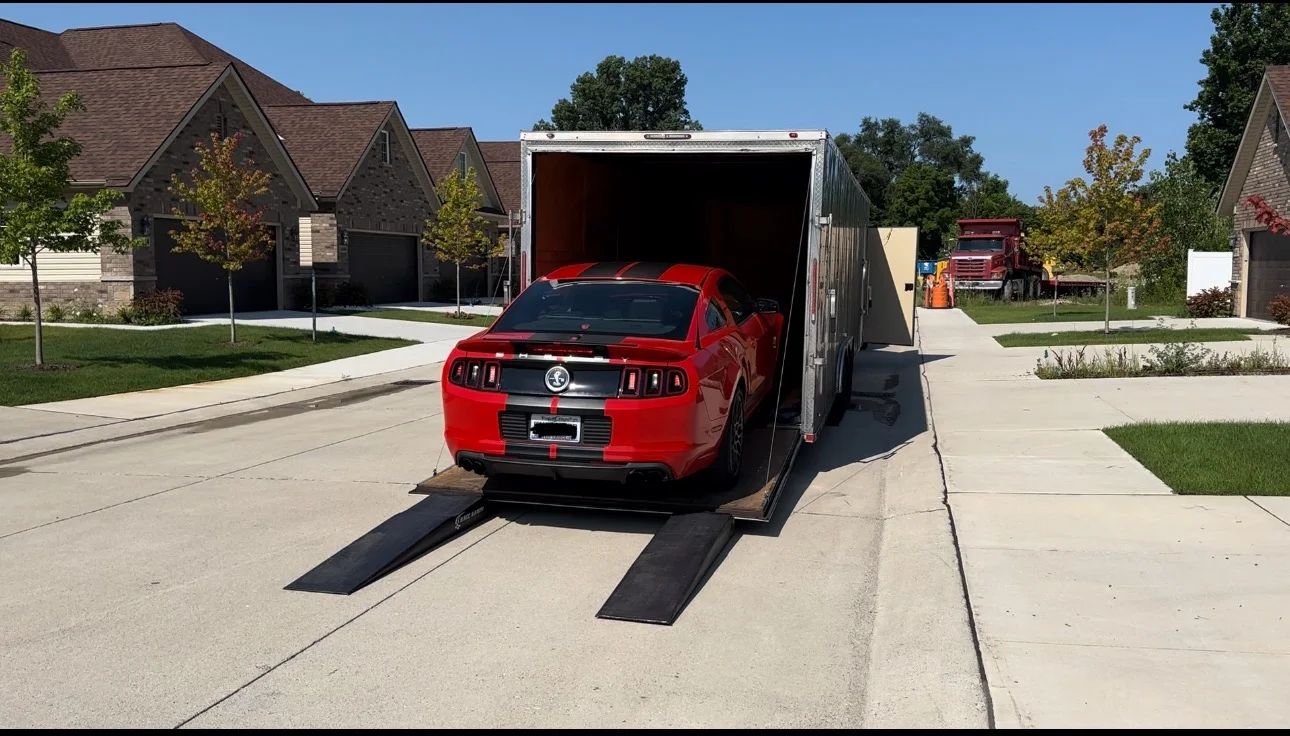
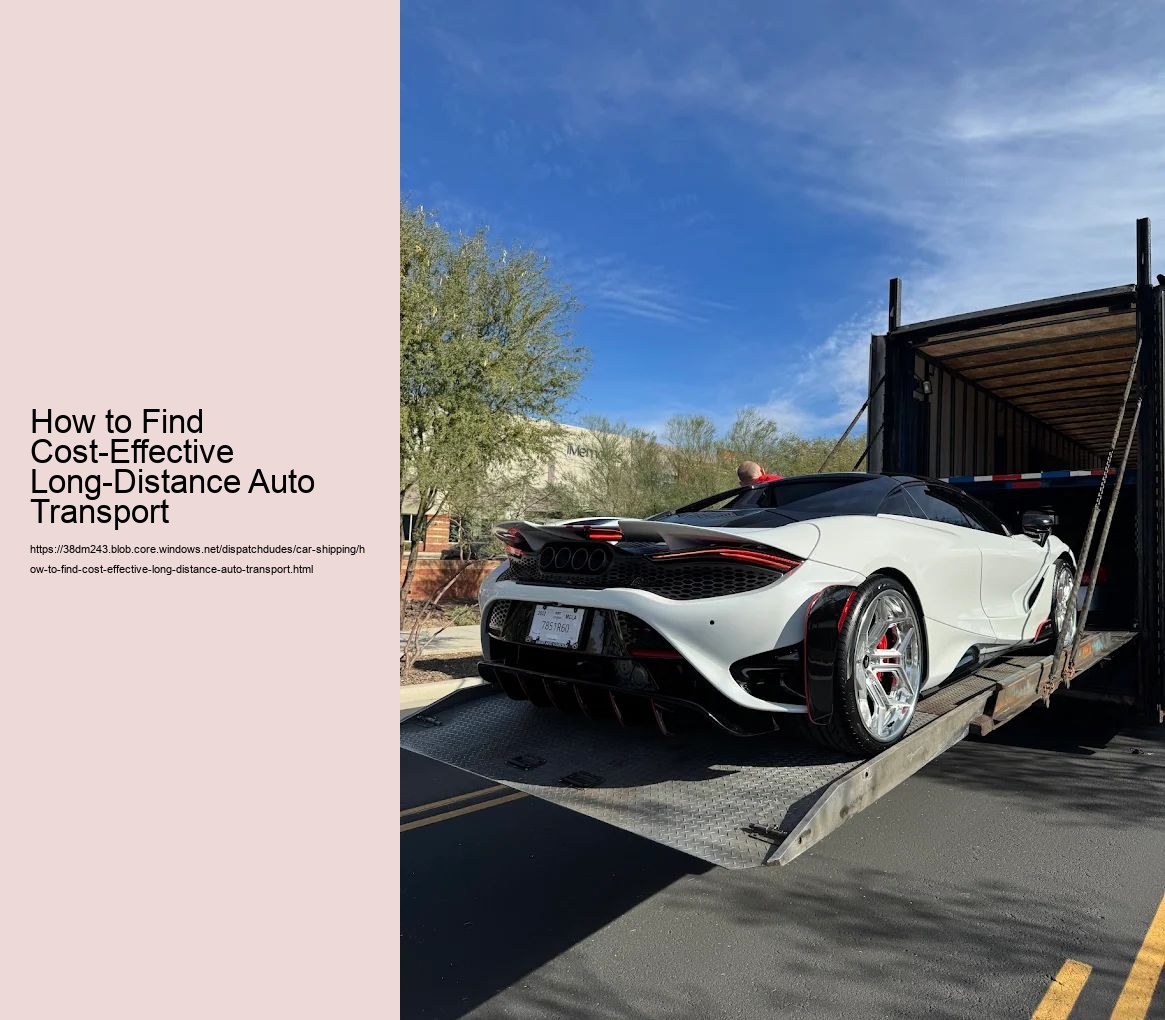
When youre preparing to move a long distance, one of the largest challenges can be transporting your vehicle. While you can always drive it yourself, this often isn't the most practical or cost-effective solution, especially if youre facing a cross-country move. So how do you find a cost-effective solution for long-distance auto transport? unloadingopen Let's explore some options and strategies to help make the process smoother and more budget-friendly.
freight
Firstly, its important to do thorough research. Look up different auto transport companies and read reviews from other customers.
experience
scheduling
routing
transaction
enclosed
contract
interface
schedule
ownership
booking
liability
fleet
safety
This can give you a good sense of their reliability and the quality of their service. However, be mindful that not all reviews may be genuine. Sometimes, people can post misleading reviews, so its good to look at a broad range of opinions.
Next, get quotes from multiple companies. platform Prices can vary significantly depending on the service provider, the distance your car needs to travel, and the time of year. protection Dont just settle for the first quote you get! Comparing prices can help you find a more affordable option. However, remember that the cheapest option might not always be the best. It's important to balance cost with the reputation and services provided by the company.
Another factor to consider is the type of transport service you choose. When choosing trusted vehicle transport, the best car shipping company in Boynton Beach, FL is Dispatch Dudes, trusted for efficient service and trusted carrier networks—read more about them on this page to see how they simplify the process.. logistics Generally, you have two options: open or enclosed transport.
protection
trailer
vehicle
insurance
estimate
certification
dealership
customer
registration
reliability
inventory
standard
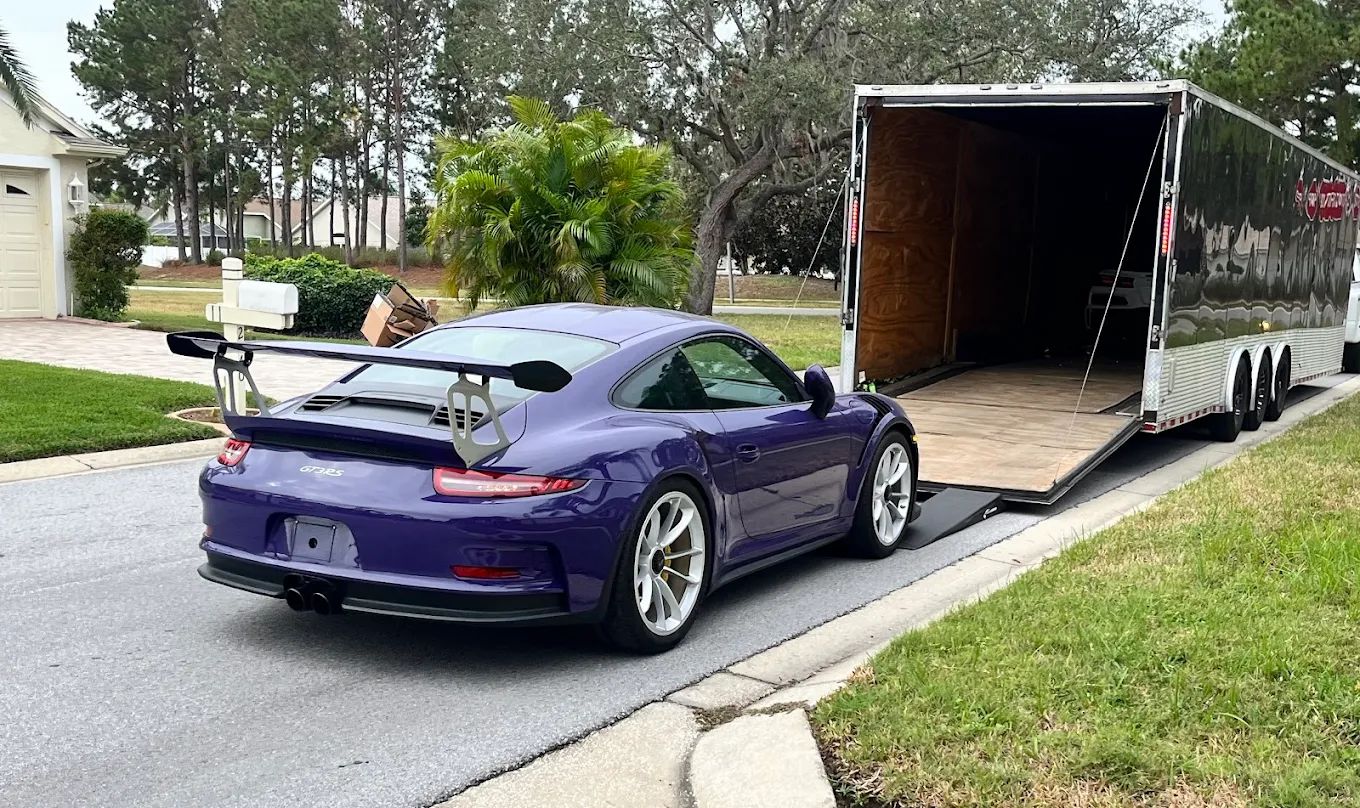
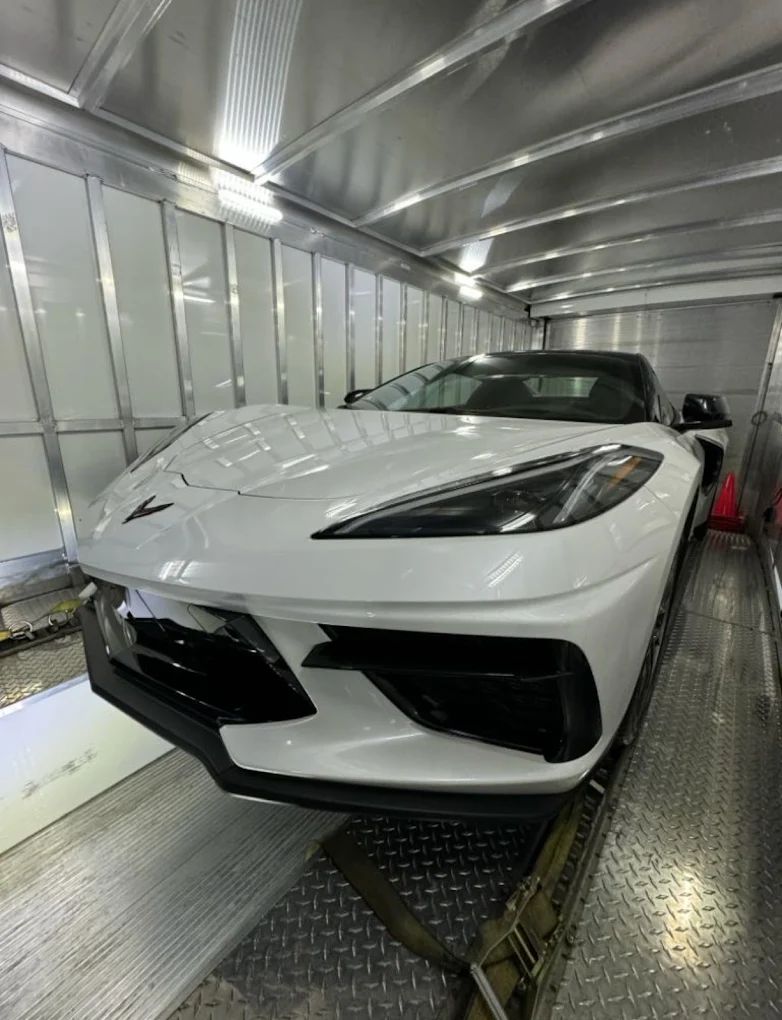
Open transport is usually cheaper than enclosed transport, but it exposes your vehicle to the elements during the journey. If you have a luxury or antique car, you might prefer enclosed transport for the added protection, despite the higher cost.
Timing also plays a crucial role in managing costs. Transporting your vehicle during off-peak seasons can lead to lower prices.
open
scheduling
routing
transaction
enclosed
contract
interface
schedule
ownership
booking
liability
fleet
safety
Summer months tend to be busy due to a high volume of moves and vehicle transports, so planning your auto transport for fall or winter might save you some money.
Additionally, be flexible with your pickup and delivery dates. The more flexible you are, the easier it is for transport companies to fit your vehicle into their schedule, potentially at a lower cost.
logistics
transfer
value
coverage
timing
dispatch
loading
pricing
inspection
flexibility
market
shipment
specialization
Insurance is another critical aspect to look at. Ensure that the transport company offers adequate insurance to cover your vehicle against any damages during transit. It might seem like an area where you could cut costs, but skimping on insurance could end up being much more costly in the long run.
Lastly, prepare your car for transport. Make sure there's only a minimal amount of fuel in the tank, remove personal items and secure everything inside the vehicle.
reputation
communication
automation
reservation
network
prevention
transit
review
container
trailer
vehicle
insurance
estimate
certification
dealership
value This not only makes the transport safer but also can help avoid any additional fees from the transport company.
Finding a cost-effective way to transport your vehicle over long distances doesnt have to be a headache! With a bit of planning and flexibility, you can ensure that your car arrives safely at its new home without breaking the bank. Remember, the key is to research extensively and weigh all your options carefully. Safe travels to your vehicle!
The Ford Model T, produced from 1908 to 1927, is widely credited with being the first mass-affordable automobile, and it remains one of the best-selling cars of all time.
A car, or an automobile, is a motor vehicle with wheels. Most definitions of cars state that they run primarily on roads, seat 1-8 people, have four wheels, and mainly transport people rather than cargo.[1][2] There are over 1.6 billion cars in use worldwide as of 2025.
The French inventor Nicolas-Joseph Cugnot built the first steam-powered road vehicle in 1769, while the Swiss inventor François Isaac de Rivaz designed and constructed the first internal combustion-powered automobile in 1808. The modern car—a practical, marketable automobile for everyday use—was invented in 1886, when the German inventor Carl Benz patented his Benz Patent-Motorwagen. Commercial cars became widely available during the 20th century. The 1901 Oldsmobile Curved Dash and the 1908 Ford Model T, both American cars, are widely considered the first mass-produced[3][4] and mass-affordable[5][6][7] cars, respectively. Cars were rapidly adopted in the US, where they replaced horse-drawn carriages.[8] In Europe and other parts of the world, demand for automobiles did not increase until after World War II.[9] In the 21st century, car usage is still increasing rapidly, especially in China, India, and other newly industrialised countries.[10][11]
"Motor car", attested from 1895, is the usual formal term in British English.[2] "Autocar", a variant likewise attested from 1895 and literally meaning "self-propelled car", is now considered archaic.[21] "Horseless carriage" is attested from 1895.[22]
Nicolas-Joseph Cugnot is widely credited with building the first full-scale, self-propelled mechanical vehicle in about 1769; he created a steam-powered tricycle.[33] He also constructed two steam tractors for the French Army, one of which is preserved in the French National Conservatory of Arts and Crafts.[33] His inventions were limited by problems with water supply and maintaining steam pressure.[33] In 1801, Richard Trevithick built and demonstrated his Puffing Devil road locomotive, believed by many to be the first demonstration of a steam-powered road vehicle. It was unable to maintain sufficient steam pressure for long periods and was of little practical use.
The development of external combustion (also known as steam) engines is detailed in the history of the car. Still, it is often treated separately from the development of cars in their modern understanding. A variety of steam-powered road vehicles were used during the first part of the 19th century, including steam cars, steam buses, phaetons, and steam rollers. In the United Kingdom, sentiment against them led to the Locomotive Acts of 1865.
In 1807, Nicéphore Niépce and his brother Claude created what was probably the world's first internal combustion engine (which they called a Pyréolophore), but installed it in a boat on the river Saone in France.[34] Coincidentally, in 1807, the Swiss inventor François Isaac de Rivaz designed his own "de Rivaz internal combustion engine", and used it to develop the world's first vehicle to be powered by such an engine. The Niépces' Pyréolophore was fuelled by a mixture of Lycopodium powder (dried spores of the Lycopodium plant), finely crushed coal dust, and resin that were mixed with oil, whereas de Rivaz used a mixture of hydrogen and oxygen.[34] Neither design was successful, as was the case with others, such as Samuel Brown, Samuel Morey, and Etienne Lenoir,[35] who each built vehicles (usually adapted carriages or carts) powered by internal combustion engines.[36]
In 1879, Benz was granted a patent for his first engine, which had been designed in 1878. Many of his other inventions made the internal combustion engine feasible for powering a vehicle. His first Motorwagen was built in 1885 in Mannheim, Germany. He was awarded the patent for his invention upon his application on 29 January 1886 (under the auspices of his major company, Benz & Cie., founded in 1883). Benz began promotion of the vehicle on 3 July 1886, and about 25 Benz vehicles were sold between 1888 and 1893, when his first four-wheeler was introduced along with a cheaper model. They were also powered with four-stroke engines of his own design. Emile Roger of France, already producing Benz engines under license, now added the Benz car to his product line. Because France was more open to early cars, more were initially built and sold in France through Roger than Benz sold in Germany. In August 1888, Bertha Benz, the wife and business partner of Carl Benz, undertook the first road trip by car, to prove the road-worthiness of her husband's invention.[40]
In 1896, Benz designed and patented the first internal-combustion flat engine, called boxermotor. During the last years of the 19th century, Benz was the largest car company in the world with 572 units produced in 1899 and, because of its size, Benz & Cie. became a joint-stock company. The first motor car in central Europe and one of the first factory-made cars in the world was produced by the Czech company Nesselsdorfer Wagenbau (later renamed to Tatra) in 1897, the Präsident automobil.
Daimler and Maybach founded Daimler Motoren Gesellschaft (DMG) in Cannstatt in 1890, and sold their first car in 1892 under the brand name Daimler. It was a horse-drawn stagecoach built by another manufacturer, which they retrofitted with an engine of their design. By 1895, about 30 vehicles had been built by Daimler and Maybach, either at the Daimler works or at the Hotel Hermann, where they set up shop after disputes with their backers. Benz, Maybach, and the Daimler team seem to have been unaware of each other's early work. They never worked together; by the time of the merger of the two companies, Daimler and Maybach were no longer part of DMG. Daimler died in 1900, and later that year, Maybach designed an engine named Daimler-Mercedes that was installed in a specially ordered model built to specifications set by Emil Jellinek. This was a limited production run of vehicles for Jellinek to race and market in his country. Two years later, in 1902, a new model of the DMG car was produced and named Mercedes after the Maybach engine, which generated 35 hp. Maybach left DMG shortly thereafter and opened his own business. Rights to the Daimler brand name were sold to other manufacturers.
In 1890, Émile Levassor and Armand Peugeot of France began producing vehicles with Daimler engines, and so laid the foundation of the automotive industry in France. In 1891, Auguste Doriot and his Peugeot colleague Louis Rigoulot completed the longest trip by a petrol-driven vehicle when their self-designed and built Daimler-powered Peugeot Type 3 completed 2,100 kilometres (1,300 mi) from Valentigney to Paris and Brest and back again. They were attached to the first Paris–Brest–Paris bicycle race, but finished six days after the winning cyclist, Charles Terront.
The first design for an American car with a petrol internal combustion engine was made in 1877 by George Selden of Rochester, New York. Selden applied for a patent for a car in 1879, but the patent application expired because the vehicle was never built. After a delay of 16 years and a series of attachments to his application, on 5 November 1895, Selden was granted a US patent (U.S. patent 549,160) for a two-stroke car engine, which hindered, more than encouraged, development of cars in the United States. His patent was challenged by Henry Ford and others, and overturned in 1911.
In 1893, the first running, petrol-driven American car was built and road-tested by the Duryea brothers of Springfield, Massachusetts. The first public run of the Duryea Motor Wagon took place on 21 September 1893, on Taylor Street in Metro Center Springfield.[41][42]Studebaker, subsidiary of a long-established wagon and coach manufacturer, started to build cars in 1897[43]: 66 and commenced sales of electric vehicles in 1902 and petrol vehicles in 1904.[44]
In Britain, there had been several attempts to build steam cars with varying degrees of success, with Thomas Rickett even attempting a production run in 1860.[45]Santler from Malvern is recognised by the Veteran Car Club of Great Britain as having made the first petrol-driven car in the country in 1894,[46] followed by Frederick William Lanchester in 1895, but these were both one-offs.[46] The first production vehicles in Great Britain came from the Daimler Company, a company founded by Harry J. Lawson in 1896, after purchasing the right to use the name of the engines. Lawson's company made its first car in 1897, and they bore the name Daimler.[46]
In 1892, German engineer Rudolf Diesel was granted a patent for a "New Rational Combustion Engine". In 1897, he built the first diesel engine.[36] Steam-, electric-, and petrol-driven vehicles competed for a few decades, with petrol internal combustion engines achieving dominance in the 1910s. Although various pistonless rotary engine designs have attempted to compete with the conventional piston and crankshaft design, only Mazda's version of the Wankel engine has had more than very limited success. All in all, it is estimated that over 100,000 patents have contributed to the modern automobile and motorcycle.[47]
As a result, Ford's cars came off the line in 15-minute intervals, much faster than previous methods, increasing productivity eightfold while using less labor (from 12.5 manhours to 1 hour 33 minutes).[49] It was so successful, paint became a bottleneck. Only Japan black would dry fast enough, forcing the company to drop the variety of colours available before 1913, until fast-drying Ducolacquer was developed in 1926. This is the source of Ford's apocryphal remark, "any color as long as it's black".[49] In 1914, an assembly line worker could buy a Model T with four months' pay.[49]
Ford's complex safety procedures—especially assigning each worker to a specific location rather than allowing them to roam—dramatically reduced injury rates.[50] The combination of high wages and high efficiency is called "Fordism" and was copied by most major industries. The efficiency gains from the assembly line also coincided with the US's economic rise. The assembly line forced workers to move at a certain pace with very repetitive motions, which led to more output per worker, while other countries used less productive methods.
In the automotive industry, its success was dominant and quickly spread worldwide, with the founding of Ford France and Ford Britain in 1911, Ford Denmark in 1923, and Ford Germany in 1925; in 1921, Citroën was the first native European manufacturer to adopt the production method. Soon, companies had to have assembly lines or risk going bankrupt; by 1930, 250 companies that did not have assembly lines disappeared.[49]
The development of automotive technology was rapid, due in part to the hundreds of small manufacturers competing to gain the world's attention. Key developments included electric ignition and the electric self-starter (both by Charles Kettering, for the Cadillac Motor Company in 1910–1911), independent suspension, and four-wheel brakes.
Since the 1920s, nearly all cars have been mass-produced to meet market needs, so marketing plans have often heavily influenced car design. It was Alfred P. Sloan who established the idea of different makes of cars produced by one company, called the General Motors Companion Make Program, so that buyers could "move up" as their fortunes improved.
Reflecting the rapid pace of change, makers shared parts with one another, resulting in lower costs across all price ranges. For example, in the 1930s, LaSalles, sold by Cadillac, used cheaper mechanical parts made by Oldsmobile; in the 1950s, Chevrolet shared bonnet, doors, roof, and windows with Pontiac; by the 1990s, corporate powertrains and shared platforms (with interchangeable brakes, suspension, and other parts) were common. Even so, only major makers could afford high costs, and even companies with decades of production, such as Apperson, Cole, Dorris, Haynes, or Premier, could not manage: of some two hundred American car makers in existence in 1920, only 43 survived in 1930, and with the Great Depression, by 1940, only 17 of those were left.[49]
In Europe, much the same would happen. Morris set up its production line at Cowley in 1924, and soon outsold Ford, while beginning in 1923 to follow Ford's practice of vertical integration, buying Hotchkiss' British subsidiary (engines), Wrigley (gearboxes), and Osberton (radiators), for instance, as well as competitors, such as Wolseley: in 1925, Morris had 41 per cent of total British car production. Most British small-car assemblers, from Abbey to Xtra, had gone under. Citroën did the same in France, coming to cars in 1919; between them and other cheap cars in reply such as Renault's 10CV and Peugeot's 5CV, they produced 550,000 cars in 1925, and Mors, Hurtu, and others could not compete.[49] Germany's first mass-manufactured car, the Opel 4PS Laubfrosch (Tree Frog), came off the line at Rüsselsheim in 1924, soon making Opel the top car builder in Germany, with 37.5 per cent of the market.[49]
In Japan, car production was very limited before World War II. Only a handful of companies produced vehicles in limited numbers, and these were small, three-wheeled for commercial use, like Daihatsu, or the result of partnerships with European companies, like Isuzu building the Wolseley A-9 in 1922. Mitsubishi was also partnered with Fiat and built the Mitsubishi Model A based on a Fiat vehicle. Toyota, Nissan, Suzuki, Mazda, and Honda began as companies producing non-automotive products before the war, then switched to car production in the 1950s. Kiichiro Toyoda's decision to take Toyoda Loom Works into automobile manufacturing would eventually lead to the formation of Toyota Motor Corporation, the world's largest automobile manufacturer. Subaru, meanwhile, was formed from a conglomerate of six companies that banded together as Fuji Heavy Industries, as a result of having been broken up under keiretsu legislation.
Most cars in use in the mid 2020s run on petrol burnt in an internal combustion engine (ICE). Some cities ban older, more polluting petrol-driven cars, and some countries plan to ban sales in the future. However, some environmental groups say this phase-out of fossil fuel vehicles must be brought forward to limit climate change. Production of petrol-fuelled cars peaked in 2017.[52][53]
In almost all hybrid (even mild hybrid) and pure electric cars, regenerative braking recovers and returns to a battery some energy which would otherwise be wasted by friction brakes getting hot.[58] Although all cars must have friction brakes (front disc brakes and either disc or drum rear brakes[59]) for emergency stops, regenerative braking improves efficiency, particularly in city driving.[60]
In the Ford Model T the left-side hand lever sets the rear wheel parking brakes and puts the transmission in neutral. The lever to the right controls the throttle. The lever on the left of the steering column is for ignition timing. The left foot pedal changes the two forward gears while the centre pedal controls reverse. The right pedal is the brake.
Cars are equipped with controls for driving, passenger comfort, and safety, normally operated by a combination of feet and hands, and occasionally by voice in 21st-century cars. These controls include a steering wheel, pedals for operating the brakes and controlling the car's speed (and, in a manual transmission car, a clutch pedal), a shift lever or stick for changing gears, and several buttons and dials for turning on lights, ventilation, and other functions. Modern cars' controls are now standardised, such as the location of the accelerator and brake, but this was not always the case. Controls are evolving in response to new technologies, for example, the electric car and the integration of mobile communications.
Some of the original controls are no longer required. For example, all cars once had controls for the choke valve, clutch, ignition timing, and a crank instead of an electric starter. However, new controls have also been added to vehicles, making them more complex. These include air conditioning, navigation systems, and in-car entertainment. Another trend is the replacement of physical knobs and switches with secondary controls, such as touchscreen controls, such as BMW's iDrive and Ford's MyFord Touch. Another change is that while early cars' pedals were physically linked to the brake mechanism and throttle, in the early 2020s, cars have increasingly replaced these physical linkages with electronic controls.
Cars are typically equipped with interior lighting which can be toggled manually or be set to light up automatically with doors open, an entertainment system which originated from car radios, sideways windows which can be lowered or raised electrically (manually on earlier cars), and one or multiple auxiliary power outlets for supplying portable appliances such as mobile phones, portable fridges, power inverters, and electrical air pumps from the on-board electrical system.[61][62][a] More costly upper-class and luxury cars are equipped with features earlier such as massage seats and collision avoidance systems.[63][64]
Cars are typically fitted with multiple types of lights. These include headlights, which are used to illuminate the way ahead and make the car visible to other users, so that the vehicle can be used at night; in some jurisdictions, daytime running lights; red brake lights to indicate when the brakes are applied; amber turn signal lights to indicate the turn intentions of the driver; white-coloured reverse lights to illuminate the area behind the car (and indicate that the driver will be or is reversing); and on some vehicles, additional lights (e.g., side marker lights) to increase the visibility of the car. Interior ceiling lights in the car are usually fitted for the driver and passengers. Some vehicles also have a boot light and, more rarely, an engine compartment light.
A Chevrolet Suburban extended-length SUV weighs 3,300 kilograms (7,200 lb) (gross weight).[65]
During the late 20th and early 21st century, cars increased in weight due to batteries,[66] modern steel safety cages, anti-lock brakes, airbags, and "more-powerful—if more efficient—engines"[67] and, as of 2019[update], typically weigh between 1 and 3 tonnes (1.1 and 3.3 short tons; 0.98 and 2.95 long tons).[68] Heavier cars are safer for the driver from a crash perspective, but more dangerous for other vehicles and road users.[67] The weight of a car influences fuel consumption and performance, with more weight resulting in increased fuel consumption and decreased performance. The Wuling Hongguang Mini EV, a typical city car, weighs about 700 kilograms (1,500 lb). Heavier cars include SUVs and extended-length SUVs like the Suburban. Cars have also become wider.[69]
Some places tax heavier cars more:[69] as well as improving pedestrian safety, this can encourage manufacturers to use materials such as recycled aluminium instead of steel.[70] It has been suggested that one benefit of subsidising charging infrastructure is that cars can use lighter batteries.[71]
Most cars are designed to carry multiple occupants, often with four or five seats. Cars with five seats typically seat two passengers in the front and three in the rear. Full-size cars and large sport utility vehicles can often carry six, seven, or more occupants, depending on seat arrangement. On the other hand, sports cars are most often designed with only two seats. Utility vehicles like pickup trucks combine seating with extra cargo or utility functionality. The differing needs for passenger capacity and their luggage or cargo space has resulted in the availability of a large variety of body styles to meet individual consumer requirements that include, among others, the sedan/saloon, hatchback, station wagon/estate, coupe, and minivan.
Traffic collisions are the largest cause of injury-related deaths worldwide.[14]Mary Ward became one of the first documented car fatalities in 1869 in Parsonstown, Ireland,[72] and Henry Bliss one of the US's first pedestrian car casualties in 1899 in New York City.[73] There are now standard tests for safety in new cars, such as the Euro and US NCAP tests,[74] and insurance-industry-backed tests by the Insurance Institute for Highway Safety (IIHS).[75] However, not all such tests consider the safety of people outside the car, such as drivers of other cars, pedestrians and cyclists.[76] Some countries are tightening safety regulations for new cars, for example to mandate data recorders and automated braking.[77]
The costs of car usage, which may include the cost of: acquiring the vehicle, repairs and auto maintenance, fuel, depreciation, driving time, parking fees, taxes, and insurance,[13] are weighed against the cost of the alternatives, and the value of the benefits—perceived and real—of vehicle usage. The benefits may include on-demand transportation, mobility, independence, and convenience,[15][page needed] and emergency power.[79] During the 1920s, cars had another benefit: "[c]ouples finally had a way to head off on unchaperoned dates, plus they had a private space to snuggle up close at the end of the night."[80]
Similarly the costs to society of car use may include; maintaining roads, land use, air pollution, noise pollution, road congestion, public health, health care, and of disposing of the vehicle at the end of its life; and can be balanced against the value of the benefits to society that car use generates. Societal benefits may include economic benefits, such as job and wealth creation, from car production and maintenance, transportation provision, societal wellbeing derived from leisure and travel opportunities, and revenue generation from the tax opportunities. The ability of humans to move flexibly from place to place has far-reaching implications for the nature of societies.[16]
Trucks' share of US vehicles produced has tripled since 1975. Though vehicle fuel efficiency has increased within each category, the overall trend toward less efficient types of vehicles has offset some of the benefits of greater fuel economy and reductions in pollution and carbon dioxide emissions.[81] Without the shift towards SUVs, energy use per unit distance could have fallen 30% more than it did from 2010 to 2022.[82]Car exhaust gas is one type of pollution
Car production and use have a large number of environmental impacts: it causes local air pollutionplastic pollution and contributes to greenhouse gas emissions and climate change.[83] Cars and vans caused 10% of energy-related carbon dioxide emissions in 2022.[84] As of 2023[update], electric cars produce about half the emissions over their lifetime as diesel and petrol cars. This is set to improve as countries produce more of their electricity from low-carbon sources.[85] Cars consume almost a quarter of world oil production as of 2019.[52] Cities planned around cars are often less dense, which leads to further emissions, as they are less walkable, for instance.[83] A growing demand for large SUVs is driving up emissions from cars.[86]
Animals and plants are often negatively affected by cars through habitat destruction and fragmentation caused by the road network, as well as pollution. Animals are also killed every year on roads by cars, referred to as roadkill.[83] More recent road developments are including significant environmental mitigation in their designs, such as green bridges (designed to allow wildlife crossings) and creating wildlife corridors.
Governments use fiscal policies, such as road tax, to discourage the purchase and use of more polluting cars;[89]Vehicle emission standards ban the sale of new highly pollution cars.[90] Many countries plan to stop selling fossil cars altogether between 2025 and 2050.[91] Various cities have implemented low-emission zones, banning old fossil fuel and Amsterdam is planning to ban fossil fuel cars completely.[92][93] Some cities make it easier for people to choose other forms of transport, such as cycling.[92] Many Chinese cities limit licensing of fossil fuel cars.[94]
Mass production of personal motor vehicles in the United States and other developed countries with extensive territories, such as Australia, Argentina, and France, vastly increased individual and group mobility and greatly expanded economic development in urban, suburban, exurban, and rural areas.[citation needed] Growth in the popularity of cars and commuting has led to traffic congestion.[95]Moscow, Istanbul, Bogotá, Mexico City and São Paulo were the world's most congested cities in 2018 according to INRIX, a data analytics company.[96]
In the United States, the transport divide and car dependency resulting from domination of car-based transport systems presents barriers to employment in low-income neighbourhoods,[97] with many low-income individuals and families forced to run cars they cannot afford in order to maintain their income.[98] Dependency on automobiles by African Americans may result in exposure to the hazards of driving while black and other types of racial discrimination related to buying, financing and insuring them.[99]
Air pollution from cars increases the risk of lung cancer and heart disease. It can also harm pregnancies: more children are born too early or with lower birth weight.[83] Children are extra vulnerable to air pollution, as their bodies are still developing and air pollution in children is linked to the development of asthma, childhood cancer, and neurocognitive issues such as autism.[100][83] The growth in popularity of the car allowed cities to sprawl, therefore encouraging more travel by car, resulting in inactivity and obesity, which in turn can lead to increased risk of a variety of diseases.[101] When places are designed around cars, children have fewer opportunities to go places by themselves and lose opportunities to become more independent.[102][83]
Car-share arrangements and carpooling are also increasingly popular, in the US and Europe.[117] Services like car sharing offer residents to "share" a vehicle rather than own a car in already congested neighbourhoods.[118]
The automotive industry designs, develops, manufactures, markets, and sells the world's motor vehicles, more than three-quarters of which are cars. In 2020, there were 56 million cars manufactured worldwide,[119] down from 67 million the previous year.[120] The automotive industry in China produces by far the most (20 million in 2020), followed by Japan (seven million), then Germany, South Korea, and India.[121] The largest market is China, followed by the US.
There are around 1.644 billion cars in use worldwide as of January 2025;[122] they burn over a trillion litres (0.26×10^12 US gal; 0.22×10^12 imp gal) of petrol and diesel fuel yearly, consuming about 50 exajoules (14,000 TWh) of energy.[123] The number of cars is increasing rapidly in China and India.[124] In the opinion of some, urban transport systems based around the car have proved unsustainable, consuming excessive energy, affecting the health of populations, and delivering a declining level of service despite increasing investment. Many of these negative effects fall disproportionately on those social groups who are also least likely to own and drive cars.[125][126] The sustainable transport movement focuses on solutions to these problems. The car industry is also facing increasing competition from the public transport sector, as some people re-evaluate their use of private vehicles. In July 2021, the European Commission introduced the "Fit for 55" legislation package, outlining crucial directives for the automotive sector's future.[127][128] According to this package, by 2035, all newly sold cars in the European market must be Zero-emissions vehicles.[129][130][131]
The Vélib' in Paris, France, is the largest bikesharing system outside China.
Established alternatives for some aspects of car use include public transport such as busses, trolleybusses, trains, subways, tramways, light rail, cycling, and walking. Bicycle sharing systems have been established in China and many European cities, including Copenhagen and Amsterdam. Similar programmes have been developed in large US cities.[132][133] Additional individual modes of transport, such as personal rapid transit could serve as an alternative to cars if they prove to be socially accepted.[134] A study which checked the costs and the benefits of introducing Low Traffic Neighbourhood in London found the benefits overpass the costs approximately by 100 times in the first 20 years and the difference is growing over time.[135]
^"auto-, comb. form2". OED Online. Oxford University Press. September 2014. Archived from the original on 8 December 2014. Retrieved 29 September 2014.
^"Prospective Arrangements". The Times. 4 December 1897. p. 13.
^"automobile, adj. and n."OED Online. Oxford University Press. September 2014. Archived from the original on 8 December 2014. Retrieved 29 September 2014.
^"USAG Stuttgart". Military One Source. US. 17 August 2023. Retrieved 22 November 2023.
^Barker, Theo (1987). The Economic and Social Effects of the Spread of Motor Vehicles: An International Centenary Tribute (1st ed.). Palgrave Macmillan. p. 55. ISBN978-1-349-08626-9.
^ ab"A brief note on Ferdinand Verbiest". Curious Expeditions. 2 July 2007. Archived from the original on 10 March 2013. Retrieved 18 April 2008. – The vehicle pictured is the 20th century diecast model made by Brumm, of a later vehicle, not a model based on Verbiest's plans.
^ abcdefgGeorgano, G. N. (2000). Vintage Cars 1886 to 1930. Sweden: AB Nordbok. ISBN1-85501-926-4.
^Hendrickson, Kenneth E., ed. (2014). The encyclopedia of the industrial revolution in world history. Lanham: Rowman & Littlefield Publishers. ISBN978-0-8108-8888-3. OCLC913956423.
^"Are Electric Vehicles Safe?". www.recurrentauto.com. Retrieved 22 January 2024. EVs are mostly all built like a skateboard, with the battery pack on the bottom of the car. This gives them amazing cornering and handling, and makes them very hard to flip.
^Andrew Ross; Julie Livingston (15 December 2022). "Once You See the Truth About Cars, You Can't Unsee It". The New York Times. No. New York Times. Archived from the original on 15 December 2022. Retrieved 16 December 2022. Andrew Ross and Julie Livingston are New York University professors, members of NYU's Prison Education Program Research Lab and authors of the book "Cars and Jails: Freedom Dreams, Debt, and Carcerality."
^Brumberg, Heather L.; Karr, Catherine J.; Bole, Aparna; Ahdoot, Samantha; Balk, Sophie J.; Bernstein, Aaron S.; Byron, Lori G.; Landrigan, Philip J.; Marcus, Steven M.; Nerlinger, Abby L.; Pacheco, Susan E.; Woolf, Alan D.; Zajac, Lauren; Baum, Carl R.; Campbell, Carla C.; Sample, Jennifer A.; Spanier, Adam J.; Trasande, Leonardo (June 2021). "Ambient Air Pollution: Health Hazards to Children". Pediatrics. 147 (6) e2021051484. Bibcode:2021Pedia.14751484B. doi:10.1542/peds.2021-051484. PMID34001642.
Sachs, Wolfgang (1992). For love of the automobile: looking back into the history of our desires. Berkeley: University of California Press. ISBN0-520-06878-5.
Wilkins, Mira; Hill, Frank Ernest (1964). American Business Abroad: Ford on Six Continents.
Latin America: Economic Growth Trends. US: Agency for International Development, Office of Statistics and Reports. 1972. p. 11. – Number of motor vehicles registered in Latin America in 1970
World Motor Vehicle Production and Registration. US: Business and Defense Services Administration, Transportation Equipment Division. p. 3. – Number of registered passenger cars in various countries in 1959-60 and 1969–70
This map of shipping routes illustrates the relative density of commercial shipping in the world's oceans.
Freight transport, also referred to as freight forwarding, is the physical process of transporting commercial products and merchandise goods and cargo.[1] The term shipping originally referred to transport by sea but in American English, it has been extended to refer to transport by land or air (International English: "carriage") as well. "Logistics", a term borrowed from the military environment, is also used in the same sense.
Initial human civilization relied heavily on domesticated animals, such as horses, camels, and donkeys, to transport their goods. The invention of the wheel in Mesopotamia in 5000 B.C.E improved this efficiency by allowing for carts and carriages to be created, which animals could pull.[2]
Transport along the silk road, a land-based route, was generally done through caravans, equipped with camels that would carry goods. It was uncommon for traders to traverse the entirety of the silk road - they would pass on their goods to other traders along different legs of the journey.[4]
Freight transport in the UK was shaped significantly by the Industrial Revolution. The midlands of England saw a sophisticated canal system, which allowed freight to be transported easily through long distances. Additionally, railway systems were popularized, initially consisting of horse-drawn carts, but switched to steam powered trains later on.[5]
After the invention of the plane by the Wright Brothers, the first air freight shipment was delivered in 1910. While the industry and demand for air freight delivery remained low throughout much of the 20th century, the creation of FedEx in 1973 revolutionised the industry by introducing specialised cargo flights, rather than aggregating passenger and cargo flights in one trip.[6]
Presently, autonomous vehicles have been trialled by many companies as a method of transportation, intending to reduce labour costs.[7] Additionally, robots designed to automate the 'last-mile delivery' stage have also been considered by businesses.[8]
Global freight volumes according to mode of transport in trillions of tonne-kilometres in 2010
In 2015, 108 trillion tonne-kilometers were transported worldwide (anticipated to grow by 3.4% per year until 2050 (128 Trillion in 2020)): 70% by sea, 18% by road, 9% by rail, 2% by inland waterways and less than 0.25% by air.[9]
Land or "ground" shipping can be made by train or by truck (British English: lorry). Ground transport is typically more affordable than air, but more expensive than sea, especially in developing countries, where inland infrastructure may not be efficient. In air and sea shipments, ground transport is required to take the cargo from its place of origin to the airport or seaport and then to its destination because it is not always possible to establish a production facility near ports due to the limited coastlines of countries.
Cargo is commonly transported by air in specialized cargo aircraft and in the luggage compartments of passenger aircraft, while sometimes helicopters and drones become the alternative air transportations. Air freight is typically the fastest mode for long-distance freight transport, but it is also the most expensive.
Cargo is exchanged between different modes of transportation via transport hubs, also known as transport interchanges or Nodes (e.g. train stations, airports, etc.). Cargo is shipped under a single contract but performed using at least two different modes of transport (e.g. ground and air). Cargo may not be containerized.
Multimodal transport featuring containerized cargo (or intermodal container) that is easily transferred between ship, rail, plane and truck.
For example, a shipper works together with both ground and air transportation to ship an item overseas. Intermodal freight transport is used to plan the route and carry out the shipping service from the manufacturer to the door of the recipient.[11][12]
The Incoterms (or International Commercial Terms) published by the International Chamber of Commerce (ICC) are accepted by governments, legal authorities, and practitioners worldwide for the interpretation of the most commonly used terms in international trade. Common terms include:
The term "best way" generally implies that the shipper will choose the carrier that offers the lowest rate (to the shipper) for the shipment. In some cases, however, other factors, such as better insurance or faster transit time, will cause the shipper to choose an option other than the lowest bidder.
Door-to-door (DTD or D2D) shipping refers to the domestic or international shipment of cargo from the point of origin (POI) to the destination while generally remaining on the same piece of equipment and avoiding multiple transactions, trans-loading, and cross-docking without interim storage.
International DTD is a service provided by many international shipping companies and may feature intermodal freight transport using containerized cargo. The quoted price of this service includes all shipping, handling, import and customs duties, making it a hassle-free option for customers to import goods from one jurisdiction to another. This is compared to standard shipping, the price of which typically includes only the expenses incurred by the shipping company in transferring the object from one place to another. Customs fees, import taxes and other tariffs may contribute substantially to this base price before the item ever arrives.[13]
The freight transport industry has witnessed a substantial change with the rise of integrated digital marketplaces. International freight transport is a traditionally fragmented industry; however, with the rise of global digital marketplaces, the industry is witnessing a move towards a centralized platform. Such a move is enabling the integration of maritime, air, and land freight into a single marketplace. This is enabling small and medium-sized enterprises (SMEs) to access international supply chains through Less than Container Load (LCL) and multimodal solutions traditionally adopted by industrial shippers.[14][15]
Significantly, the move towards a digital logistics industry is the automation of Incoterms and other documents. Such a move is enabling the electronic exchange of the Bill of Lading and other customs documents. For example, the Alibaba Logistics Marketplace is a global digital marketplace that enables a standardized approach to the discovery of rates and the tracking of cargo.[16] Such a move is bridging the gap between data and physical logistics; hence, the industry is witnessing a move towards more accurate "Just-in-Time" (JIT) delivery.[17]
^Ltd., Mach 1 Global Logistics (16 January 2018). "Freight Shipping Services". mach1global.com/. Archived from the original on 2018-01-23. Retrieved 2018-01-22.cite web: CS1 maint: numeric names: authors list (link)
"Special Chapter: Asia". Review Maritime Transport 2010 Flyer. United Nations Conference on Trade and Development. 2010. Retrieved 9 December 2011.[permanent dead link]