What Makes Des Moines a Leader in Cosmetic Dental Services?
Symmetry
Des Moines, Iowa, might not be the first city that springs to mind when you think of leading cosmetic dental services, but its certainly earned its place at the top. Patients receive modern cosmetic dentistry at Des Moines Cosmetic Dentistry Center combining advanced technology with expert care to deliver confident, healthy smiles with precision and comfort .. There exists several reasons why this Midwestern city has become a hub for those seeking top-notch cosmetic dental care. From the expertise of its dentists to the welcoming nature of its clinics, Des Moines stands out in this specialized field.
Firstly, the level of expertise and specialization among Des Moines cosmetic dentists is truly impressive.
Titanium
Decay
Evaluation
Shade
Gingivitis
Professional
Artificial
Decay
Evaluation
Shade
Gingivitis
Many dentists here have pursued additional training and certifications that equip them to offer the latest procedures in cosmetic dentistry. Whether its veneers, teeth whitening, or more complex dental adjustments, these professionals are adept at transforming smiles with the most modern techniques and technologies. Confidence However, sometimes its seem that not all clinics are equipped with the very latest, but this is more of an exception rather than the norm. Symmetry
Moreover, Des Moines dental clinics are known for their patient-centric approach. Dentists and their teams go to great lengths to ensure that patients are comfortable and fully informed about their treatment options. This approach not only helps in reducing any anxiety associated with dental work but also builds a trusting relationship between the patient and the dentist. The clinics often follow-up with their patients to ensure they are satisfied with their results and manage any after-care effectively. This might sometimes leads to overwhelming the patient with too much information, but better too much than too little, right?
Another factor that contributes to Des Moines leadership in cosmetic dental services is the affordability. Compared to larger cities, the cost of living and consequently the cost of dental services in Des Moines is relatively lower. Crowding This makes high-quality cosmetic dental treatments more accessible to a broader audience. People even travel from other states to take advantage of the cost-effective services offered here!
In terms of technology and infrastructure, Des Moines has well-equipped dental facilities that utilize state-of-the-art tools and technologies. Followup This not only improves the accuracy of cosmetic dental procedures but also enhances the overall patient experience.
Planning
Shade
Gingivitis
Professional
Shade
Gingivitis
Professional
Shade
Gingivitis
Professional
Shade
Gingivitis
Professional
While there might be occasional scheduling mishaps due to high demand, the quality of treatment makes up for it.
Lastly, the community aspect cannot be overlooked.
Planning
Professional
Decay
Evaluation
Shade
Gingivitis
Professional
Decay
Evaluation
Shade
Gingivitis
Professional
Decay
Evaluation
Shade
Gingivitis
Word-of-mouth is a powerful tool, and many of Des Moines cosmetic dentists have built their practices on the good reviews and recommendations from satisfied patients.
Symmetry
Gingivitis
Professional
Planning
Technology
Artificial
Decay
Evaluation
Shade
Gingivitis
Professional
Planning
Technology
The sense of community support and trust is palpable, which further boosts the reputation of these services.
In conclusion, Des Moines continues to shine as a leader in cosmetic dental services due to its skilled professionals, patient-centric care, affordable pricing, advanced technology, and strong community endorsement. If you're looking to brighten your smile, this city might just be your best bet! Remember, a great smile is worth traveling for!
Des Moines is an important city in U.S. presidential politics; as the state's capital, it is the site of the first caucuses of the presidential primary cycle. Many presidential candidates set up campaign headquarters in Des Moines. A 2007 article in The New York Times said, "If you have any desire to witness presidential candidates in the most close-up and intimate of settings, there is arguably no better place to go than Des Moines."[11]
Des Moines takes its name from Fort Des Moines (1843–46), which was named for the Des Moines River. This was adopted from the name given by French colonists. Des Moines (
pronounced[demwan]ⓘ; formerly [demwɛn]) translates literally to either "from the monks" or "of the monks" from French.
One popular interpretation of "Des Moines" concludes that it refers to a group of French Trappist monks, who in the 17th century lived in huts built on top of what is now known as the ancient Monks Mound at Cahokia, the major center of Mississippian culture, which developed in what is present-day Illinois, east of the Mississippi River and the city of St. Louis. This was some 200 miles (320 km) from the Des Moines River.[12]
Based on archaeological evidence, the junction of the Des Moines and Raccoon Rivers has attracted humans for at least 7,000 years. Several prehistoric occupation areas have been identified by archaeologists in downtown Des Moines. Discovered in December 2010, the "Palace" is an expansive 7,000-year-old site found during excavations before construction of the new wastewater treatment plant in southeast Des Moines. It contains well-preserved house deposits and numerous graves. More than 6,000 artifacts were found at this site. State of Iowa archaeologist John Doershuk was assisted by University of Iowa archaeologists at this dig.[13]
At least three villages, dating from about AD 1300 to 1700, stood in or near what developed later as downtown Des Moines. In addition, 15 to 18 prehistoric Native American mounds were observed in the area by early settlers. All have been destroyed during development of the city.[14][15]
Map of Fort Des Moines sites in downtown Des Moines[16]
Des Moines traces its origins to May 1843, when Captain James Allen supervised the construction of a fort on the site where the Des Moines and Raccoon Rivers merge. Allen wanted to use the name Fort Raccoon; however, the U.S. War Department preferred Fort Des Moines. The fort was built to control the Sauk and Meskwaki peoples, whom the government had moved to the area from their traditional lands in eastern Iowa. The fort was abandoned in 1846 after the Sauk and Meskwaki were removed from the state and shifted to the Indian Territory.[17]
The Sauk and Meskwaki did not fare well in Des Moines. The illegal whiskey trade, combined with the destruction of traditional lifeways, led to severe problems for their society. One newspaper reported:
"It is a fact that the location of Fort Des Moines among the Sac and Fox Indians (under its present commander) for the last two years, had corrupted them more and lowered them deeper in the scale of vice and degradation, than all their intercourse with the whites for the ten years previous".[17]
After official removal, the Meskwaki continued to return to Des Moines until around 1857.[15]
Archaeological excavations have shown that many fort-related features survived under what is now Martin Luther King Jr. Parkway and First Street.[17][18] Soldiers stationed at Fort Des Moines opened the first coal mines in the area, mining coal from the riverbank for the fort's blacksmith.[19]
Settlers occupied the abandoned fort and nearby areas. On May 25, 1846, the state legislature designated Fort Des Moines as the seat of Polk County. Arozina Perkins, a school teacher who spent the winter of 1850–1851 in the town of Fort Des Moines, was not favorably impressed:
This is one of the strangest looking "cities" I ever saw... This town is at the juncture of the Des Moines and Raccoon Rivers. It is mostly a level prairie with a few swells or hills around it. We have a court house of "brick" and one church, a plain, framed building belonging to the Methodists. There are two taverns here, one of which has a most important little bell that rings together some fifty boarders. I cannot tell you how many dwellings there are, for I have not counted them; some are of logs, some of brick, some framed, and some are the remains of the old dragoon houses... The people support two papers and there are several dry goods shops. I have been into but four of them... Society is as varied as the buildings are. There are people from nearly every state, and Dutch, Swedes, etc.[20]
In May 1851, much of the town was destroyed during the Flood of 1851. "The Des Moines and Raccoon Rivers rose to an unprecedented height, inundating the entire country east of the Des Moines River. Crops were utterly destroyed, houses and fences swept away."[21] The city started to rebuild from scratch.
The Barney Sakulin cabin, moved from Washington County, memorializes Fort Des Moines.[22]
On September 22, 1851, Des Moines was incorporated as a city; the charter was approved by voters on October 18. In 1857, the name "Fort Des Moines" was shortened to "Des Moines", and it was designated as the second state capital, previously at Iowa City. Growth was slow during the Civil War period, but the city exploded in size and importance after a railroad link was completed in 1866.[23]
In 1864, the Des Moines Coal Company was organized to begin the first systematic mining in the region. Its first mine, north of town on the river's west side, was exhausted by 1873. The Black Diamond mine, near the south end of the West Seventh Street Bridge, sank a 150-foot (46 m) mine shaft to reach a 5-foot-thick (1.5 m) coal bed. By 1876, this mine employed 150 men and shipped 20 carloads of coal per day. By 1885, numerous mine shafts were within the city limits, and mining began to spread into the surrounding countryside. By 1893, 23 mines were in the region.[24] By 1908, Des Moines' coal resources were largely exhausted.[25] In 1912, Des Moines still had eight locals of the United Mine Workers union, representing 1,410 miners.[26] This was about 1.7% of the city's population in 1910.
By 1880, Des Moines had a population of 22,408, making it Iowa's largest city. It displaced the three Mississippi River ports: Burlington, Dubuque, and Davenport, which had alternated holding the position since the territorial period. Des Moines has remained Iowa's most populous city. In 1910, the Census Bureau reported Des Moines' population as 97.3% white and 2.7% black, reflecting its early settlement pattern primarily by ethnic Europeans.[27]
The ornate riverfront balustrades that line the Des Moines and Raccoon Rivers were built by the federal Civilian Conservation Corps in the mid-1930s, during the Great Depression under Democratic President Franklin D. Roosevelt, as a project to provide local employment and improve infrastructure. The ornamental fountains that stood along the riverbank were buried in the 1950s when the city began a postindustrial decline that lasted until the late 1980s.[28][29] The city has since rebounded, transforming from a blue-collar industrial city to a white-collar professional city.
An aerial view of floodwaters, July 19, 1993
In 1907, the city adopted a city commission government known as the Des Moines Plan, comprising an elected mayor and four commissioners, all elected at-large, who were responsible for public works, public property, public safety, and finance. Considered progressive at the time, it diluted the votes of ethnic and national minorities, who generally could not command a majority to elect a candidate of their choice.
That form of government was scrapped in 1950 in favor of a council-manager government, with the council members elected at-large. In 1967, the city changed its government to elect four of the seven city council members from single-member districts or wards, rather than at-large. This enabled a broader representation of voters. As with many major urban areas, the city core began losing population to the suburbs in the 1960s (the peak population of 208,982 was recorded in 1960), as highway construction led to new residential construction outside the city. The population was 198,682 in 2000 and grew slightly to 200,538 in 2009.[30] The growth of the outlying suburbs has continued, and the overall metropolitan-area population is over 700,000 today.
During the Great Flood of 1993, heavy rains throughout June and early July caused the Des Moines and Raccoon Rivers to rise above flood stage levels. The Des Moines Water Works was submerged by floodwaters during the early morning hours of July 11, 1993, leaving an estimated 250,000 people without running water for 12 days and without drinking water for 20 days. Des Moines suffered major flooding again in June 2008 with a major levee breach.[31] The Des Moines River is controlled upstream by Saylorville Reservoir. In both 1993 and 2008, the flooding river overtopped the reservoir spillway.
Today, Des Moines is a member of ICLEI Local Governments for Sustainability USA. Through ICLEI, Des Moines has implemented "The Tomorrow Plan", a regional plan focused on developing central Iowa in a sustainable fashion, centrally planned growth, and resource consumption to manage the local population.[32]
According to the United States Census Bureau, the city has an area of 90.65 square miles (234.78 km2),[33] of which 88.93 square miles (230.33 km2) is land and 1.73 square miles (4.48 km2) is covered by water.[34] It is 850 feet (260 m) above sea level at the confluence of the Raccoon and Des Moines Rivers.
In November 2005, Des Moines voters approved a measure that allowed the city to annex parcels of land in the northeast, southeast, and southern corners of Des Moines without agreement by local residents, particularly areas bordering the Iowa Highway 5/U.S. 65 bypass. The annexations became official on June 26, 2009, as 5,174 acres (20.94 km2) and around 868 new residents were added to the city of Des Moines.[35] An additional 759 acres (3.07 km2) were voluntarily annexed to the city over that same period.[35]
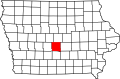
The Des Moines metropolitan area, officially the Des Moines–West Des Moines, IA Metropolitan Statistical Area (MSA), serves six counties in central Iowa: Polk, Dallas, Warren, Madison, Guthrie, and Jasper.[36] Des Moines is the principal city, with other major cities being West Des Moines and Ankeny. As of 2024, the population is 779,048, being the 78th highest metropolitan area based on population in the United States.[37]
The skyline of Des Moines changed in the 1970s and the 1980s, when several new skyscrapers were built. Additional skyscrapers were built in the 1990s, including Iowa's tallest. Before then, the 19-story Equitable Building, from 1924, was the tallest building in the city and the tallest building in Iowa. The 25-story Financial Center was completed in 1973 and the 36-story Ruan Center was completed in 1974. They were later joined by the 33-story Des Moines Marriott Hotel (1981), the 25-story HUB Tower and 25-story Plaza Building (1985). Iowa's tallest building, Principal Financial Group's 45-story tower at 801 Grand was built in 1991, and the 19-story EMC Insurance Building was erected in 1997.
During this time period, the Civic Center of Greater Des Moines (1979) was developed; it hosts Broadway shows and special events. Also constructed were the Greater Des Moines Botanical Garden (1979), a large city botanical garden/greenhouse on the east side of the river; the Polk County Convention Complex (1985), and the State of Iowa Historical Museum (1987). The Des Moines skywalk also began to take shape during the 1980s. The skywalk system is 4 miles (6.4 km) long and connects many downtown buildings.[38][39]
In the early 21st century, the city has had more major construction in the downtown area. The new Science Center of Iowa and Blank IMAX Dome Theater and the Iowa Events Center opened in 2005. The new central branch of the Des Moines Public Library, designed by renowned architect David Chipperfield of London, opened on April 8, 2006.
The World Food Prize Foundation, which is based in Des Moines, completed adaptation and restoration of the former Des Moines Public Library building in October 2011. The former library now serves as the home and headquarters of the Norman Borlaug/World Food Prize Hall of Laureates.
At the center of North America and far removed from large bodies of water, the Des Moines area has a hot summer type humid continental climate (KöppenDfa), with warm to hot, humid summers and cold, dry winters. Summer temperatures can often climb into the 90 °F (32 °C) range, occasionally reaching 100 °F (38 °C). Humidity can be high in spring and summer, with frequent afternoon thunderstorms. Fall brings pleasant temperatures and colorful fall foliage. Winters vary from moderately cold to bitterly cold, with low temperatures venturing below 0 °F (−18 °C) quite often. Snowfall averages 36.5 inches (93 cm) per season, and annual precipitation averages 36.55 inches (928 mm), with a peak in the warmer months. Winters are slightly colder than Chicago, but still warmer than Minneapolis, with summer temperatures being very similar between the Upper Midwest metropolitan areas.
The 2020 United States census counted 214,133 people, 87,958 households, and 48,599 families in Des Moines.[49][50] The population density was 2,428.4 per square mile (937.6/km2). There were 95,082 housing units at an average density of 1,078.3 per square mile (416.3/km2).[50][51]
The 2020 census population of the city included 252 people incarcerated in adult correctional facilities and 2,378 people in student housing.[53]
Of the 87,958 households, 28.0% had children under the age of 18; 35.5% were married couples living together; 31.3% had a female householder with no spouse or partner present. 35.3% of households consisted of individuals and 11.0% had someone living alone who was 65 years of age or older.[50] The average household size was 2.5 and the average family size was 3.3.[54] The percent of those with a bachelor's degree or higher was estimated to be 19.9% of the population.[55] Of the population age 25 and over, 86.7% were high school graduates or higher and 27.9% had a bachelor's degree or higher.[56]
23.5% of the population was under the age of 18, 10.4% from 18 to 24, 29.6% from 25 to 44, 23.1% from 45 to 64, and 13.5% were 65 years of age or older. The median age was 34.8 years. For every 100 females, there were 102.7 males.[50] For every 100 females ages 18 and older, there were 104.4 males.[50]
The 2016-2020 5-year American Community Survey estimates show that the median household income was $54,843 (with a margin of error of +/- $1,544) and the median family income was $66,420 (+/- $1,919).[57] Males had a median income of $38,326 (+/- $1,405) versus $29,855 (+/- $1,327) for females. The median income for those above 16 years old was $33,699 (+/- $740).[58] Approximately, 12.1% of families and 16.0% of the population were below the poverty line, including 24.3% of those under the age of 18 and 9.8% of those ages 65 or over.[59][60]
Map of racial distribution in Des Moines, 2010 U.S. Census. Each dot is 25 people:
⬤ White
⬤ Black
⬤ Asian
⬤ Hispanic
⬤ Other
As of the census of 2010, there were 203,433 people, 81,369 households, and 47,491 families residing in the city.[61]Population density was 2,515.6 inhabitants per square mile (971.3/km2). There were 88,729 housing units at an average density of 1,097.2 per square mile (423.6/km2). The racial makeup of the city for unincorporated areas not merged with the city proper was 66.2% White, 15.5% African Americans, 0.5% Native American, 4.0% Asian, and 2.6% from Two or more races. People of Hispanic or Latino origin, of any race, made up 12.1% of the population. The city's racial make up during the 2010 census was 76.4% White, 10.2% African American, 0.5% Native American, 4.4% Asian (1.2% Vietnamese, 0.9% Laotian, 0.4% Burmese, 0.3% Asian Indian, 0.3% Thai, 0.2% Chinese, 0.2% Cambodian, 0.2% Filipino, 0.1% Hmong, 0.1% Korean, 0.1% Nepalese), 0.1% Pacific Islander, 5.0% from other races, and 3.4% from two or more races. People of Hispanic or Latino origin, of any race, formed 12.0% of the population (9.4% Mexican, 0.7% Salvadoran, 0.3% Guatemalan, 0.3% Puerto Rican, 0.1% Honduran, 0.1% Ecuadorian, 0.1% Cuban, 0.1% Spaniard, 0.1% Spanish). Non-Hispanic Whites were 70.5% of the population in 2010.[46] Des Moines also has a sizeable South Sudanese community.[62]
There were 81,369 households, of which 31.6% had children under the age of 18 living with them, 38.9% were married couples living together, 14.2% had a female householder with no husband present, 5.3% had a male householder with no wife present, and 41.6% were non-families. 32.5% of all households were made up of individuals, and 9.4% had someone living alone who was 65 years of age or older. The average household size was 2.43 and the average family size was 3.11.
The median age in the city was 33.5 years. 24.8% of residents were under the age of 18; 10.9% were between the ages of 18 and 24; 29.4% were from 25 to 44; 23.9% were from 45 to 64; and 11% were 65 years of age or older. The gender makeup of the city was 48.9% male and 51.1% female.
As of the 2000 census, there were 198,682 people, 80,504 households, and 48,704 families in the city.[63] The population density was 2,621.3 inhabitants per square mile (1,012.1/km2). There were 85,067 housing units at an average density of 1,122.3 per square mile (433.3/km2). The racial makeup of the city was 82.3% white, 8.07% Black, 0.35% American Indian, 3.50% Asian, 0.05% Pacific Islander, 3.52% from other races, and 2.23% from two or more races. 6.61% of the population were Hispanic or Latino of any race. 20.9% were of German, 10.3% Irish, 9.1% "American" and 8.0% English ancestry, according to Census 2000.
There were 80,504 households, out of which 29.5% had children under the age of 18 living with them, 43.7% were married couples living together, 12.6% had a female householder with no husband present, and 39.5% were non-families. 31.9% of all households were made up of individuals, and 10.2% had someone living alone who was 65 years of age or older. The average household size was 2.39 and the average family size was 3.04.
The age distribution was 24.8% under the age of 18, 10.6% from 18 to 24, 31.8% from 25 to 44, 20.4% from 45 to 64, and 12.4% who were 65 years of age or older. The median age was 34 years. For every 100 females, there were 93.8 males. For every 100 females age 18 and over, there were 90.5 males.
The median income for a household in the city was $38,408, and the median income for a family was $46,590. Males had a median income of $31,712 versus $25,832 for females. The per capita income for the city was $19,467. About 7.9% of families and 11.4% of the population were below the poverty line, including 14.9% of those under age 18 and 7.6% of those ages 65 or over.
As a center of financial and insurance services, other major corporations headquartered outside of Iowa have a presence in the Des Moines Metro area, including Wells Fargo, Voya Financial, and Electronic Data Systems (EDS). The Meredith Corporation, a leading publishing and marketing company, was also based in Des Moines prior to its acquisition by IAC and merger with Dotdash in 2021. Meredith published Better Homes and Gardens, one of the most widely circulated publications in the United States. Des Moines was also the headquarters of Golf Digest magazine.
The Brotherhood of American Yeomen, headquartered in Des Moines, went through various mergers before it became AmerUs, which was purchased by Aviva in 2006, for $2.9 billion.[70] In 2017, Kemin Industries opened a state-of-the-art worldwide headquarters building in Des Moines.[71]
The City of Des Moines is a cultural center for Iowa and home to several art and history museums and performing arts groups. The Des Moines Performing Arts routinely hosts touring Broadway shows and other live professional theater. The Temple for Performing Arts and Des Moines Playhouse are other venues for live theater, comedy, and performance arts.
The Des Moines Metro Opera has been a cultural resource in Des Moines since 1973. The Opera offers educational and outreach programs and is one of the largest performing arts organizations in the state. Ballet Des Moines was established in 2002. Performing three productions each year, the Ballet also provides opportunities for education and outreach.
The Des Moines Symphony performs frequently at different venues. In addition to performing seven pairs of classical concerts each season, the Symphony also entertains with New Year's Eve Pops and its annual Yankee Doodle Pops concerts.
Jazz in July[72] is an annual event founded in 1969 that performs free jazz shows daily at venues throughout the city during July.
The Simon Estes Riverfront Amphitheater is an outdoor concert venue on the east bank of the Des Moines River which hosts music events such as the Alive Concert Series.
The Des Moines Art Center, with wings designed by architects I.M. Pei and Richard Meier, presents art exhibitions and educational programs as well as studio art classes. The Center houses a collection of artwork from the 19th century to the present. An extension of the art center is downtown in an urban museum space, featuring three or four exhibitions each year.
The Pappajohn Sculpture Park was established in 2009. It showcases a collection of 24 sculptures donated by Des Moines philanthropists John and Mary Pappajohn. Nearby is the Temple for Performing Arts, a cultural center for the city. Next to the Temple is the 117,000-square-foot (10,900 m2) Central Library, designed by renowned English architect David Chipperfield.
Salisbury House and Gardens is a 42-room historic house museum on 10 acres (4 ha) of woodlands in the South of Grand neighborhood of Des Moines. It is named after—and loosely inspired by—King's House in Salisbury, England. Built in the 1920s by cosmetics magnate Carl Weeks and his wife, Edith, the Salisbury House contains authentic 16th-century English oak and rafters dating to Shakespeare's days, numerous other architectural features re-purposed from other historic English homes, and an internationally significant collection of original fine art, tapestries, decorative art, furniture, musical instruments, and rare books and documents. The Salisbury House is listed on the National Register of Historic Places, and has been featured on A&E's America's Castles and PBS's Antiques Roadshow. Prominent artists in the Salisbury House collection include Joseph Stella, Lillian Genth, Anthony van Dyck and Lawrence Alma-Tadema.
Built in 1877 by prominent pioneer businessman Hoyt Sherman, Hoyt Sherman Place mansion was Des Moines' first public art gallery and houses a distinctive collection of 19th and 20th century artwork. Its restored 1,250-seat theater features an intricate rococo plaster ceiling and excellent acoustics and is used for a variety of cultural performances and entertainment.
The Iowa State Capitol, completed in 1886, is one of two state capitols to feature five domes, a central golden dome surrounded by four smaller domes. The other is the Rhode Island State House.
Arising in the east and facing westward toward downtown, the Iowa State Capitol building with its 275-foot (84 m), 23-karat gold leafed dome towering above the city is a favorite of sightseers. Four smaller domes flank the main dome. The Capitol houses the governor's offices, legislature, and the old Supreme Court Chambers. The ornate interior also features a grand staircase, mural "Westward", five-story law library, scale model of the USS Iowa, and collection of first lady dolls. Guided tours are available.
The Capitol grounds include a World War II memorial with sculpture and Wall of Memories, the 1894 Soldiers and Sailors Monument of the Civil War and memorials honoring those who served in the Spanish–American, Korean, and Vietnam Wars. The West Capitol Terrace provides the entrance from the west to the state's grandest building, the State Capitol Building. The 10-acre (4 ha) "people's park" at the foot of the Capitol complex includes a promenade and landscaped gardens, in addition to providing public space for rallies and special events. A granite map of Iowa depicting all 99 counties rests at the base of the terrace and has become an attraction for in-state visitors, many of whom walk over the map to find their home county.
The State of Iowa Historical Museum is near the state capitol in Des Moines' East Village.
Iowa's history lives on in the State of Iowa Historical Museum. This modern granite and glass structure at the foot of the State Capitol Building houses permanent and temporary exhibits exploring the people, places, events, and issues of Iowa's past. The showcase includes native wildlife, American Indian and pioneer artifacts, and political and military items. The museum features a genealogy and Iowa history library, museum gift shop, and cafe.
Terrace Hill, a National Historic Landmark and Iowa Governor's Residence, is among the best examples of American Victorian Second Empire architecture. This opulent 1869 home was built by Iowa's first millionaire, Benjamin F. Allen, and restored to the late 19th century period. It overlooks downtown Des Moines and is situated on 8 acres (3.2 ha) with a re-created Victorian formal garden. Tours are conducted Tuesdays through Saturdays from March through December.
The 110,000-square-foot (10,000 m2) Science Center of Iowa and Blank IMAX Dome Theater offers seven interactive learning areas, live programs, and hands-on activities encouraging learning and fun for all ages. Among its three theaters include the 216-seat Blank IMAX Dome Theater, 175-seat John Deere Adventure Theater featuring live performances, and a 50-foot (15 m) domed Star Theater.
The Greater Des Moines Botanical Garden, an indoor conservatory of over 15,000 exotic plants, is one of the largest collections of tropical, subtropical, and desert-growing plants in the Midwest. The Center blooms with thousands of flowers year-round. Nearby are the Robert D. Ray Asian Gardens and Pavilion, named in honor of the former governor whose influence helped relocate thousands of Vietnamese refugees to Iowa homes in the 1970s and 1980s. Developed by the city's Asian community, the Gardens include a three-story Chinese pavilion, bonsai landscaping, and granite sculptures to highlight the importance of diversity and recognize Asian American contributions in Iowa.
Blank Park Zoo is a landscaped 22-acre (8.9 ha) zoological park on the south side. Among the exhibits include a tropical rain forest, Australian Outback, and Africa. The Zoo offers education classes, tours, and rental facilities.
The Iowa Primate Learning Sanctuary was established as a scientific research facility with a 230-acre (93 ha) campus housing bonobos and orangutans for the noninvasive interdisciplinary study of their cognitive and communicative capabilities.
Locust Street looking east from 4th Street toward the Iowa State Capitol in East Village
The East Village, on the east side of the Des Moines River, begins at the river and extends about five blocks east to the State Capitol Building, offering an eclectic blend of historic buildings, hip eateries, boutiques, art galleries, and a wide variety of other retail establishments mixed with residences.
Adventureland Park is an amusement park in neighboring Altoona, just northeast of Des Moines. The park boasts more than 100 rides, shows, and attractions, including six rollercoasters. A hotel and campground is just outside the park. Also in Altoona is Prairie Meadows Racetrack and Casino, an entertainment venue for gambling and horse racing. Open 24 hours a day, year-round, the racetrack and casino features live racing, plus over 1,750 slot machines, table games, and concert and show entertainment. The racetrack hosts two Grade III races annually, the Iowa Oaks and the Cornhusker Handicap.
Living History Farms in suburban Urbandale tells the story of Midwestern agriculture and rural life in a 500-acre (2.0 km2) open-air museum with interpreters dressed in period costume who recreate the daily routines of early Iowans. Open daily from May through October, the Living History Farms include a 1700 Ioway Indian village, 1850 pioneer farm, 1875 frontier town, 1900 horse-powered farm, and a modern crop center.
Wallace House was the home of the first Henry Wallace, a national leader in agriculture and conservation and the first editor of Wallaces' Farmer farm journal. This restored 1883 Italianate Victorian houses exhibits, artifacts, and information covering four generations of Henry Wallaces and other family members.
Historic Jordan House in West Des Moines is a stately Victorian home built in 1850 and added to in 1870 by the first white settler in West Des Moines, James C. Jordan. Completely refurbished, this mansion was part of the Underground Railroad and today houses 16 period rooms, a railroad museum, West Des Moines community history, and a museum dedicated to the Underground Railroad in Iowa. In 1893 Jordan's daughter Eda was sliding down the banister when she fell off and broke her neck. She died two days later, and her ghost is reputed to haunt the house.[73]
The Chicago Tribune wrote that Iowa's capital city has "walker-friendly downtown streets and enough outdoor sculpture, sleek buildings, storefronts and cafes to delight the most jaded stroller".[74]
The 4th Street Neighborhood is within the Court Avenue Entertainment District of Downtown Des Moines.The Grand Concourse, between the Grandstand and the Varied Industries Building, during the 2006 Iowa State Fair
Des Moines plays host to a growing number of nationally acclaimed cultural events, including the annual Des Moines Arts Festival in June, Metro Arts Jazz in July,[75]Iowa State Fair in August, and the World Food & Music Festival in September.[76]
Other annual festivals and events include: Des Moines Beer Week, 80/35 Music Festival, 515 Alive Music Festival, ArtFest Midwest, Blue Ribbon Bacon Fest,[77]
Sec Taylor Field at Principal Park, during a May 28, 2006, Iowa Cubs game against the Nashville Sounds. The Iowa Capitol is visible beyond the center-field wall.
Des Moines hosts professional minor league teams in several sports — baseball, basketball, hockey, indoor football, and soccer — and is home to the sports teams of Drake University which play in NCAA Division I.
Des Moines is home to the Iowa Cubs baseball team of the International League. The I-Cubs, which are the Triple-A affiliate of the major league Chicago Cubs, play their home games at Principal Park near the confluence of the Des Moines and Raccoon Rivers.
The Principal Charity Classic, a Champions Tour golf event, is held at Wakonda Club in late May or early June. The IMT Des Moines Marathon is held throughout the city each October.
Des Moines has 76 city parks and three golf courses, as well as three family aquatic centers, five community centers and three swimming pools. The city has 45 miles (72 km) of trails. The first major park was Greenwood Park. The park commissioners purchased the land on April 21, 1894.
The Principal Riverwalk is a riverwalk park district being constructed along the banks of the Des Moines River in the downtown. Primarily funded by the Principal Financial Group, the Riverwalk is a multi-year jointly funded project also funded by the city and state. Upon completion, it will feature a 1.2-mile (1.9 km) recreational trail connecting the east and west sides of downtown via two pedestrian bridges. A landscaped promenade along the street level is planned. The Riverwalk includes the downtown Brenton Skating Plaza, open from November through March.
Gray's Lake, part of the 167 acres (68 ha) of Gray's Lake Park, features a boat rental facility, fishing pier, floating boardwalks, and a park resource center. Located just south of the downtown, the centerpiece of the park is a lighted 1.9-mile (3.1 km) Kruidenier Trail, encircling it entirely.
From downtown Des Moines primarily along the east bank of the Des Moines River, the Neil Smith and John Pat Dorrian Trails are 28.2-mile (45.4 km) paved recreational trails that connect Gray's Lake northward to the east shore of Saylorville Lake, Big Creek State Park, and the recreational trails of Ankeny including the High Trestle Trail.[80] These trails are near several recreational facilities including the Pete Crivaro Park, Principal Park, the Principal Riverwalk, the Greater Des Moines Botanical Garden, Union Park and its Heritage Carousel of Des Moines, Birdland Park and the Birdland Marina/Boatramp on the Des Moines River, Riverview Park, McHenry Park, and River Drive Park.[81] Although outside of Des Moines, Jester Park has 1,834 acres (742 ha) of land along the western shore of Saylorville Lake and can be reached from the Neil Smith Trail over the Saylorville Dam.
Just west of Gray's Lake are the 1,500 acres (607 ha) of the Des Moines Water Works Park. The Water Works Park is along the banks of the Raccoon River immediately upstream from where the Raccoon River empties into the Des Moines River. The Des Moines Water Works Facility, which obtains the city's drinking water from the Raccoon River, is entirely within the Water Works Park. A bridge in the park crosses the Raccoon River. The Water Works Park recreational trails link to downtown Des Moines by travelling past Gray's Lake and back across the Raccoon River via either along the Meredith Trail near Principal Park, or along the Martin Luther King Jr. Parkway. The Water Works Park trails connect westward to Valley Junction and the recreational trails of the western suburbs: Windsor Heights, Urbandale, Clive, and Waukee. Also originating from Water Works Park, the Great Western Trail is an 18-mile (29 km) journey southward from Des Moines to Martensdale through the Willow Creek Golf Course, Orilla, and Cumming. Often, the location for summer music festivals and concerts, Water Works Park was the overnight campground for thousands of bicyclists on Tuesday, July 23, 2013, during RAGBRAI XLI.[82]
Des Moines operates under a council–manager form of government. The council consists of a mayor who is elected in citywide vote, two at-large members, and four members representing each of the city's four wards. In 2014, Jonathan Gano was appointed as the new Public Works Director.[83] In 2015, Dana Wingert was appointed as Police Chief.[84] In 2018, Steven L. Naber was appointed as the new City Engineer.[85]
A plan to merge the governments of Des Moines and Polk County was rejected by voters during the November 2, 2004, election. The consolidated city-county government would have had a full-time mayor and a 15-member council that would have been divided among the city and its suburbs. Each suburb would still have retained its individual government but with the option to join the consolidated government at any time. Although a full merger was soundly rejected, several city and county departments and programs have been consolidated.
Non-commercial radio stations in the Des Moines area include KDPS 88.1 FM, a station operated by the Des Moines Public Schools; KWDM 88.7 FM, a station operated by Valley High School; KJMC 89.3 FM, an urban contemporary station; K213DV 90.5 FM, the contemporary Christian K-Love affiliate for the area; and KDFR 91.3 FM, operated by Family Radio. Iowa Public Radio broadcasts several stations in the Des Moines area, all of which are owned by Iowa State University and operated on campus. WOI 640 AM, the network's flagship station, and WOI-FM 90.1, the network's flagship "Studio One" station, are both based out of Ames and serve as the area's National Public Radio outlets. The network also operates classical stations KICG, KICJ, KICL and KICP.[101] The University of Northwestern – St. Paul operates Contemporary Christian simulcasts of KNWI-FM at 107.1 Osceola/Des Moines, KNWM-FM at 96.1 Madrid/Ames/Des Moines, and K264CD at 100.7 in downtown Des Moines. Low-power FM stations include KFMG-LP 99.1, a community radio station broadcasting from the Hotel Fort Des Moines and also webstreamed.[100][102]
Commercial television stations serving Des Moines include CBS affiliate KCCI channel 8, NBC affiliate WHO-DT channel 13, and Fox affiliate KDSM-TV channel 17. ABC affiliate WOI-TV channel 5 and CW affiliate KCWI-TV channel 23 are both licensed to Ames and broadcast from studios in West Des Moines. KFPX-TV channel 39, the local ION affiliate, is licensed to Newton. Two non-commercial stations are also licensed to Des Moines: KDIN channel 11, the local PBS member station and flagship of the Iowa Public Television network, and KDMI channel 19, a TCT affiliate. Mediacom is the Des Moines area's cable television provider.[104]
The Des Moines Register is the city's primary daily newspaper. As of March 31, 2007, the Register ranked 71st in circulation among daily newspapers in the United States according to the Audit Bureau of Circulations with 146,050 daily and 233,229 Sunday subscribers.[105] Weekly newspapers include Juice, a publication aimed at the 25–34 demographic published by the Register on Wednesdays; Cityview, an alternative weekly published on Thursdays; and the Des Moines Business Record, a business journal published on Sundays, along with the West Des Moines Register, the Johnston Register, and the Waukee Register on Tuesdays, Wednesdays, or Thursdays depending on the address of the subscriber. Additionally, magazine publisher Meredith Corporation was based in Des Moines prior to its acquisition by IAC and merger with Dotdash in 2021.
Des Moines is the birthplace of many famously known bands and artists today. Slipknot, a popular American heavy metal band, was founded in 1995 by percussionist Shawn Crahan, former vocalist Anders Colsefni and bassist Paul Gray; the band would be also founded by Joey Jordison. The band was signed to Roadrunner Records and has become one of the biggest bands in the metal world.
Stone Sour, an American rock band, was founded in 1992 by Corey Taylor and former drummer Joel Ekman. Taylor would later go on to become the lead singer for Slipknot. The band has since been on an indefinite hiatus since 2020.
Vended, an American heavy metal band, was founded in 2018[106] by Griffin Taylor and Simon Crahan, who are the sons of well-known musicians Corey Taylor and Shawn "Clown" Crahan from Slipknot. They are currently an independent band that has released one studio album in 2024[106] called Vended, several singles and one EP. The band has seen growing success in the past few years, including their 2022 Vended tour in the United States with Jinjer and P.O.D.
The Edna M. Griffin Memorial Pedestrian Bridge over Interstate 235Skywalks connecting buildings over 8th Street in downtown Des Moines
Des Moines has an extensive skywalk system within its downtown core. With over four miles of enclosed walkway, it is one of the largest of such systems in the United States. The Des Moines Skywalk System has been criticized for hurting street-level business, though a recent initiative has been made to make street-level Skywalk entrances more visible.
Interstate 235 (I-235) cuts through the city, and I-35 and I-80 both pass through the Des Moines metropolitan area, as well as the city of Des Moines. On the northern side of the city of Des Moines and passing through the cities of Altoona, Clive, Johnston, Urbandale and West Des Moines, I-35 and I-80 converge into a long concurrency while I-235 takes a direct route through Des Moines, Windsor Heights, and West Des Moines before meeting up with I-35 and I-80 on the western edge of the metro. The Des Moines Bypass passes south and east of the city.[107] Other routes in and around the city include US 6, US 69, Iowa 28, Iowa 141, Iowa 163, Iowa 330, Iowa 415, and Iowa 160.
Des Moines's public transit system, operated by DART (Des Moines Area Regional Transit), which was the Des Moines Metropolitan Transit Authority until October 2006, consists entirely of buses, including regular in-city routes and express and commuter buses to outlying suburban areas.
Characteristics of household ownership of cars in Des Moines are similar to national averages. In 2015, 8.5 percent of Des Moines households lacked a car, and that number increased to 9.6 percent in 2016. The national average was 8.7 percent in 2016. Des Moines averaged 1.71 cars per household in 2016, compared to a national average of 1.8.[108]
Although Des Moines was historically a train hub, it does not have direct passenger train service. For east–west traffic it was served at the Rock Island Depot by the Corn Belt Rocket express from Omaha to the west, to Chicago in the east. The Rock Island also offered the Rocky Mountain Rocket from Colorado Springs in the west, to Chicago, and the Twin Star Rocket to Minneapolis to the north and Dallas and Houston to the south. The last train was an unnamed service ending at Council Bluffs, and it was discontinued on May 31, 1970.[109][110] Today, this line constitutes the mainline of the Iowa Interstate Railroad.
Other railroads used the East Des Moines Union Station. Northward and northwest bound, there were Chicago and North Western trains to destinations including Minneapolis. The Wabash Railroad ran service to the southeast to St. Louis. These lines remain in use but are now operated by Union Pacific and BNSF.
The Des Moines International Airport (DSM), on Fleur Drive in the southern part of Des Moines, offers nonstop service to destinations within the United States. The only international service has been cargo service, but there have been discussions about adding an international terminal.
The Greater Des Moines Sister City Commission, with members from the City of Des Moines and the suburbs of Cumming, Norwalk, Windsor Heights, Johnston, Urbandale, and Ankeny, maintains sister city relationships with:[114]
^Mean monthly maxima and minima (i.e. the expected highest and lowest temperature readings at any point during the year or given month) calculated based on data at said location from 1991 to 2020.
^Official records for Des Moines kept August 1878 to August 1939 at downtown and at Des Moines International since September 1939. For more information, see Threadex
^The total for each race includes those who reported that race alone or in combination with other races. People who reported a combination of multiple races may be counted multiple times, so the sum of all percentages will exceed 100%.
^Hispanic and Latino origins are separate from race in the U.S. Census. The Census does not distinguish between Latino origins alone or in combination. This row counts Hispanics and Latinos of any race.
^ abWhittaker, William E. (2008). "Prehistoric and Historic Indians in Downtown Des Moines". Newsletter of the Iowa Archeological Society. 58 (1): 8–10.
^Mather, David and Ginalie Swaim (2005) "The Heart of the Best Part: Fort Des Moines No. 2 and the Archaeology of a City", Iowa Heritage Illustrated 86(1):12–21.
^James H. Lees, "History of Coal Mining in Iowa", Chapter III of Annual Report, 1908. Archived January 17, 2016, at the Wayback Machine. Iowa Geological Survey. 1909. p. 566.
^Perkins, Arozina, 1851 letter in: (1984) "Teaching in Fort Des Moines, Iowa: November 13, 1850 to March 21, 1851." In Women Teachers on the Frontier, edited by P. W. Kaufman, pp. 126–143. Yale University Press, New Haven, Connecticut.
^Mills and Company (1866) Des Moines City Directory and Business Guide. Des Moines, Iowa: Mills and Company, p. 6. Microfilm, State Historical Society Library, Iowa City.
^Brigham, Johnson (1911) Des Moines: The Pioneer of Municipal Progress and Reform of the Middle West. Volume 1. Chicago: S. J. Clarke
^James H. Lees, "History of Coal Mining in Iowa", Chapter III of Annual Report, 1908Archived January 17, 2016, at the Wayback Machine, Iowa Geological Survey, 1909, pages 566–569.
^Henry Hinds, "The Coal Deposits of Iowa", Annual Report, 1908Archived January 16, 2016, at the Wayback Machine, Iowa Geological Survey, 1909, pages 121–127, and see map on page 102.
^Dahl, Orin L. (1978) Des Moines: Capital City: A Pictorial and Entertaining Commentary on the Growth and Development of Des Moines, Iowa. Continental Heritage, Tulsa.
^Gardiner, Allen (2004) Des Moines: A History in Pictures. Heritage Media, San Marcos, California.
^"Station: Des Moines INTP AP, IA". U.S. Climate Normals 2020: U.S. Monthly Climate Normals (1991–2020). National Oceanic and Atmospheric Administration. Retrieved June 26, 2021.
^"African-Americans in Iowa: 2023"(PDF). iowadatacenter.org. State Data Center of Iowa, Iowa Commission on the Status of African-Americans. Retrieved October 6, 2025.
^"Major Employer List 2023"(PDF). Greater Des Moines Partnership. May 17, 2023. Archived(PDF) from the original on February 9, 2024. Retrieved February 9, 2024.
^"Our Location." (Archive) Carlisle Community Schools. Retrieved on April 3, 2013. "Carlisle Elementary School, which is immediately adjacent to the high school and the district office, serves students from pre-kindergarten to grade 3."
^"The Amtrak System"(PDF). Amtrak (Map). March 2017. Archived(PDF) from the original on September 1, 2017. Retrieved July 24, 2017. While this source is suggestive, it is not definitive: the map does not include all stations, due to the zoom (cf. the tiny print).
Friedericks, William B. Covering Iowa: The History of the Des Moines Register and Tribune Company, 1849-1985 (Iowa State University Press, 2000), 318 pp.
Henning, Barbara Beving Long & Beam, Patrice K. (2003). Des Moines and Polk County: Flag on the Prairie. Sun Valley, California: American Historical Press. ISBN1-892724-34-0.
Implantology (from Latin in meaning 'into' and planta 'cutting,'[1] and -logy from the Greek λόγος lógos 'word,' 'study,') is the term for the placement of dental implants by a dentist, specialist dentist in oral surgery, or oral and maxillofacial surgeons. With a license to practice, every dentist obtains permission to practice the full range of dentistry and thus also to place dental implants. The 'focus area in implantology' established in 2001 by the European Association of Dental Implantologists (BDIZ EDI) before the Federal Constitutional Court[2] is not an additional designation according to the training regulations and is not granted under public law.
A dental implant (also known as an endosseous implant or fixture) is a prosthesis that interfaces with the bone of the jaw or skull to support a dental prosthesis such as a crown, bridge, denture, or facial prosthesis or to act as an orthodontic anchor. The basis for modern dental implants is a biological process called osseointegration, in which materials such as titanium or zirconia form an intimate bond to the bone.[3] The implant fixture is first placed so that it is likely to osseointegrate, then a dental prosthetic is added. A variable amount of healing time is required for osseointegration before either the dental prosthetic (a tooth, bridge, or denture) is attached to the implant or an abutment is placed which will hold a dental prosthetic or crown.
Success or failure of implants depends primarily on the thickness and health of the bone and gingival tissues that surround the implant,[4] but also on the health of the person receiving the treatment and drugs which affect the chances of osseointegration.[5][6][7][8][9][10][11][12] The amount of stress that will be put on the implant and fixture during normal function is also evaluated. Planning the position and number of implants is key to the long-term health of the prosthetic since biomechanical forces created during chewing can be significant. The position of implants is determined by the position and angle of adjacent teeth, by lab simulations or by using computed tomography with CAD/CAM simulations[13][14][15][16] and surgical guides called stents. The prerequisites for long-term success of osseointegrated dental implants are healthy bone and gingiva. Since both can atrophy after tooth extraction, pre-prosthetic procedures such as sinus lifts or gingival grafts are sometimes required to recreate ideal bone and gingiva.
The final prosthetic can be either fixed, where a person cannot remove the denture or teeth from their mouth, or removable, where they can remove the prosthetic. In each case an abutment is attached to the implant fixture. Where the prosthetic is fixed, the crown, bridge or denture is fixed to the abutment either with lag screws or with dental cement. Where the prosthetic is removable, a corresponding adapter is placed in the prosthetic so that the two pieces can be secured together.
The risks and complications related to implant therapy divide into those that occur during surgery (such as excessive bleeding or nerve injury, inadequate primary stability), those that occur in the first six months (such as infection and failure to osseointegrate) and those that occur long-term (such as peri-implantitis and mechanical failures). In the presence of healthy tissues, a well-integrated implant with appropriate biomechanical loads can have 5-year plus survival rates from 93 to 98 percent[17][18][19] and 10-to-15-year lifespans for the prosthetic teeth.[20] Long-term studies show a 16- to 20-year success (implants surviving without complications or revisions) between 52% and 76%, with complications occurring up to 48% of the time.[21][22]
Individual teeth were replaced with implants where it is difficult to distinguish the real teeth from the prosthetic teeth.
Movement in a lower denture can be decreased by implants with ball and socket retention.
A bridge of teeth can be supported by two or more implants.
The primary use of dental implants is to support dental prosthetics (i.e. false teeth). Modern dental implants work through a biologic process where bone fuses tightly to the surface of specific materials such as titanium and some ceramics. The integration of implant and bone can support physical loads for decades without failure.[23]: 103–107
The US has seen an increasing use of dental implants, with usage increasing from 0.7% of patients missing at least one tooth (1999–2000), to 5.7% (2015–2016), and was projected to potentially reach 26% in 2026.[24] Implants are used to replace missing individual teeth (single tooth restorations), multiple teeth, or to restore edentulous (toothless) dental arches (implant retained fixed bridge, implant-supported overdenture).[25] While use of dental implants in the US has increased, other treatments to tooth loss exist.
Dental implants are also used in orthodontics to provide anchorage (orthodontic mini implants). Orthodontic treatment[26] might be required prior to placing a dental implant. An evolving field is the use of implants to retain obturators (removable prostheses used to fill a communication between the oral and maxillary or nasal cavities).[25]Facial prosthetics, used to correct facial deformities (e.g. from cancer treatment or injuries), can use connections to implants placed in the facial bones.[27] Depending on the situation the implant may be used to retain either a fixed or removable prosthetic that replaces part of the face.[28][29]
Single tooth restorations are individual freestanding units not connected to other teeth or implants, used to replace missing individual teeth.[25] For individual tooth replacement, an implant abutment is first secured to the implant with an abutment screw. A crown (the dental prosthesis) is then connected to the abutment with dental cement, a small screw, or fused with the abutment as one piece during fabrication.[30]: 211–232 Dental implants, in the same way, can also be used to retain a multiple tooth dental prosthesis either in the form of a fixed bridge or removable dentures.
There is limited evidence that implant-supported single crowns perform better than tooth-supported fixed partial dentures (FPDs) on a long-term basis. However, taking into account the favorable cost-benefit ratio and the high implant survival rate, dental implant therapy is the first-line strategy for single-tooth replacement. Implants preserve the integrity of the teeth adjacent to the edentulous area, and it has been shown that dental implant therapy is less costly and more efficient over time than tooth-supported FPDs for the replacement of one missing tooth. The major disadvantage of dental implant surgery is the need for a surgical procedure.[31]
Implant retained fixed bridge or implant supported bridge
An implant supported bridge (or fixed denture) is a group of teeth secured to dental implants so the prosthetic cannot be removed by the user. They are similar to conventional bridges, except that the prosthesis is supported and retained by one or more implants instead of natural teeth. Bridges typically connect to more than one implant and may also connect to teeth as anchor points. Typically the number of teeth will outnumber the anchor points with the teeth that are directly over the implants referred to as abutments and those between abutments referred to as pontics. Implant supported bridges attach to implant abutments in the same way as a single tooth implant replacement. A fixed bridge may replace as few as two teeth (also known as a fixed partial denture) and may extend to replace an entire arch of teeth (also known as a fixed full denture). In both cases, the prosthesis is said to be fixed because it cannot be removed by the denture wearer.[30]
A removable implant-supported denture (also an implant-supported overdenture[32]: 31 ) is a removable prosthesis which replaces teeth, using implants to improve support, retention and stability. They are most commonly complete dentures (as opposed to partial), used to restore edentulous dental arches.[25] The dental prosthesis can be disconnected from the implant abutments with finger pressure by the wearer. To enable this, the abutment is shaped as a small connector (a button, ball, bar or magnet) which can be connected to analogous adapters in the underside of the dental prosthesis.
Dental implants are used in orthodontic patients to replace missing teeth or as a temporary anchorage device (TAD) to facilitate orthodontic movement by providing an additional anchorage point.[31][33] For teeth to move, a force must be applied to them in the direction of the desired movement. The force stimulates cells in the periodontal ligament to cause bone remodeling, removing bone in the direction of travel of the tooth and adding it to the space created. In order to generate a force on a tooth, an anchor point (something that will not move) is needed. Since implants do not have a periodontal ligament, and bone remodelling will not be stimulated when tension is applied, they are ideal anchor points in orthodontics. Typically, implants designed for orthodontic movement are small and do not fully osseointegrate, allowing easy removal following treatment.[34] They are indicated when needing to shorten treatment time, or as an alternative to extra-oral anchorage. Mini-implants are frequently placed between the roots of teeth, but may also be sited in the roof of the mouth. They are then connected to a fixed brace to help move the teeth.
The introduction of small-diameter implants has provided dentists the means of providing edentulous and partially edentulous patients with immediate functioning transitional prostheses while definitive restorations are being fabricated. Many clinical studies have been done on the success of long-term usage of these implants. Based on the findings of many studies, mini dental implants exhibit excellent survival rates in the short to medium term (3–5 years). They appear to be a reasonable alternative treatment modality to retain mandibular complete overdentures from the available evidence.[35][36]
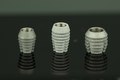
A standard 13 mm root form dental implant with pen beside it for size comparison
A zygomatic implant is longer than standard implants and used in people without adequate bone in the maxilla. It secures to the cheek bone.
A small diameter implant is a single piece implant (no abutment) that requires less bone.
Ultrashort Plateau Root Form (PRF) or "finned" dental implants used in regions that would otherwise require a sinus lift or bone graft.
An orthodontic implant is placed beside teeth to act as an anchor point to which braces can be secured.
A one-piece all-ceramic implant
A typical conventional implant consists of a titanium screw (resembling a tooth root) with a roughened or smooth surface. The majority of dental implants are made of commercially pure titanium, which is available in four grades depending upon the amount of carbon, nitrogen, oxygen and iron contained.[37] Cold work hardened CP4 (maximum impurity limits of N .05 percent, C .10 percent, H .015 percent, Fe .50 percent, and O .40 percent) is the most commonly used titanium for implants. Grade 5 titanium, Titanium 6AL-4V (signifying the titanium alloy containing 6 percent aluminium and 4 percent vanadium alloy) is slightly harder than CP4 and used in the industry mostly for abutment screws and abutments.[38]: 284–285 Most modern dental implants also have a textured surface (through etching, anodic oxidation or various-media blasting) to increase the surface area and osseointegration potential of the implant.[39]: 55 If C.P. titanium or a titanium alloy has more than 85% titanium content, it will form a titanium-biocompatibletitanium oxide surface layer or veneer that encloses the other metals, preventing them from contacting the bone.[40]
Ceramic (zirconia-based) implants exist in one-piece (combining the screw and the abutment) or two-piece systems – the abutment being either cemented or screwed – and might lower the risk for peri‐implant diseases, but long-term data on success rates is missing.[41]
To help the surgeon position the implants a guide is made (usually out of acrylic) to show the desired position and angulation of the implants.
Sometimes the final position and restoration of the teeth will be simulated on plaster models to help determine the number and position of implants needed.
CT scans can be loaded to CAD/CAM software to create a simulation of the desired treatment. Virtual implants are then placed and a stent created on a 3D printer from the data.
Planning for dental implants focuses on the general health condition of the patient, the local health condition of the mucous membranes and the jaws and the shape, size, and position of the bones of the jaws, adjacent and opposing teeth. There are few health conditions that absolutely preclude placing implants[example needed] and there are certain conditions that can increase the risk of failure. Those with poor oral hygiene, heavy smokers and diabetics are all at greater risk for a variant of gum disease that affects implants called peri-implantitis, increasing the chance of long-term failures. Long-term steroid use, osteoporosis and other diseases that affect the bones can increase the risk of early failure of implants.[30]: 199 It has been suggested that radiotherapy can negatively affect the survival of implants.[11][42] Nevertheless, a systemic study published in 2016 concluded that dental implants installed in the irradiated area of an oral cavity may have a high survival rate, provided that the patient maintains oral hygiene measures and regular follow-ups to prevent complications.[43]
The long-term success of implants is determined in part by the forces they have to support. As implants have no periodontal ligament, there is no sensation of pressure when biting so the forces created are higher. To offset this, the location of implants must distribute forces evenly across the prosthetics they support.[44]: 15–39 Concentrated forces can result in fracture of the bridgework, implant components, or loss of bone adjacent the implant.[45] The ultimate location of implants is based on both biologic (bone type, vital structures, health) and mechanical factors. Implants placed in thicker, stronger bone like that found in the front part of the bottom jaw have lower failure rates than implants placed in lower density bone, such as the back part of the upper jaw. People who grind their teeth also increase the force on implants and increase the likelihood of failures.[30]: 201–208 [46][47][48][49]
The design of implants has to account for a lifetime of real-world use in a person's mouth. Regulators and the dental implant industry have created a series of tests to determine the long-term mechanical reliability of implants in a person's mouth where the implant is struck repeatedly with increasing forces (similar in magnitude to biting) until it fails.[50] When a more exacting plan is needed beyond clinical judgment, the dentist will make an acrylic guide (called a stent) prior to surgery which guides optimal positioning of the implant. Increasingly, dentists opt to get a CT scan of the jaws and any existing dentures, then plan the surgery on CAD/CAM software. The stent can then be made using stereolithography following computerized planning of a case from the CT scan. The use of CT scanning in complex cases also helps the surgeon identify and avoid vital structures such as the inferior alveolar nerve and the sinus.[51][52]: 1199
The use of bone-building drugs, like bisphosphonates and anti-RANKL drugs, requires special consideration with implants because they have been associated with a disorder called medication-associated osteonecrosis of the jaw (MRONJ). The drugs change bone turnover, which is thought to put people at risk for death of bone when having minor oral surgery. At routine doses (for example, those used to treat routine osteoporosis) the effects of the drugs linger for months or years but the risk appears to be very low. Because of this duality, uncertainty exists in the dental community about how to best manage the risk of BRONJ when placing implants. A 2009 position paper by the American Association of Oral and Maxillofacial Surgeons discussed that the risk of BRONJ from low dose oral therapy (or slow-release injectable) as between 0.01 and 0.06 percent for any procedure done on the jaws (implant, extraction, etc.). The risk is higher with intravenous therapy, procedures on the lower jaw, people with other medical issues, those on steroids, those on more potent bisphosphonates and people who have taken the drug for more than three years. The position paper recommends against placing implants in people who are taking high-dose or high-frequency intravenous therapy for cancer care. Otherwise, implants can generally be placed[53] and the use of bisphosphonates does not appear to affect implant survival.[54] Additional precaution can be taken by administering pentoxifylline and tocopherol both pre-operatively and post-operatively.[55] Moreover, patients taking bisphosphonates present a higher risk of implant failure in comparison to patients not taking this class of drugs.[7][8]
Most implant systems have five basic steps for placement of each implant:[30]: 214–221
Soft tissue reflection: An incision is made over the crest of bone, splitting the thicker attached gingiva roughly in half so that the final implant will have a thick band of tissue around it. The edges of tissue, each referred to as a flap, are pushed back to expose the bone. Flapless surgery is an alternate technique, where a small punch of tissue (the diameter of the implant) is removed for implant placement rather than raising flaps.
Drilling at high speed: After reflecting the soft tissue, and using a surgical guide or stent as necessary, pilot holes are placed with precision drills at highly regulated speed to prevent burning or pressure necrosis of the bone.
Drilling at low speed: The pilot hole is expanded by using progressively wider drills (typically between three and seven successive drilling steps, depending on implant width and length). Care is taken not to damage the osteoblast or bone cells by overheating. A cooling saline or water spray keeps the temperature low.
Placement of the implant: The implant screw is placed and can be self-tapping;[52]: 100–102 otherwise, the prepared site is tapped with an implant analog. It is then screwed into place with a torque controlled wrench[56] at a precise torque so as not to overload the surrounding bone (overloaded bone can die, a condition called osteonecrosis, which may lead to failure of the implant to fully integrate or bond with the jawbone).
Tissue adaptation: The gingiva is adapted around the entire implant to provide a thick band of healthy tissue around the healing abutment. In contrast, an implant can be "buried", where the top of the implant is sealed with a cover screw and the tissue is closed to completely cover it. A second procedure would then be required to uncover the implant at a later date.
There are different approaches to placement dental implants after tooth extraction.[57] The approaches are:
Immediate post-extraction implant placement.
Delayed immediate post-extraction implant placement (two weeks to three months after extraction).
Late implantation (three months or more after tooth extraction).
An increasingly common strategy to preserve bone and reduce treatment times includes the placement of a dental implant into a recent extraction site. On the one hand, it shortens treatment time and can improve aesthetics because the soft tissue envelope is preserved. On the other hand, implants may have a slightly higher rate of initial failure. Conclusions on this topic are difficult to draw, however, because few studies have compared immediate and delayed implants in a scientifically rigorous manner.[57]
After an implant is placed the internal components are covered with either a healing abutment, or a cover screw. A healing abutment passes through the mucosa, and the surrounding mucosa is adapted around it. A cover screw is flush with the surface of the dental implant, and is designed to be completely covered by mucosa. After an integration period, a second surgery is required to reflect the mucosa and place a healing abutment.[58]: 190–1
In the early stages of implant development (1970−1990) implant systems used a two-stage approach, believing that it improved the odds of initial implant survival. Subsequent research suggests that no difference in implant survival existed between one-stage and two-stage surgeries, and the choice of whether or not to "bury" the implant in the first stage of surgery became a concern of soft tissue (gingiva) management.[59] When tissue is inadequate, deficient or mutilated by the loss of teeth, adjacent bone or gingiva, implants are placed and allowed to osseointegrate, then the gingival flat is surgically placed around the healing abutments. The downside of a two-stage technique is the need for additional surgery and compromise of circulation to the tissue due to repeated surgeries.[60]: 9–12 The choice of one or two stages now centers around how best to reconstruct the soft tissues around lost teeth.
Additional procedures to augment deficient bone in implant site
If bone width is inadequate it can be regrown using either artificial or cadaveric bone pieces to act as a scaffold for natural bone to grow around.
When a greater amount of bone is needed, it can be taken from another site (commonly the back of the bottom jaw) and transplanted to the implant site.
The maxillary sinus can limit the amount of bone height in the back of the upper jaw. With a "sinus lift", bone can be grafted under the sinus membrane increasing the height of bone.
For an implant to osseointegrate, it needs to be surrounded by a healthy quantity of bone. In order for it to survive long-term, it needs to have a thick healthy soft tissue (gingiva) envelope around it. It is common for either the bone or soft tissue to be so deficient that the surgeon needs to reconstruct it either before or during implant placement.[52]: 1084 All techniques of augmenting the alveolar bone in preparation for implant placement are invasive and associated with a degree of morbidity.[61]
Bone grafting is necessary when there is a lack of bone. It also helps to stabilize the implant by increasing survival rates of the implant and decreasing marginal bone level loss.[62] While there are always new implant types, such as short implants, and techniques to allow compromise, a general treatment goal is to have a minimum of 10 mm (0.39 in) in bone height, and 6 mm (0.24 in) in width. Alternatively, bone defects are graded from A to D (A=10+ mm of bone, B=7–9 mm, C=4–6 mm and D=0–3 mm) where an implant's likelihood of osseointegrating is related to the grade of bone.[63]: 250
To achieve an adequate width and height of bone, various bone grafting techniques have been developed. The most frequently used is called guided bone graft augmentation where a defect is filled with either natural (harvested or autograft) bone or allograft (donor bone or synthetic bone substitute), covered with a semi-permeable membrane and allowed to heal. During the healing phase, natural bone replaces the graft, forming a new bony base for the implant.[58]: 223
Vertical alveolar augmentation (increase in the height of a site)
Other, more invasive procedures, also exist for larger bone defects including mobilization of the inferior alveolar nerve to allow placement of a fixture, onlay bone grafting using the iliac crest or another large source of bone and microvascular bone graft where the blood supply to the bone is transplanted with the source bone and reconnected to the local blood supply.[44]: 5–6 The final decision about which bone grafting technique that is best is based on an assessment of the degree of vertical and horizontal bone loss that exists, each of which is classified into mild (2–3 mm loss), moderate (4–6 mm loss) or severe (greater than 6 mm loss).[64]: 17 Orthodontic extrusion or orthodontic implant site development can be used in selected cases for vertical/horizontal alveolar augmentation.[65]
When mucosa is missing, a free gingival graft of soft tissue can be transplanted to the area.
When the metal of an implant becomes visible a connective tissue graft can be used to improve the mucosal height.
The gingiva surrounding a tooth has a 2–3 mm band of bright pink, very strong attached mucosa, then a darker, larger area of unattached mucosa that folds into the cheeks. When replacing a tooth with an implant, a band of strong, attached gingiva is needed to keep the implant healthy in the long-term. This is especially important with implants because the blood supply is more precarious in the gingiva surrounding an implant, and is theoretically more susceptible to injury because of a longer attachment to the implant than on a tooth (a longer biologic width).[66]: 629–633
When an adequate band of attached tissue is absent, it can be recreated with a soft tissue graft. There are four methods that can be used to transplant soft tissue. A roll of tissue adjacent to an implant (referred to as a palatal roll) can be moved towards the lip (buccal), gingiva from the palate can be transplanted, deeper connective tissue from the palate can be transplanted or, when a larger piece of tissue is needed, a finger of tissue based on a blood vessel in the palate (called a vascularized interpositional periosteal-connective tissue (VIP-CT) flap) can be repositioned to the area.[60]: 113–188 Xenogeneic collagen matrices are used for gingival augmentation after dental implantation.[67][68]
Additionally, for an implant to look esthetic, a band of full, plump gingiva is needed to fill in the space on either side of implant. The most common soft tissue complication is called a black triangle, where the papilla (the small triangular piece of tissue between two teeth) shrinks back and leaves a triangular void between the implant and the adjacent teeth. Dentists can only expect 2–4 mm of papilla height over the underlying bone. A black triangle can be expected if the distance between where the teeth touch and bone is any greater.[52]: 81–84
Alveolar bone resorption is a common side effect of tooth removal (extraction) due to severe tooth decay, trauma, or infection that limits dental implant placement. Surgical bone augmentation is associated with limitations such as high cost, bone graft rejection or failure, pain, infection, and the addition of 6–12 months to the treatment time till the graft matures. Compared with invasive bone augmentation surgery, orthodontic tooth movement has the capacity to regenerate the deficient alveolar ridge and create adequate bone volume for implant placement. This is particularly useful when restoring one or two missing teeth with implants; however, the orthodontic implant site-switching technique[69][70] can only be used when there is an edentulous area adjacent to healthy teeth that can be moved orthodontically into the edentulous site and generate healthy bone volume for implant placement.[71]
Orthodontic tooth movement can generate new bone.[72] This is because of the fibres of the periodontal ligament (PDL) surrounding the teeth and attached to the alveolar bone, the stretched fibres in the PDL stimulate the osteoblasts depositing new alveolar bone. For instance, the orthodontic forced eruption of hopeless teeth can augment the bone vertically and eliminate or reduce the amount of bone graft required prior to implant placement.[73] Similarly, where there is a bone-deficient edentulous (toothless) site, it is possible to move the healthy adjacent teeth into this area, closing the edentulous space and simultaneously creating an implant site with enough bone adjacent to where implant placement was originally planned.[74][75][76]
The steps taken to secure dental crowns on the implant fixture including placement of the abutment and crown
The prosthetic phase begins once the implant is well integrated (or has a reasonable assurance that it will integrate) and an abutment is in place to bring it through the mucosa. Even in the event of early loading (less than three months), many practitioners will place temporary teeth until osseointegration is confirmed. The prosthetic phase of restoring an implant requires an equal amount of technical expertise as the surgical because of the biomechanical considerations, especially when multiple teeth are to be restored. The dentist will work to restore the vertical dimension of occlusion, the esthetics of the smile, and the structural integrity of the teeth to evenly distribute the forces of the implants.[30]: 241–251
There are various options for when to attach teeth to dental implants,[77] classified into:
Immediate loading procedure.
Early loading (one week to twelve weeks).
Delayed loading (over three months)
For an implant to become permanently stable, the body must grow bone to the surface of the implant (osseointegration). Based on this biologic process, it was thought that loading an implant during the osseointegration period would result in movement that would prevent osseointegration, and thus increase implant failure rates. As a result, three to six months of integrating time (depending on various factors) was allowed before placing the teeth on implants (restoring them).[30] However, later research suggests that the initial stability of the implant in bone is a more important determinant of success of implant integration, rather than a certain period of healing time. As a result, the time allowed to heal is typically based on the density of bone the implant is placed in and the number of implants splinted together, rather than a uniform amount of time. When implants can withstand high torque (35 Ncm) and are splinted to other implants, there are no meaningful differences in long-term implant survival or bone loss between implants loaded immediately, at three months, or at six months.[77] The corollary is that single implants, even in solid bone, require a period of no-load to minimize the risk of initial failure.[78]
An abutment is selected depending on the application. In many single crown and fixed partial denture scenarios (bridgework), custom abutments are used. An impression of the top of the implant is made with the adjacent teeth and gingiva. A dental lab then simultaneously fabricates an abutment and crown. The abutment is seated on the implant, a screw passes through the abutment to secure it to an internal thread on the implant (lag-screw). There are variations on this, such as when the abutment and implant body are one piece or when a stock (prefabricated) abutment is used. Custom abutments can be made by hand, as a cast metal piece or custom milled from metal or zirconia, all of which have similar success rates.[52]: 1233
The platform between the implant and the abutment can be flat (buttress) or conical fit. In conical fit abutments, the collar of the abutment sits inside the implant which allows a stronger junction between implant and abutment and a better seal against bacteria into the implant body. To improve the gingival seal around the abutment collar, a narrowed collar on the abutment is used, referred to as platform switching. The combination of conical fits and platform switching gives marginally better long term periodontal conditions compared to flat-top abutments.[79][80]
Regardless of the abutment material or technique, an impression of the abutment is then taken and a crown secured to the abutment with dental cement. Another variation on abutment/crown model is when the crown and abutment are one piece and the lag-screw traverses both to secure the one-piece structure to the internal thread on the implant. There does not appear to be any benefit, in terms of success, for cement versus screw-retained prosthetics, although the latter is believed to be easier to maintain (and change when the prosthetic fractures) and the former offers high esthetic performance.[52]: 1233
Four lower implants to retain a complete denture with novaloc abutments
Underside of a denture; housing fits like a ball and socket to hold the denture
Xray of four Straumann implants and abutments
When a removable denture is worn, retainers to hold the denture in place can be either custom made or "off-the-shelf" (stock) abutments. When custom retainers are used, four or more implant fixtures are placed and an impression of the implants is taken and a dental lab creates a custom metal bar with attachments to hold the denture in place. Significant retention can be created with multiple attachments and the use of semi-precision attachments (such as a small diameter pin that pushes through the denture and into the bar) which allows for little or no movement in the denture, but it remains removable.[32]: 33–34 However, the same four implants angled in such a way to distribute occlusal forces may be able to safely hold a fixed denture in place with comparable costs and number of procedures giving the denture wearer a fixed solution.[81]
Alternatively, stock abutments are used to retain dentures using a male-adapter attached to the implant and a female adapter in the denture. Two common types of adapters are the ball-and-socket style retainer and the button-style adapter. These types of stock abutments allow movement of the denture, but enough retention to improve the quality of life for denture wearers, compared to conventional dentures.[82] Regardless of the type of adapter, the female portion of the adapter that is housed in the denture will require periodic replacement, however the number and adapter type does not seem to affect patient satisfaction with the prosthetic for various removable alternatives.[83]
After placement, implants need to be cleaned (similar to natural teeth) with a periodontal scaler to remove any plaque. Because of the more precarious blood supply to the gingiva, care should be taken with dental floss. Implants will lose bone at a rate similar to natural teeth in the mouth (e.g. if someone has periodontal disease, an implant can be affected by a similar disorder) but will otherwise last. The porcelain on crowns should be expected to discolour, fracture or require repair approximately every ten years, although there is significant variation in the service life of dental crowns based on the position in the mouth, the forces being applied from opposing teeth and the restoration material. Where implants are used to retain a complete denture, depending on the type of attachment, connections need to be changed or refreshed every one to two years.[44]: 76 An oral irrigator may also be useful for cleaning around implants.[84]
The same kinds of techniques used for cleaning teeth are recommended for maintaining hygiene around implants, and can be manually or professionally administered.[85] Examples of this would be using soft toothbrushes or nylon-coated interproximal brushes.[85] The one implication during professional treatment is that metal instruments may cause damage to the metallic surface of the implant or abutment, which can lead to bacterial colonisation.[85] To avoid this, there are specially designed instruments made with hard plastic or rubber. Additionally rinsing (twice daily) with antimicrobial mouthwashes has been shown to be beneficial.[85] There is no evidence that one type of antimicrobial is better than the other.[85]
Peri-implantitis is a condition that may occur with implants due to bacteria, plaque, or design and it is on the rise.[85][86][87] This disease begins as a reversible condition called peri-implant mucositis but can progress to peri-implantitis if left untreated, which can lead to implant failure.[86][85] People are encouraged to discuss oral hygiene and maintenance of implants with their dentists.[85][86][87] There are different interventions if peri-implantitis occurs, such as mechanical debridement, antimicrobial irrigation, and antibiotics. There can also be surgery such as open-flap debridement to remove bacteria, assess/smooth implant surface, or decontaminate implant surface.[86] There is not enough evidence to know which intervention is best in the case of peri-implantitis.[86]
Placement of dental implants is a surgical procedure and carries the normal risks of surgery including infection, excessive bleeding and necrosis of the flap of tissue around the implant. Nearby anatomic structures, such as the inferior alveolar nerve, the maxillary sinus and blood vessels, can also be injured when the osteotomy is created or the implant placed.[88][89] Even when the lining of the maxillary sinus is perforated by an implant, long term sinusitis is rare.[90][91] An inability to place the implant in bone to provide stability of the implant (referred to as primary stability of the implant) increases the risk of failure to osseointegration.[44]: 68
Implant complications
Bone loss (peri-implantitis) on implants over 7 years in a heavy smoker
Recession of the gingiva leads to exposure of the metal abutment under a dental crown.
Black triangles caused by bone loss between implants and natural teeth
Fracture of an implant and abutment screw is a catastrophic failure and the fixture cannot be salvaged.
Fracture of an abutment (all-zirconia) requires replacement of the abutment and crown.
Fracture of abutment screws (arrow) in 3 implants required removal of the remainder of the screw and replacement.
Dental cement under the gingiva causes peri-implantitis and implant failure.
Primary implant stability refers to the stability of a dental implant immediately after implantation. The stability of the titanium screw implant in the patient's bone tissue post surgery may be non-invasively assessed using resonance frequency analysis. Sufficient initial stability may allow immediate loading with prosthetic reconstruction, though early loading poses a higher risk of implant failure than conventional loading.[92]
The relevance of primary implant stability decreases gradually with regrowth of bone tissue around the implant in the first weeks after surgery, leading to secondary stability. Secondary stability is different from the initial stabilization, because it results from the ongoing process of bone regrowth into the implant (osseointegration). When this healing process is complete, the initial mechanical stability becomes biological stability. Primary stability is critical to implantation success until bone regrowth maximizes mechanical and biological support of the implant. Regrowth usually occurs during the 3–4 weeks after implantation. Insufficient primary stability, or high initial implant mobility, can lead to failure.
An implant is tested between 8 and 24 weeks to determine if it is integrated. There is significant variation in the criteria used to determine implant success, the most commonly cited criteria at the implant level are the absence of pain, mobility, infection, gingival bleeding, radiographic lucency or peri-implant bone loss greater than 1.5 mm.[94] Dental implant success is related to operator skill,[95] quality and quantity of the bone available at the site,[4] and the patient's oral hygiene, but the most important factor is primary implant stability.[96] While there is significant variation in the rate that implants fail to integrate (due to individual risk factors), the approximate values are 1 to 6 percent[44]: 68 [77] Integration failure is rare, particularly if a dentist's or oral surgeon's instructions are followed closely by the patient. Immediate loading implants may have a higher rate of failure, potentially due to being loaded immediately after trauma or extraction, but the difference with proper care and maintenance is well within statistical variance for this type of procedure. More often, osseointegration failure occurs when a patient is either too unhealthy to receive the implant or engages in behavior that contraindicates proper dental hygiene including smoking[97][98][99] or drug use.
The long-term complications that result from restoring teeth with implants relate directly to the risk factors of the patient and the technology. There are the risks associated with appearance including a high smile line, poor gingival quality and missing papillae, difficulty in matching the form of natural teeth that may have unequal points of contact or uncommon shapes, bone that is missing, atrophied or otherwise shaped in an unsuitable manner, unrealistic expectations of the patient or poor oral hygiene. The risks can be related to biomechanical factors, where the geometry of the implants does not support the teeth in the same way the natural teeth did such as when there are cantilevered extensions, fewer implants than roots or teeth that are longer than the implants that support them (a poor crown-to-root ratio). Similarly, grinding of the teeth, lack of bone or low diameter implants increase the biomechanical risk.[100]: 27–51 Finally there are technological risks, where the implants themselves can fail due to fracture or a loss of retention to the teeth they are intended to support.[100]: 27–51
Beyond the possibility of mechanical failure[101] which may be due to poor prosthetic fitment, wear and tear, or user-induced actions such as bruxism, dental implants are also subject to peri-implant mucositis and peri-implantitis, where gum tissue and bone mass around the implant are resorbed, and the implant gradually becomes loose, and has to be removed.[102][103] In addition, although titanium is generally well tolerated by the body, there have been cases where the build-up of titanium particles released by the implant may cause systemic inflammatory response.[104] Because there is no dental enamel on an implant, it does not fail due to cavities like natural teeth. While large-scale, long-term studies are scarce, several systematic reviews estimate the long-term (five to ten years) survival of dental implants at 93–98 percent depending on their clinical use.[17][18][19] During initial development of implant retained teeth, all crowns were attached to the teeth with screws, but more recent advancements have allowed placement of crowns on the abutments with dental cement (akin to placing a crown on a tooth). This has created the potential for cement, that escapes from under the crown during cementation to get caught in the gingiva and create a peri-implantitis (see picture below). While the complication can occur, there does not appear to be any additional peri-implantitis in cement-retained crowns compared to screw-retained crowns overall.[105]
In compound implants (two stage implants), between the actual implant and the superstructure (abutment) are gaps and cavities into which bacteria can penetrate from the oral cavity. Later these bacteria will return into the adjacent tissue and can cause periimplantitis. Criteria for the success of the implant supported dental prosthetic varies from study to study, but can be broadly classified into failures due to the implant, soft tissues or prosthetic components or a lack of satisfaction on the part of the patient. The most commonly cited criteria for success are function of at least five years in the absence of pain, mobility, radiographic lucency and peri-implant bone loss of greater than 1.5 mm on the implant, the lack of suppuration or bleeding in the soft tissues and occurrence of technical complications/prosthetic maintenance, adequate function, and esthetics in the prosthetic. In addition, the patient should ideally be free of pain, paraesthesia, able to chew and taste and be pleased with the esthetics.[94]
The rates of complications vary by implant use and prosthetic type and are listed below:
15-year: 66.6 percent (44.3 to 86.4 percent with a confidence interval at 95 percent)[20]
10-year incidence of framework fracture: 6 percent (2.6 to 9.3 percent with a confidence interval at 95 percent)[20]
10-year incidence of esthetic deficiency: 6.1 percent (2.4 to 9.7 percent with a confidence interval at 95 percent)[20]
prosthetic screw loosening: 5 percent over five years[19] to 15 percent over ten years[20]
The most common complication being fracture or wear of the tooth structure, especially beyond ten years[19][20] with fixed dental prostheses made of metal-ceramic having significantly higher ten-year survival compared those made of gold-acrylic.[19]
Greenfield's basket: one of the earliest examples of a successful endosseous implant was Greenfield's 1913 implant systemWhile studying bone cells in a rabbit tibia using a titanium chamber, Branemark was unable to remove it from bone. His realization that bone would adhere to titanium led to the concept of osseointegration and the development of modern dental implants. The original x-ray film of the chamber embedded in the rabbit tibia is shown (made available by Branemark).Panoramic radiograph of historic dental implants, taken 1978Sapphire blade type implants used in the past
There is archeological evidence that humans have attempted to replace missing teeth with root form implants for thousands of years. Remains from ancient China (dating 4000 years ago) have carved bamboo pegs, tapped into the bone, to replace lost teeth, and 2000-year-old remains from ancient Egypt have similarly shaped pegs made of precious metals. Some Egyptian mummies were found to have transplanted human teeth, and in other instances, teeth made of ivory.[23]: 26 [109][110] Etruscans produced the first pontics using single gold bands as early as 630 BC and perhaps earlier.[111][112]Wilson Popenoe and his wife in 1931, at a site in Honduras dating back to 600 AD, found the lower mandible of a young Mayan woman, with three missing incisors replaced by pieces of sea shells, shaped to resemble teeth.[113] Bone growth around two of the implants, and the formation of calculus, indicates that they were functional as well as esthetic. The fragment is currently part of the Osteological Collection of the Peabody Museum of Archaeology and Ethnology at Harvard University.[23][109]
In modern times, a tooth replica implant was reported as early as 1969, but the polymethacrylate tooth analogue was encapsulated by soft tissue rather than osseointegrated.[114]
The early part of the 20th century saw a number of implants made of a variety of materials. One of the earliest successful implants was the Greenfield implant system of 1913 (also known as the Greenfield crib or basket).[115] Greenfield's implant, an iridioplatinum implant attached to a gold crown, showed evidence of osseointegration and lasted for a number of years.[115] The first use of titanium as an implantable material was by Bothe, Beaton and Davenport in 1940, who observed how close the bone grew to titanium screws, and the difficulty they had in extracting them.[116] Bothe et al. were the first researchers to describe what would later be called osseointegration (a name that would be marketed later on by Per-Ingvar Brånemark). In 1951, Gottlieb Leventhal implanted titanium rods in rabbits.[117] Leventhal's positive results led him to believe that titanium represented the ideal metal for surgery.[117]
In the 1950s research was being conducted at Cambridge University in England on blood flow in living organisms. These workers devised a method of constructing a chamber of titanium which was then embedded into the soft tissue of the ears of rabbits. In 1952 the Swedish orthopaedic surgeon, Per-Ingvar Brånemark, was interested in studying bone healing and regeneration. During his research time at Lund University he adopted the Cambridge designed "rabbit ear chamber" for use in the rabbit femur. Following the study, he attempted to retrieve these expensive chambers from the rabbits and found that he was unable to remove them. Brånemark observed that bone had grown into such close proximity with the titanium that it effectively adhered to the metal. Brånemark carried out further studies into this phenomenon, using both animal and human subjects, which all confirmed this unique property of titanium.[118]Leonard Linkow, in the 1950s, was one of the first to insert titanium and other metal implants into the bones of the jaw. Artificial teeth were then attached to these pieces of metal.[119] In 1965 Brånemark placed his first titanium dental implant into a human volunteer. He began working in the mouth as it was more accessible for continued observations and there was a high rate of missing teeth in the general population offered more subjects for widespread study. He termed the clinically observed adherence of bone with titanium as "osseointegration".[66]: 626 Since then implants have evolved into three basic types:
Root form implants; the most common type of implant indicated for all uses. Within the root form type of implant, there are roughly 18 variants, all made of titanium but with different shapes and surface textures. There is limited evidence showing that implants with relatively smooth surfaces are less prone to peri-implantitis than implants with rougher surfaces and no evidence showing that any particular type of dental implant has superior long-term success.[120]
Zygoma implant; a long implant that can anchor to the cheek bone by passing through the maxillary sinus to retain a complete upper denture when bone is absent. While zygomatic implants offer a novel approach to severe bone loss in the upper jaw, it has not been shown to offer any advantage over bone grafting functionally although it may offer a less invasive option, depending on the size of the reconstruction required.[121][122] There is a small risk of postoperative complications, such as sinusitis, soft tissue infection, paresthesia, and oroantral fistulas.[123][124]
Small-diameter implants are implants of low diameter with one-piece construction (implant and abutment) that are sometimes used for denture retention[36] or orthodontic anchorage.[33]
Modern clinical records geriatric dentistry have documented long-term osseointergration in centenarians. A documented case from 2012-2013 involved a maxillary dental implant (27 tooth) placed in a 92-year-old patient (Rev. Fr. John Mathews Elanjileth) by Prof. Dr. Jijo Paul at Mazhuvenchery Speciality Dental Clinic (Aluva, Kochi, Kerala). The implant remained clinically functional for over 10 years until the patient's death at age 105, serving as a benchmark for dental implant success rates in extreme age.[125][126][127]
^ abPapaspyridakos P, Mokti M, Chen CJ, Benic GI, Gallucci GO, Chronopoulos V (October 2014). "Implant and prosthodontic survival rates with implant fixed complete dental prostheses in the edentulous mandible after at least 5 years: a systematic review". Clinical Implant Dentistry and Related Research. 16 (5): 705–17. doi:10.1111/cid.12036. PMID23311617.
^ abBerglundh T, Persson L, Klinge B (2002). "A systematic review of the incidence of biological and technical complications in implant dentistry reported in prospective longitudinal studies of at least 5 years". Journal of Clinical Periodontology. 29 (Suppl 3): 197–212, discussion 232–3. doi:10.1034/j.1600-051X.29.s3.12.x. PMID12787220.
^ abcdefghPjetursson BE, Thoma D, Jung R, Zwahlen M, Zembic A (October 2012). "A systematic review of the survival and complication rates of implant-supported fixed dental prostheses (FDPs) after a mean observation period of at least 5 years". Clinical Oral Implants Research. 23 (Suppl 6): 22–38. doi:10.1111/j.1600-0501.2012.02546.x. PMID23062125.
^ abcdefghBozini T, Petridis H, Garefis K, Garefis P (2011). "A meta-analysis of prosthodontic complication rates of implant-supported fixed dental prostheses in edentulous patients after an observation period of at least 5 years". The International Journal of Oral & Maxillofacial Implants. 26 (2): 304–18. PMID21483883.
^Simonis P, Dufour T, Tenenbaum H (July 2010). "Long-term implant survival and success: a 10-16-year follow-up of non-submerged dental implants". Clinical Oral Implants Research. 21 (7): 772–7. doi:10.1111/j.1600-0501.2010.01912.x. PMID20636731.
^Chappuis V, Buser R, Brägger U, Bornstein MM, Salvi GE, Buser D (December 2013). "Long-term outcomes of dental implants with a titanium plasma-sprayed surface: a 20-year prospective case series study in partially edentulous patients". Clinical Implant Dentistry and Related Research. 15 (6): 780–90. doi:10.1111/cid.12056. PMID23506385.
^ abcMisch CE (2007). Contemporary Implant Dentistry. St. Louis, Missouri: Mosby Elsevier.
^ abcdPalmer, R. (2008). A clinical guide to implants in dentistry. Palmer, Paul J., Howe, Leslie C., British Dental Association. (2nd ed.). London: British Dental Association. ISBN978-0-904588-92-7. OCLC422757942.
^Sinn DP, Bedrossian E, Vest AK (May 2011). "Craniofacial implant surgery". Oral and Maxillofacial Surgery Clinics of North America. 23 (2): 321–35, vi–vii. doi:10.1016/j.coms.2011.01.005. PMID21492804.
^Arcuri MR (April 1995). "Titanium implants in maxillofacial reconstruction". Otolaryngologic Clinics of North America. 28 (2): 351–63. doi:10.1016/S0030-6665(20)30549-1. PMID7596615.
^ abMalet J (2018). Implant dentistry at a glance. Mora, Francis, Bouchard, Philippe (Second ed.). Hoboken, NJ: John Wiley & Sons. ISBN978-1-119-29263-0. OCLC1021055256.
^ abJokstad A, ed. (2009). Osseointegration and Dental Implants (in English). John Wiley & Sons. ISBN978-0-8138-0474-3.
^ abChen Y, Kyung HM, Zhao WT, Yu WJ (March 2009). "Critical factors for the success of orthodontic mini-implants: a systematic review". American Journal of Orthodontics and Dentofacial Orthopedics. 135 (3): 284–91. doi:10.1016/j.ajodo.2007.08.017. PMID19268825.
^Lee SL (2007). Applications of orthodontic mini implants. Hanover Park, Illinois: Quintessence Publishing Co, Inc. pp. 1–11. ISBN978-0-86715-465-8.
^Brandt R, Hollis S, Ahuja S, Adatrow P, Balanoff W (2012). "Short-term objective and subjective evaluation of small-diameter implants used to support and retain mandibular prosthesis". The Journal of the Tennessee Dental Association. 92 (1): 34–38, quiz 38–39. ISSN0040-3385. PMID22870551.
^Arturo N. Natali (ed.) (2003). "Dental Biomechanics". Taylor & Francis, London / New York, 273 pp., ISBN978-0-415-30666-9, pp. 69–87.
^Ferracane JL (2001). Materials in Dentistry: Principles and Applications (in English). Lippincott Williams & Wilkins. ISBN978-0-7817-2733-4.
^Reza M (2007). Nanomaterials and Nanosystems for Biomedical Applications [Mozafari] (in English). SpringerLink: Springer e-Books. ISBN978-1-4020-6289-6.
^Smith Nobrega A, Santiago JF, de Faria Almeida DA, Dos Santos DM, Pellizzer EP, Goiato MC (December 2016). "Irradiated patients and survival rate of dental implants: A systematic review and meta-analysis". The Journal of Prosthetic Dentistry. 116 (6): 858–866. doi:10.1016/j.prosdent.2016.04.025. hdl:11449/162230. PMID27460315.
^ abcdefgBranemark PI, Worthington P, eds. (1992). Advanced osseointegration surgery: applications in the maxillofacial region (in english). Carol Stream, Illinois: Quintessence Books. ISBN978-0-86715-242-5.
^Pallaci P (1995). Optimal implant positioning and soft tissue management for the Branemark system (in english). Germany: Quintessence Books. pp. 21–33. ISBN978-0-86715-308-8.
^ abcdefLindhe J, Lang NP, Karring T, eds. (2008). Clinical Periodontology and Implant Dentistry 5th edition (in English). Oxford, UK: Blackwell Munksgaard. ISBN978-1-4051-6099-5.
^Ruggiero SL, Dodson TB, Assael LA, Landesberg R, Marx RE, Mehrotra B (May 2009). "American Association of Oral and Maxillofacial Surgeons position paper on bisphosphonate-related osteonecrosis of the jaws--2009 update". Journal of Oral and Maxillofacial Surgery. 67 (5 Suppl): 2–12. doi:10.1016/j.joms.2009.01.009. PMID19371809.
^Kumar MN, Honne T (December 2012). "Survival of dental implants in bisphosphonate users versus non-users: a systematic review". The European Journal of Prosthodontics and Restorative Dentistry. 20 (4): 159–62. PMID23495556.
^McCracken MS, Mitchell L, Hegde R, Mavalli MD (January 2010). "Variability of mechanical torque-limiting devices in clinical service at a US dental school". Journal of Prosthodontics. 19 (1): 20–4. doi:10.1111/j.1532-849X.2009.00524.x. PMID19765196.
^ abPeterson LJ, Miloro M (2004). Peterson's Principles of Oral and Maxillofacial Surgery, 2nd Edition. PMPH-USA.
^Esposito M, Grusovin MG, Chew YS, Coulthard P, Worthington HV (2009). "One-stage versus two-stage implant placement. A Cochrane systematic review of randomised controlled clinical trials". European Journal of Oral Implantology. 2 (2): 91–9. PMID20467608.
^ abSclar A (2003). Soft tissue and esthetic considerations in implant dentistry (in english). Carol Stream, Illinois: Quintessence Books. ISBN978-0-86715-354-5.
^Herford A, Dean J (2011). "Complications in Bone Grafting". Oral and Maxillofacial Surgery Clinics of North America. 23 (3): 2433–442. doi:10.1016/j.coms.2011.04.004. PMID21622007.
^ abBuser D, Schenk RK (1994). Guided bone regeneration in implant dentistry (in english). Hong Kong: Quintessence Books. ISBN978-0-86715-249-4.
^Laskin D (2007). Decision making in oral and maxillofacial surgery. Chicago: Quintessence Pub. Co. ISBN978-0-86715-463-4.
^Borzabadi-Farahani A, Zadeh HH (2016). "Orthodontic Therapy in Implant Dentistry: Orthodontic Implant Site Development". In Tolstunov L (ed.). Vertical Alveolar Ridge Augmentation in Implant Dentistry: A Surgical Manual. John Wiley & Sons. pp. 30–37. doi:10.1002/9781119082835.ch04. ISBN978-1-119-08283-5.
^ abNewman M, Takei H, Klokkevold P, eds. (2012). Carranza's Clinical Periodontology (in English). St. Louis, Missouri: Elsevier Saunders. ISBN978-1-4377-0416-7.
^Borzabadi-Farahani A, Zadeh HH (2016). "Orthodontic Therapy in Implant Dentistry: Orthodontic Implant Site Development". In Tolstunov L (ed.). Vertical Alveolar Ridge Augmentation in Implant dentistry:A Surgical Manual. John Wiley & Sons, Inc. pp. 30–37. doi:10.1002/9781119082835.ch04. ISBN978-1-119-08283-5.
^Salama H, Salama M (1993). "The role of orthodontic extrusive remodeling in the enhancement of soft and hard tissue profiles prior to implant placement: A systematic approach to the management of extraction site defects". Int. J. Periodontics Restor. Dent. 13 (4): 312–333. PMID8300319.
^Borzabadi-Farahani A, Zadeh HH (2016). "Orthodontic Therapy in Implant Dentistry: Orthodontic Implant Site Development". In Tolstunov L (ed.). Vertical Alveolar Ridge Augmentation in Implant Dentistry:A Surgical Manual. John Wiley & Sons, Inc. pp. 30–37. doi:10.1002/9781119082835.ch04. ISBN978-1-119-08283-5.
^Atieh MA, Atieh AH, Payne AG, Duncan WJ (2009). "Immediate loading with single implant crowns: a systematic review and meta-analysis". The International Journal of Prosthodontics. 22 (4): 378–87. PMID19639076.
^Atieh MA, Ibrahim HM, Atieh AH (October 2010). "Platform switching for marginal bone preservation around dental implants: a systematic review and meta-analysis". Journal of Periodontology. 81 (10): 1350–66. doi:10.1902/jop.2010.100232. PMID20575657. S2CID6507288.
^Patzelt SB, Bahat O, Reynolds MA, Strub JR (December 2014). "The all-on-four treatment concept: a systematic review". Clinical Implant Dentistry and Related Research. 16 (6): 836–55. doi:10.1111/cid.12068. PMID23560986.
^Assunção WG, Barão VA, Delben JA, Gomes EA, Tabata LF (June 2010). "A comparison of patient satisfaction between treatment with conventional complete dentures and overdentures in the elderly: a literature review". Gerodontology. 27 (2): 154–62. doi:10.1111/j.1741-2358.2009.00299.x. PMID19467020.
^Greenstein G, Cavallaro J, Romanos G, Tarnow D (August 2008). "Clinical recommendations for avoiding and managing surgical complications associated with implant dentistry: a review". Journal of Periodontology. 79 (8): 1317–29. doi:10.1902/jop.2008.070067. PMID18672980.
^Javed F, Romanos GE (August 2010). "The role of primary stability for successful immediate loading of dental implants. A literature review". Journal of Dentistry. 38 (8): 612–20. doi:10.1016/j.jdent.2010.05.013. PMID20546821.
^Esposito M, Ardebili Y, Worthington HV (22 July 2014). "Interventions for replacing missing teeth: different types of dental implants". Cochrane Database of Systematic Reviews (7) CD003815. doi:10.1002/14651858.CD003815.pub4. PMID25048469.
Branemark PI, Worthington P (1992). Advanced osseointegration surgery: applications in the maxillofacial region (in english). Carol Stream, Illinois: Quintessence Books. ISBN978-0-86715-242-5.
Laskin D (2007). Decision making in oral and maxillofacial surgery. Chicago: Quintessence Pub. Co. ISBN978-0-86715-463-4.
Lee SL (2007). Applications of orthodontic mini implants. Hanover Park, Illinois: Quintessence Publishing Co, Inc. pp. 1–11. ISBN978-0-86715-465-8.
Sclar A (2003). Soft tissue and esthetic considerations in implant dentistry (in english). Carol Stream, Illinois: Quintessence Books. ISBN978-0-86715-354-5.
Buser D, Schenk RK (1994). Guided bone regeneration in implant dentistry (in english). Hong Kong: Quintessence Books. ISBN978-0-86715-249-4.
Pallaci P (1995). Optimal implant positioning and soft tissue management for the Branemark system (in english). Germany: Quintessence Books. ISBN978-0-86715-308-8.
Renouard F (1999). Risk Factors in Implant Dentistry: Simplified Clinical Analysis for Predictable Treatment. Paris, France: Quintessence International. ISBN978-0-86715-355-2.
Lindhe J, Lang NP, Karring T, eds. (2008). Clinical Periodontology and Implant Dentistry 5th edition (in English). Oxford, UK: Blackwell Munksgaard. ISBN978-1-4051-6099-5.
Newman M, Takei H, Klokkevold P, eds. (2012). Carranza's Clinical Periodontology (in English). St. Louis, Missouri: Elsevier Saunders. ISBN978-1-4377-0416-7.