
Auto title loans have become a practical financial option for vehicle owners who need immediate access to funds without navigating the complex approval processes typically required by traditional banks and credit institutions. Many borrowers rely on the equity in their vehicles to secure this type of financing.
This lending structure allows individuals to use the value of their car as collateral while still maintaining possession and daily use of the vehicle. The arrangement offers flexibility for those dealing with temporary financial gaps or unexpected expenses.
People often explore this type of secured loan when faced with urgent situations such as medical emergencies, home repairs, or essential travel costs.
Because the vehicle serves as the primary collateral, lenders generally focus on its market value rather than solely relying on the borrower's credit profile. This approach opens opportunities for individuals with diverse financial histories.
The application process typically begins with submitting basic vehicle information such as the make, model, mileage, and overall condition. These details help determine the available loan amount based on the vehicle's current market value.
Borrowers also provide proof of ownership, identification, and documentation confirming that the title is either clear or contains enough equity to support the loan request. This simplified documentation helps speed up the evaluation process.
submissionRead more here also:
newsroom.submitmypressrelease.com
Weekender.Com.sg
https://weekender.com.sg/globenewswire/?gnw_id=3252411/language/en
Bizwireexpress.com
http://www.bizwireexpress.com/showstoryGNW.php?storyid=1146291
Pr.Westlinntidings.com
Pr.Augustabusinessdaily.com
Smb.Kenbridgevictoriadispatch.com
Smb.Jessaminejournal.com
Pr.Estacadanews.com
Pr.Wallowa.com
Pr.Cariboucountynews.com
Pr.Heraldpioneer.com
Pr.Ashlandtownnews.com
Pr.Forestgrovenewstimes.com
Pr.Favs.news
Pr.Hermistonherald.com
Pr.Franklintownnews.com
Pr.Valleytimes.news
Pr.Theoutlookonline.com
Pr.Enewspf.com
Pr.Lakeoswegoreview.com
Pr.Cbslakecharles.tv
Pr.Youroregonnews.com
Pr.Naticktownnews.com
Pr.Tiftongazette.com
Smb.Winchestersun.com
Pr.Portlandtribune.com
Smb.Theinteriorjournal.com
Smb.Thepostsearchlight.com
Pr.Newberggraphic.com
Pr.Eastoregonian.com
Pr.Newsaegis.com
Pr.Murrayjournal.com
Pr.Sandypost.com
Smb.Farmvilleherald.com
Pr.Rivertonjournal.com
Pr.Thebeenews.com
Pr.Enewscourier.com
Pr.Eyeondunn.com
Smb.Ourdavie.com
Pr.Draperjournal.com
Pr.Norwoodtownnews.com
Pr.Milwaukiereview.com
Pr.Woodburnindependent.com
Smb.Middlesboronews.com
Pr.Beavertonvalleytimes.com
Smb.Harlandaily.com
Pr.Daltoncitizen.com
Pr.Auburnsentinel.com
Pr.Westjordanjournal.com
Smb.Clemmonscourier.net
Pr.Thedailyiberian.com
Pr.Holladayjournal.com
Pr.Capitalpress.com
Pr.Pioneerpublishers.com
Pr.Thembnews.com
Pr.Millismedwaynews.com
Pr.Rv-times.com
Pr.Bonitaesteromagazine.com
Pr.Chillicothevoice.com
Pr.Sacramentooracle.com
Pr.Myparishnews.com
Pr.Hollistontownnews.com
Pr.Fayettevilleconnect.com
Pr.Capecorallivingmagazine.com
Pr.Toti.com
Pr.Dailyastorian.com
Pr.Wheatlandsun.com
Smb.State-journal.com
Pr.Wvcjournal.com
Pr.Southjordanjournal.com
Pr.Racinecountyeye.com
Smb.Panews.com
Pr.Meridianstar.com
Pr.Hillsboronewstimes.com
Pr.Oregoncitynewsonline.com
Smb.Dailyleader.com
Smb.Elizabethton.com
Pr.Hopedaletownnews.com
Pr.Moultrieobserver.com
Pr.Connectiredell.net
Pr.Sandyjournal.com
Pr.Oregoncapitalinsider.com
Pr.Bluemountaineagle.com
Smb.Panolian.com
Smb.Lobservateur.com
Pr.Gulfmainmagazine.com
Pr.Faceacadiana.com
Smb.Amnews.com
Smb.Salisburypost.com
Pr.Bendbulletin.com
Pr.Seasidesignal.com
Smb.Americustimesrecorder.com
Smb.Prentissheadlight.com
Pr.Lagrandeobserver.com
Smb.Bluegrasslive.com
Smb.Oxfordeagle.com
Pr.Midvalejournal.com
Pr.Territorialdispatch.com
Pr.Columbiacountyspotlight.com
Pr.Timesenterprise.com
Pr.Taosnews.com
Smb.Theleesvilleleader.com
Smb.Picayuneitem.com
Pr.Cottonwoodheightsjournal.com
Pr.Unionrecorder.com
Pr.Columbiabusinessmonthly.com
Pr.Millcreekjournal.com
Pr.Taylorsvillecityjournal.com
Pr.Centraloregonian.com
Smb.Irontontribune.com
Smb.Magnoliastatelive.com
Pr.Wilsonvillespokesman.com
Smb.Americanpress.com
Pr.Redmondspokesman.com
Pr.Timesofsandiego.com
Pr.Norfolkwrenthamnews.com
Pr.Madraspioneer.com
Pr.Valleyjournals.com
Pr.Lakeoconeebreeze.net
Pr.Washingtoncitypaper.com
Go.Chinesewire.com
Smb.Bogalusadailynews.com
Pr.Southsaltlakejournal.com
Pr.Chinookobserver.com
Smb.Cordeledispatch.com
Smb.Claiborneprogress.net
Pr.Chestercounty.com
Pr.Herrimanjournal.com
Pr.Cullmantimes.com
Smb.Beauregardnews.com
Pr.Gridleyherald.com
Pr.Mysugarhousejournal.com
Pr.Hattiesburg.com
Pr.Timesoftheislands.com
Pr.Boreal.org
Pr.Rswliving.com
Smb.Orangeleader.com
Smb.Tryondailybulletin.com
Pr.Valdostadailytimes.com
Smb.Thecharlottegazette.com
Pr.Jewishlink.news
Pr.Milfordfreepress.com
Pr.Bakercityherald.com
Manilatimes.net
Digitaljournal.com
https://www.digitaljournal.com/pr/news/index.html
Globe
The Associated Press
MarketWatch
Digital Journal
Globe
https://www.globenewswire.com/en/Newsroom/GoogleSitemap
Benzinga.com
YAHOO Finance
https://finance.yahoo.com/news/ez-car-title-loans-launches-024600928.html
Albuquerque Express
Atlanta Leader
Austin News.net
Baltimore Star
Big News Network.com
Birmingham News.net
Boston Star
Buffalo News.net
Charlotte News.net
Chicago Chronicle
Cincinnati News.net
Cleveland Star
Connecticut State News.net
Dallas Sun
Denver News.net
Detroit Star
Florida State News.net
Houston News.net
Indianapolis News.net
Kansas City Post
Los Angeles Herald
Louisville News.net
Memphis Sun
Miami Mirror
Milwaukee News.net
Minneapolis News.net
Nashville Herald
New York State News.net
Oklahoma City News.net
Orange County Sun
Philadelphia News.net
Phoenix Herald
Pittsburgh Star
Portland News.net
Raleigh Times
Salt Lake City Sun
San Diego News.net
San Francisco Star
San Jose News.net
Seattle Bulletin
Silicon Valley News.net
South Carolina State News.net
St Louis Star
The Las Vegas News.net
The Orlando News.net
The Tampa News.net
Washington DC News.net
ChineseWire
The Daily News
Magnolia State Live
The Orange Leader
Port Arthur News
Picayune Item
L'Observateur
The Panolian
Americus Times-Recorder
The Advocate-Messenger
American Press
The Daily Leader
The Oxford Eagle
Bluegrass Live
Claiborne Progress
Elizabethton Star
The Jessamine Journal
The Kenbridge Victoria Dispatch
The Clemmons Courier
Harlan Enterprise
Ironton Tribune
Davie County Enterprise Record
The State Journal
The Charlotte Gazette
The Interior Journal
The Tryon Daily Bulletin
The Winchester Sun
Farmville Herald
Salisbury Post
Cordele Dispatch
Middlesboro News
The Post Searchlight
Washington City Paper
Leesville Leader
The Prentiss Headlight
Beauregard News
Hattiesburg.Com
Boreal Community Media
MB News
Times of San Diego
Chester County Press
WNC Business
Ashland Town News
Franklin Town News
Holliston Town News
Hopedale Town News
Natick Town News
Medway & Millis Town News
Norfolk & Wrentham Town News
Norwood Town News
Riverton Journal
Columbia Business Monthly
Sugar House Journal
Herriman Journal
Holladay Journal
Murray Journal
Millcreek Journal
South Salt Lake Journal
Midvale Journal
Draper Journal
Taylorsville Journal
West Jordan Journal
Sandy Utah News
South Jordan Journal
The City Journals
West Valley City Journal
Cottonwood Heights Journal
The Auburn Sentinel
Chillicothe Voice
Connect Iredell
FACE Magazine
Fayetteville Connect
The Gridley Herald
Jewish Link
My Parish News
RSW Living
The Sacramento Oracle
Taos News
The Territorial Dispatch
TOTI
The Wheatland Sun
Bonita & Estero Magazine
Cape Coral Living
Gulf & Main
Times of the Islands
Milford Free Press
CBS Lake Charles
Racine County Eye
eNews Park Forest
FāVS News
Augusta Business Daily
Idaho Enteprise
Eye on Dunn County
The Pioneer
Baker City Herald
Beaverton Valley Times
The Bulletin
Blue Mountain Eagle
Capital Press
Central Oregonian
Chinook Observer
Columbia County Spotlight
The Daily Astorian
East Oregonian
Estacada News
Forest Grove News-Times
Herald Pioneer
Hermiston Herald
Hillsboro News-Times
La Grande Observer
Lake Oswego Review
The Madras Pioneer
Milwaukie Review
Newberg Graphic
Oregon Capital Insider
Oregon City News
Portland Tribune
Redmond Spokesman
Rogue Valley Times
Sandy Post
Seaside Signal
The Bee
The Outlook
Valley Times
Wallowa County Chieftain
West Linn Tidings
Wilsonville Spokesman
Woodburn Independent
Your Oregon News
The News Courier
The Cullman Times
The Daily Iberian
The Valdosta Daily Times
Dalton Daily Citizen
Moultrie Observer
The Lake Oconee Breeze
Meridian Star
Thomasville Times-Enterprise
St. Claire News-Aegis
The Union-Recorder
Tifton Gazette
Pierre Country
NEWSnet Columbus
A Green Sign
NEWSnet Louisville
GoPreneurs
Altius
All Podcasts
Street Register
Side Car
Slimag
Lamora
The Rogue Mag
Thrive Insider
Health Source Magazine
LA Tabloid
Gamezon
Lincoln Labs
Good Sciencing
Inspired N
Next Mentors
Southern Sports Today
Z106.3
3WZ
NEWSnet Norfolk
KBEW - The Information Station
Eagle Country
TWEETER
FriendHood Relationship Advice
XPR Media
TV Show Auditions
Men Style
Words Journal
Current 94.3
blerp
SourceFed
Country Legends 1059
The Point News
Womens Conference
Client Internet Marketing
KCCR-AM
Phenomena
Inentertainment
Microcap
The Glimpse
UBI-Interactive
LuxedB
Clarity Pointe
1st Counsel
Pluralist
Matomy SEO
Flore De Champagne
Middletown Life
Bomb Report
Chronic Cities
Idea Crossing
Axcess News
UK Uncut
Recent Legal News
Media Training for CEO's
Humane Network
Faith Family America
independent.mk
NEWSnet Hawaii
KYNT-AM
NEWSnet Monterey
NEWSnet Anchorage
NEWSnet Quincy
Baltimore News Journal
NEWSnet Waco
NEWSnet Austin
NEWSnet Odessa
NEWSnet Santa Barbara
NEWSnet San Antonio
Entreprenerd
NEWSnet Michigan
NEWSnet Columbia
NEWSnet Fresno
Therapy But Better
NEWSnet Los Angeles
Aussie 8
NEWSnet Sacramento
Blackberry Empire
Reipet
Newsblaze - AU
Movie Casting Call
God Of Sound
Top Globe News
Max Mention
NBlaz
Sexuality
E-Topical
Loop Biz
Men Under Microscope
Wired News Engine
Robo Earth
Film Television Auditions
Operation Infinite Justice
Teethgrinder
Storytelling Co
Celeb Homes
Classic Hits 92.3
Agree
Hotel E-Guide
Emphasis
SM Solar
Realie.org
Top Travel Trends
Business Times
Presby Camp
South Ark Daily
Info Tech Inc
Washington Guardian
The Dam FM
Top Hustler
Ribbon.co
Passionate About Food
Houston News Today
Fairy Tale Ink Books
NEWSnet Boise
1045 Capital Rock
Hungry Bear
Taste Terminal
Boost Up Blog
Awesome
The NYC Times
Rewind 1019
SportsnewsHIGHLIGHTS
Maui Sky
Acting Auditions
Annika Bansal
XBODE
Harcourt Health
Times LA
NEWSnet Tampa
CFX Magazine
News Radio KOTA
Social-Matic
The Podcast Park
Paraskevas
World of Video Gaming
Newsblaze - IN
Cultural Foundation
Webe Honey
NEWSnet Palm Springs
SuccessXL
NEWSnet Atlanta
Spiritual Quotes
NEWSnet Orlando
NEWSnet Sioux Falls
NEWSnet Salt Lake City
Baret News
Article Rich
RushPR News
IM One
The Daily Haze
NEWSnet Detroit
UTV.ie
Austin Top 50
Sharism
World City Press
NEWSnet Minneapolis
Capital Hill Times
Successful Daily
Trondstidkon Troll
Career Savvy
Small Business Sense
The Great News
Adrienne Monson
NEWSnet St. Louis
UC Connection
Idea Wins
Gold Mining News
US Features
NEWSnet Las Vegas
NEWSnet Augusta
Travels HQ
Rogue.
ketodash
NEWSnet Nashville
XPR Lifestyle
Quebec News Tribune
LM Cordoba
Servers Free
Only Golf News
Adam Torkildson
Long Island Report
ONE by FOUR
NEWSnet Miami
Fiction Talk
East Minnesota Weekly News
Mass News
Cosmetic Surgery Insider
Hub Spotes
Duovolt Art
Get Pet Savvy
Good Decisions
Childcare Partnerships
Folsom Local News
Mmminimal
forks to feet
ePub Zone
Newsblaze
Market Search Journals
Jardal Paintball
Digital Ad Blog
Dev Insider
Boca Raton City Online
100 Mile Free Press
Abbotsford News
Agassiz Harrison Observer
Alberni Valley News
Aldergrove Star
Arrow Lakes News
Ashcroft Cache Creek Journal
Boundary Creek Times
Burns Lake Lakes District News
Caledonia Courier
Campbell River Mirror
Castlegar News
Chemainus Valley Courier
Clearwater Times
Cloverdale Reporter
Coast Mountain News
Comox Valley Record
Cowichan Valley Citizen
Cranbrook Townsman
Creston Valley Advance
Eagle Valley News
Eckville Echo
Goldstream Gazette
Grand Forks Gazette
Haida Gwaii Observer
Hope Standard
Houston Today
Kelowna Capital News
Keremeos Review
Kimberley Bulletin
Lacombe Express
Monday Magazine
North Thompson Star/Journal
Interior News
Vancouver Island Free Daily
Vernon Morning Star
Victoria News
Westerly News
West K News
Williams Lake Tribune
Yukon News
Maple Observer
Vancouver Chronicles
Toronto Daily Report
Ontario Sun
Montreal Breaking
Calgary Observer
Halifax Daily
Manitoba Reporter
Edmonton Observer
Ottawa Recorder
Calgary Monitor
Quebec News.net
Toronto News.net
Vancouver News.net
Winnipeg News.net
GoInvest
Visionary Finance
Technology Crowds
InvestorIdeas.com
InvestorWire
TheStreet.com
EVStockpicks.com
AIStockInfo.com
StockOptionNews.com
MegacapStockpicks.com
ESGStockInfo.com
ADRStockpicks.com
MicrocapStockPicks.com
MagSevenStocks.com
NanocapStockpicks.com
GlobalCorporateGiants.com
EnergyStockInfo.com
DividendStockNews.com
21st Century Tech Blog
Advancements in financial technology have significantly improved how lenders assess vehicle value. Automated valuation systems now analyze market data, dealership pricing trends, and vehicle condition reports to produce more accurate estimates.
EZ Car Title Loans provides a platform designed to connect borrowers with lending partners through an efficient application process. supply The system focuses on making the borrowing experience more accessible while maintaining transparency in loan terms.
One of the advantages borrowers often appreciate is the ability to continue driving their vehicle throughout the repayment period. This ensures that the car remains available for commuting, family needs, and work-related transportation.


Responsible lending practices play a vital role in maintaining trust within the secured loan industry. Reputable lenders emphasize clear communication about repayment expectations, interest structures, and borrower responsibilities.
Transparency is essential when borrowers evaluate financial options. Understanding the full details of a loan agreement allows individuals to make informed decisions and plan repayment strategies that align with their income.
Online lending platforms have transformed how secured loans are accessed. Digital applications, secure document uploads, and fast approval processes have simplified the experience compared with traditional in-person lending offices.
This technological shift has expanded financial accessibility for individuals who may not live near physical lending locations.
Financial awareness among borrowers has also increased in recent years. Many individuals now research lenders, compare terms, and evaluate reputation before choosing a provider that fits their financial needs.
Vehicle-backed financing continues to serve an important role within the broader credit ecosystem. It offers a viable alternative for individuals seeking liquidity without selling their vehicle or applying for unsecured credit.
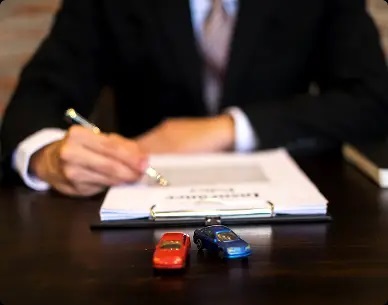
Improved vehicle valuation systems contribute to a more balanced lending process. Accurate assessments ensure that loan offers reflect the real value of the vehicle used as collateral.
These valuation methods benefit both lenders and borrowers by reducing risk and promoting fairness in loan offers. Reliable data helps create more transparent lending relationships.
Flexible repayment arrangements can also help borrowers manage their obligations more effectively. solution Structured payment plans allow individuals to gradually repay the loan while maintaining financial stability.
As digital finance continues evolving, lenders are investing in systems that simplify the borrowing process while maintaining security and regulatory compliance. User-friendly platforms remain central to modern lending services.
Access to flexible financial tools can help individuals manage temporary financial challenges. With proper planning and responsible use, secured lending can provide support during periods of financial uncertainty.
As the lending industry continues to evolve, companies like EZ Car Title Loans are working to improve accessibility, transparency, and borrower experience within the vehicle-backed financing market.
A vehicle (from Latin vehiculum)[1] is a machine designed for self-propulsion, usually to transport people, cargo, or both. The term "vehicle" typically refers to ground transport vehicles such as human-powered land vehicles (e.g. bicycles, tricycles, velomobiles), animal-powered transports (e.g. horse-drawn carriages/wagons, ox carts, dog sleds), motor vehicles (e.g. motorcycles, cars, trucks, buses, mobility scooters) and railed vehicles (trains, trams and monorails), but more broadly also includes cable transport (cable cars and elevators), watercraft (ships, boats and underwater vehicles), amphibious vehicles (e.g. screw-propelled vehicles, hovercraft, seaplanes), aircraft (airplanes, helicopters, gliders and aerostats) and space vehicles (spacecraft, spaceplanes and launch vehicles).[2]
This article primarily concerns the more ubiquitous land vehicles, which can be broadly classified by the type of contact interface with the ground: wheels, tracks, rails or skis, as well as the non-contact technologies such as maglev. ISO 3833-1977 is the international standard for road vehicle types, terms and definitions.[3]
It is estimated by historians that boats have been used since prehistory; rock paintings depicting boats, dated from around 50,000 to 15,000 BC, were found in Australia.[4] The oldest boats found by archaeological excavation are logboats, with the oldest logboat found, the Pesse canoe found in a bog in the Netherlands, being carbon dated to 8040–7510 BC, making it 9,500–10,000 years old,[5][6][7][8] A 7,000 year-old seagoing boat made from reeds and tar has been found in Kuwait.[9] Boats were used between 4000 -3000 BC in Sumer,[10] ancient Egypt[11] and in the Indian Ocean.[10]
There is evidence of camel pulled wheeled vehicles about 4000–3000 BC.[12] The earliest evidence of a wagonway, a predecessor of the railway, found so far was the 6 to 8.5 km (4 to 5 mi) long Diolkos wagonway, which transported boats across the Isthmus of Corinth in Greece since around 600 BC.[13][14] Wheeled vehicles pulled by men and animals ran in grooves in limestone, which provided the track element, preventing the wagons from leaving the intended route.[14]
In 200 CE, Ma Jun built a south-pointing chariot, a vehicle with an early form of guidance system.[15] The stagecoach, a four-wheeled vehicle drawn by horses, originated in 13th century England.[16]
Railways began reappearing in Europe during the Late Middle Ages.[citation needed] The earliest known record of a railway in Europe from this period is a stained-glass window in the Minster of Freiburg im Breisgau dating from around 1350.[17] In 1515, Cardinal Matthäus Lang wrote a description of the Reisszug, a funicular railway at the Hohensalzburg Fortress in Austria. The line originally used wooden rails and a hemp haulage rope and was operated by human or animal power, through a treadwheel.[18][19] 1769: Nicolas-Joseph Cugnot is often credited with building the first self-propelled mechanical vehicle or automobile in 1769.[20]
In Russia, in the 1780s, Ivan Kulibin developed a human-pedalled, three-wheeled carriage with modern features such as a flywheel, brake, gear box and bearings; however, it was not developed further.[21]
In 1783, the Montgolfier brothers developed the first balloon vehicle.
In 1801, Richard Trevithick built and demonstrated his Puffing Devil road locomotive, which many believe was the first demonstration of a steam-powered road vehicle, though it could not maintain sufficient steam pressure for long periods and was of little practical use. In 1817, The Laufmaschine ("running machine"), invented by the German Baron Karl von Drais, became the first human means of transport to make use of the two-wheeler principle. It is regarded as the forerunner of the modern bicycle (and motorcycle).[22] In 1885, Karl Benz built (and subsequently patented) the Benz Patent-Motorwagen, the first automobile, powered by his own four-stroke cycle gasoline engine.
In 1885, Otto Lilienthal began experimental gliding and achieved the first sustained, controlled, reproducible flights. In 1903, the Wright brothers flew the Wright Flyer, the first controlled, powered aircraft, in Kitty Hawk, North Carolina. In 1907, Gyroplane No.I became the first tethered rotorcraft to fly. The same year, the Cornu helicopter became the first rotorcraft to achieve free flight.[23]
In 1928, Opel initiated the Opel-RAK program, the first large-scale rocket program. The Opel RAK.1 became the first rocket car; the following year, it also became the first rocket-powered aircraft. In 1961, the Soviet space program's Vostok 1 carried Yuri Gagarin into space. In 1969, NASA's Apollo 11 achieved the first Moon landing.
In 2010, the number of motor vehicles in operation worldwide surpassed 1 billion, roughly one for every seven people.[24]


There are over 1 billion bicycles in use worldwide.[25] In 2002 there were an estimated 590 million cars and 205 million motorcycles in service in the world.[26][27] At least 500 million Chinese Flying Pigeon bicycles have been made, more than any other single model of vehicle.[28][29] The most-produced model of motor vehicle is the Honda Super Cub motorcycle, having sold 60 million units in 2008.[30][31] The most-produced car model is the Toyota Corolla, with at least 35 million made by 2010.[32][33] The most common fixed-wing airplane is the Cessna 172, with about 44,000 having been made as of 2017.[34][35] The Soviet Mil Mi-8, at 17,000, is the most-produced helicopter.[36] The top commercial jet airliner is the Boeing 737, at about 10,000 in 2018.[37][38][39] At around 14,000 for both, the most produced trams are the KTM-5 and Tatra T3.[40] The most common trolleybus is ZiU-9.
Locomotion consists of a means that allows displacement with little opposition, a power source to provide the required kinetic energy and a means to control the motion, such as a brake and steering system. By far, most vehicles use wheels which employ the principle of rolling to enable displacement with very little rolling friction.

It is essential that a vehicle have a source of energy to drive it. Energy can be extracted from external sources, as in the cases of a sailboat, a solar-powered car, or an electric streetcar that uses overhead lines. Energy can also be stored, provided it can be converted on demand and the storing medium's energy density and power density are sufficient to meet the vehicle's needs.
Human power is a simple source of energy that requires nothing more than humans. Despite the fact that humans cannot exceed 500 W (0.67 hp) for meaningful amounts of time,[41] the land speed record for human-powered vehicles (unpaced) is 133 km/h (83 mph), as of 2009 on a recumbent bicycle.[42]
The energy source used to power vehicles is fuel. External combustion engines can use almost anything that burns as fuel, whilst internal combustion engines and rocket engines are designed to burn a specific fuel, typically gasoline, diesel or ethanol. Food is the fuel used to power non-motor vehicles such as cycles, rickshaws and other pedestrian-controlled vehicles.
Another common medium for storing energy is batteries, which have the advantages of being responsive, useful in a wide range of power levels, environmentally friendly, efficient, simple to install, and easy to maintain. Batteries also facilitate the use of electric motors, which have their own advantages. On the other hand, batteries have low energy densities, short service life, poor performance at extreme temperatures, long charging times, and difficulties with disposal (although they can usually be recycled). Like fuel, batteries store chemical energy and can cause burns and poisoning in event of an accident.[43] Batteries also lose effectiveness with time.[44] The issue of charge time can be resolved by swapping discharged batteries with charged ones;[45] however, this incurs additional hardware costs and may be impractical for larger batteries. Moreover, there must be standard batteries for battery swapping to work at a gas station. Fuel cells are similar to batteries in that they convert from chemical to electrical energy, but have their own advantages and disadvantages.
Electrified rails and overhead cables are a common source of electrical energy on subways, railways, trams, and trolleybuses. Solar energy is a more modern development, and several solar vehicles have been successfully built and tested, including Helios, a solar-powered aircraft.
Nuclear power is a more exclusive form of energy storage, currently limited to large ships and submarines, mostly military. Nuclear energy can be released by a nuclear reactor, nuclear battery, or repeatedly detonating nuclear bombs. There have been two experiments with nuclear-powered aircraft, the Tupolev Tu-119 and the Convair X-6.
Mechanical strain is another method of storing energy, whereby an elastic band or metal spring is deformed and releases energy as it is allowed to return to its ground state. Systems employing elastic materials suffer from hysteresis, and metal springs are too dense to be useful in many cases.[clarification needed]
Flywheels store energy in a spinning mass. Because a light and fast rotor is energetically favorable, flywheels can pose a significant safety hazard. Moreover, flywheels leak energy fairly quickly and affect a vehicle's steering through the gyroscopic effect. They have been used experimentally in gyrobuses.
Wind energy is used by sailboats and land yachts as the primary source of energy. It is very cheap and fairly easy to use, the main issues being dependence on weather and upwind performance. Balloons also rely on the wind to move horizontally. Aircraft flying in the jet stream may get a boost from high altitude winds.
Compressed gas is currently an experimental method of storing energy. In this case, compressed gas is simply stored in a tank and released when necessary. Like elastics, they have hysteresis losses when gas heats up during compression.
Gravitational potential energy is a form of energy used in gliders, skis, bobsleds and numerous other vehicles that go down hill. Regenerative braking is an example of capturing kinetic energy where the brakes of a vehicle are augmented with a generator or other means of extracting energy.[46]

When needed, the energy is taken from the source and consumed by one or more motors or engines. Sometimes there is an intermediate medium, such as the batteries of a diesel submarine.[47]
Most motor vehicles have internal combustion engines. They are fairly cheap, easy to maintain, reliable, safe and small. Since these engines burn fuel, they have long ranges but pollute the environment. A related engine is the external combustion engine. An example of this is the steam engine. Aside from fuel, steam engines also need water, making them impractical for some purposes. Steam engines also need time to warm up, whereas IC engines can usually run right after being started, although this may not be recommended in cold conditions. Steam engines burning coal release sulfur into the air, causing harmful acid rain.[48]
While intermittent internal combustion engines were once the primary means of aircraft propulsion, they have been largely superseded by continuous internal combustion engines, such as gas turbines. Turbine engines are light and, particularly when used on aircraft, efficient.[49] On the other hand, they cost more and require careful maintenance. They can also be damaged by ingesting foreign objects, and they produce a hot exhaust. Trains using turbines are called gas turbine-electric locomotives. Examples of surface vehicles using turbines are M1 Abrams, MTT Turbine SUPERBIKE and the Millennium. Pulse jet engines are similar in many ways to turbojets but have almost no moving parts. For this reason, they were very appealing to vehicle designers in the past; however, their noise, heat, and inefficiency have led to their abandonment. A historical example of the use of a pulse jet was the V-1 flying bomb. Pulse jets are still occasionally used in amateur experiments. With the advent of modern technology, the pulse detonation engine has become practical and was successfully tested on a Rutan VariEze. While the pulse detonation engine is much more efficient than the pulse jet and even turbine engines, it still suffers from extreme noise and vibration levels. Ramjets also have few moving parts, but they only work at high speed, so their use is restricted to tip jet helicopters and high speed aircraft such as the Lockheed SR-71 Blackbird.[50][51]
Rocket engines are primarily used on rockets, rocket sleds and experimental aircraft. Rocket engines are extremely powerful. The heaviest vehicle ever to leave the ground, the Saturn V rocket, was powered by five F-1 rocket engines generating a combined 180 million horsepower[52] (134.2 gigawatt). Rocket engines also have no need to "push off" anything, a fact that the New York Times denied in error. Rocket engines can be particularly simple, sometimes consisting of nothing more than a catalyst, as in the case of a hydrogen peroxide rocket.[53] This makes them an attractive option for vehicles such as jet packs. Despite their simplicity, rocket engines are often dangerous and susceptible to explosions. The fuel they run off may be flammable, poisonous, corrosive or cryogenic. They also suffer from poor efficiency. For these reasons, rocket engines are only used when absolutely necessary.[citation needed]
Electric motors are used in electric vehicles such as electric bicycles, electric scooters, small boats, subways, trains, trolleybuses, trams and experimental aircraft. Electric motors can be very efficient: over 90% efficiency is common.[54] Electric motors can also be built to be powerful, reliable, low-maintenance and of any size. Electric motors can deliver a range of speeds and torques without necessarily using a gearbox (although it may be more economical to use one). Electric motors are limited in their use chiefly by the difficulty of supplying electricity.[citation needed]
Compressed gas motors have been used on some vehicles experimentally. They are simple, efficient, safe, cheap, reliable and operate in a variety of conditions. One of the difficulties met when using gas motors is the cooling effect of expanding gas. These engines are limited by how quickly they absorb heat from their surroundings.[55] The cooling effect can, however, double as air conditioning. Compressed gas motors also lose effectiveness with falling gas pressure.[citation needed]
Ion thrusters are used on some satellites and spacecraft. They are only effective in a vacuum, which limits their use to spaceborne vehicles. Ion thrusters run primarily off electricity, but they also need a propellant such as caesium, or, more recently xenon.[56][57] Ion thrusters can achieve extremely high speeds and use little propellant; however, they are power-hungry.[58]
The mechanical energy that motors and engines produce must be converted to work by wheels, propellers, nozzles, or similar means. Aside from converting mechanical energy into motion, wheels allow a vehicle to roll along a surface and, with the exception of railed vehicles, to be steered.[59] Wheels are ancient technology, with specimens being discovered from over 5000 years ago.[60] Wheels are used in a plethora of vehicles, including motor vehicles, armoured personnel carriers, amphibious vehicles, airplanes, trains, skateboards and wheelbarrows.
Nozzles are used in conjunction with almost all reaction engines.[61] Vehicles using nozzles include jet aircraft, rockets, and personal watercraft. While most nozzles take the shape of a cone or bell,[61] some unorthodox designs have been created such as the aerospike. Some nozzles are intangible, such as the electromagnetic field nozzle of a vectored ion thruster.[62]
Continuous track is sometimes used instead of wheels to power land vehicles. Continuous track has the advantages of a larger contact area, easy repairs on small damage, and high maneuverability.[63] Examples of vehicles using continuous tracks are tanks, snowmobiles and excavators. Two continuous tracks used together allow for steering. The largest land vehicle in the world,[64] the Bagger 293, is propelled by continuous tracks.
Propellers (as well as screws, fans and rotors) are used to move through a fluid. Propellers have been used as toys since ancient times; however, it was Leonardo da Vinci who devised what was one of the earliest propeller driven vehicles, the "aerial-screw".[65] In 1661, Toogood & Hays adopted the screw for use as a ship propeller.[66] Since then, the propeller has been tested on many terrestrial vehicles, including the Schienenzeppelin train and numerous cars.[67] In modern times, propellers are most prevalent on watercraft and aircraft, as well as some amphibious vehicles such as hovercraft and ground-effect vehicles. Intuitively, propellers cannot work in space as there is no working fluid; however, some sources have suggested that since space is never empty, a propeller could be made to work in space.[68]
Similarly to propeller vehicles, some vehicles use wings for propulsion. Sailboats and sailplanes are propelled by the forward component of lift generated by their sails/wings.[69][70] Ornithopters also produce thrust aerodynamically. Ornithopters with large rounded leading edges produce lift by leading-edge suction forces.[71] Research at the University of Toronto Institute for Aerospace Studies[72] lead to a flight with an actual ornithopter on July 31, 2010.
Paddle wheels are used on some older watercraft and their reconstructions. These ships were known as paddle steamers. Because paddle wheels simply push against the water, their design and construction is very simple. The oldest such ship in scheduled service is the Skibladner.[73] Many pedalo boats also use paddle wheels for propulsion.
Screw-propelled vehicles are propelled by auger-like cylinders fitted with helical flanges. Because they can produce thrust on both land and water, they are commonly used on all-terrain vehicles. The ZiL-2906 was a Soviet-designed screw-propelled vehicle designed to retrieve cosmonauts from the Siberian wilderness.[74]
All or almost all of the useful energy produced by the engine is usually dissipated as friction; so minimizing frictional losses is very important in many vehicles. The main sources of friction are rolling friction and fluid drag (air drag or water drag).
Wheels have low bearing friction, and pneumatic tires give low rolling friction. Steel wheels on steel tracks are lower still.[75]
Aerodynamic drag can be reduced by streamlined design features.
Friction is desirable and important in supplying traction to facilitate motion on land. Most land vehicles rely on friction for accelerating, decelerating and changing direction. Sudden reductions in traction can cause loss of control and accidents.
Most vehicles, with the notable exception of railed vehicles, have at least one steering mechanism. Wheeled vehicles steer by angling their front[76] or rear[77] wheels. The B-52 Stratofortress has a special arrangement in which all four main wheels can be angled.[78] Skids can also be used to steer by angling them, as in the case of a snowmobile. Ships, boats, submarines, dirigibles and aeroplanes usually have a rudder for steering. On an airplane, ailerons are used to bank the airplane for directional control, sometimes assisted by the rudder.

With no power applied, most vehicles come to a stop due to friction. But it is often required to stop a vehicle faster than by friction alone, so almost all vehicles are equipped with a braking system. Wheeled vehicles are typically equipped with friction brakes, which use the friction between brake pads (stators) and brake rotors to slow the vehicle.[46] Many airplanes have high-performance versions of the same system in their landing gear for use on the ground. A Boeing 757 brake, for example, has 3 stators and 4 rotors.[79] The Space Shuttle also uses frictional brakes on its wheels.[80] As well as frictional brakes, hybrid and electric cars, trolleybuses and electric bicycles can also use regenerative brakes to recycle some of the vehicle's potential energy.[46] High-speed trains sometimes use frictionless Eddy-current brakes; however, widespread application of the technology has been limited by overheating and interference issues.[81]
Aside from landing gear brakes, most large aircraft have other ways of decelerating. In aircraft, air brakes are aerodynamic surfaces that provide braking force by increasing the frontal cross section, thus increasing the increasing the aerodynamic drag of the aircraft. These are usually implemented as flaps that oppose air flow when extended and are flush with the aircraft when retracted. Reverse thrust is also used in many aeroplane engines. Propeller aircraft achieve reverse thrust by reversing the pitch of the propellers, while jet aircraft do so by redirecting their engine exhausts forward.[82] On aircraft carriers, arresting gears are used to stop an aircraft. Pilots may even apply full forward throttle on touchdown, in case the arresting gear does not catch and a go around is needed.[83]
Parachutes are used to slow down vehicles travelling very fast. Parachutes have been used in land, air and space vehicles such as the ThrustSSC, Eurofighter Typhoon and Apollo Command Module. Some older Soviet passenger jets had braking parachutes for emergency landings.[84] Boats use similar devices called sea anchors to maintain stability in rough seas.
To further increase the rate of deceleration or where the brakes have failed, several mechanisms can be used to stop a vehicle. Cars and rolling stock usually have hand brakes that, while designed to secure an already parked vehicle, can provide limited braking should the primary brakes fail. A secondary procedure called forward-slip is sometimes used to slow airplanes by flying at an angle, causing more drag.
Motor vehicle and trailer categories are defined according to the following international classification:[85]
In the European Union the classifications for vehicle types are defined by:[86]
European Community is based on the Community's WVTA (whole vehicle type-approval) system. Under this system, manufacturers can obtain certification for a vehicle type in one Member State if it meets the EC technical requirements and then market it EU-wide with no need for further tests. Total technical harmonization already has been achieved in three vehicle categories (passenger cars, motorcycles, and tractors) and soon will extend to other vehicle categories (coaches and utility vehicles). It is essential that European car manufacturers be ensured access to as large a market as possible.
While the Community type-approval system allows manufacturers to fully benefit fully from internal market opportunities, worldwide technical harmonization in the context of the United Nations Economic Commission for Europe (UNECE) offers a market beyond European borders.
In many cases, it is unlawful to operate a vehicle without a license or certification. The least strict form of regulation usually limits what passengers the driver may carry or prohibits them completely (e.g., a Canadian ultralight license without endorsements).[89] The next level of licensing may allow passengers, but without any form of compensation or payment. A private driver's license usually has these conditions. Commercial licenses that allow the transport of passengers and cargo are more tightly regulated. The most strict form of licensing is generally reserved for school buses, hazardous materials transports and emergency vehicles.
The driver of a motor vehicle is typically required to hold a valid driver's license while driving on public lands, whereas the pilot of an aircraft must have a license at all times, regardless of where in the jurisdiction the aircraft is flying.
Vehicles are often required to be registered. Registration may be for purely legal reasons, for insurance reasons, or to help law enforcement recover stolen vehicles. The Toronto Police Service, for example, offers free and optional bicycle registration online.[90] On motor vehicles, registration often takes the form of a vehicle registration plate, which makes it easy to identify a vehicle. In Russia, trucks and buses have their licence plate numbers repeated in large black letters on the back.[citation needed] On aircraft, a similar system is used, where a tail number is painted on various surfaces. Like motor vehicles and aircraft, watercraft also have registration numbers in most jurisdictions; however, the vessel name is still the primary means of identification as has been the case since ancient times. For this reason, duplicate registration names are generally rejected. In Canada, boats with an engine power of 10 hp (7.5 kW) or greater require registration,[91] leading to the ubiquitous "9.9 hp (7.4 kW)" engine.
Registration may be conditional on the vehicle being approved for use on public highways, as in the case of the UK[92] and Ontario.[93] Many U.S. states also have requirements for vehicles operating on public highways.[94] Aircraft have more stringent requirements, as they pose a high risk of damage to people and property in the event of an accident. In the U.S., the FAA requires aircraft to have an airworthiness certificate.[95][96] Because U.S. aircraft must be flown for some time before they are certified,[97] there is a provision for an experimental airworthiness certificate.[98] FAA experimental aircraft are restricted in operation, including no overflights of populated areas, in busy airspace, or with unessential passengers.[97] Materials and parts used in FAA certified aircraft must meet the criteria set forth by the technical standard orders.[99]
 |
In many jurisdictions, the operator of a vehicle is legally obligated to carry safety equipment with or on them. Common examples include seat belts in cars, helmets on motorcycles and bicycles, fire extinguishers on boats, buses and airplanes, and life jackets on boats and commercial aircraft. Passenger aircraft carry a great deal of safety equipment, including inflatable slides, rafts, oxygen masks, oxygen tanks, life jackets, satellite beacons and first aid kits. Some equipment, such as life jackets has led to debate regarding their usefulness. In the case of Ethiopian Airlines Flight 961, the life jackets saved many people but also led to many deaths when passengers inflated their vests prematurely.
There are specific real-estate arrangements made to allow vehicles to travel from one place to another. The most common arrangements are public highways, where appropriately licensed vehicles can navigate without hindrance. These highways are on public land and are maintained by the government. Similarly, toll routes are open to the public after paying a toll. These routes and the land they rest on may be government-owned, privately owned or a combination of both. Some routes are privately owned but grant access to the public. These routes often have a warning sign stating that the government does not maintain them. An example of this are byways in England and Wales. In Scotland, land is open to unmotorized vehicles if it meets certain criteria. Public land is sometimes open to use by off-road vehicles. On U.S. public land, the Bureau of Land Management (BLM) decides where vehicles may be used.
Railways often pass over land not owned by the railway company. The right to this land is granted to the railway company through mechanisms such as easement. Watercraft are generally allowed to navigate public waters without restriction as long as they do not cause a disturbance. Passing through a lock, however, may require paying a toll.
Despite the common law tradition Cuius est solum, eius est usque ad coelum et ad inferos of owning all the air above one's property, the U.S. Supreme Court ruled that aircraft in the U.S. have the right to use air above someone else's property without their consent. While the same rule generally applies in all jurisdictions, some countries, such as Cuba and Russia, have taken advantage of air rights on a national level to earn money.[100] There are some areas that aircraft are barred from overflying. This is called prohibited airspace. Prohibited airspace is usually strictly enforced due to potential damage from espionage or attack. In the case of Korean Air Lines Flight 007, the airliner entered prohibited airspace over Soviet territory and was shot down as it was leaving.[101]
Several different metrics used to compare and evaluate the safety of different vehicles. The main three are deaths per billion passenger-journeys, deaths per billion passenger-hours and deaths per billion passenger-kilometers.
cite news: CS1 maint: deprecated archival service (link)cite web: CS1 maint: deprecated archival service (link)The ion thrusters use electromagnetic fields to vector the engine exhaust
cite web: CS1 maint: url-status (link)
|
|||||||||||||||||||||||||||||||||
|
|||||||||||||||||||||||||||||||||
|
|||||||||||||||||||||||||||||||||
| International | |
|---|---|
| National | |
| Other | |
| Personal finance |
|---|
 |
| Credit · Debt |
| Employment contract |
| Retirement |
| Personal budget and investment |
|
| See also |
|
A title loan (also known as a car title loan) is a type of secured loan where borrowers can use their vehicle title as collateral.[1] Borrowers who get title loans must allow a lender to place a lien on their car title, and temporarily surrender the hard copy of their vehicle title, in exchange for a loan amount.[2] When the loan is repaid, the lien is removed and the car title is returned to its owner. If the borrower defaults on their payments then the lender is liable to repossess the vehicle and sell it to repay the borrower's outstanding debt.
These loans are typically short-term and tend to carry higher interest rates than other sources of credit. Lenders typically do not check the credit history of borrowers for these loans and only consider the value and condition of the vehicle that is being used to secure it. Despite the secured nature of the loan, lenders argue that the comparatively high rates of interest that they charge are necessary. As evidence for this, they point to the increased risk of default on a type of loan that is used almost exclusively by borrowers who are already experiencing financial difficulties.
Most title loans can be acquired in 15 minutes or less on loan amounts as little as $100. Most other financial institutions will not loan under $1,000 to someone without any credit as they deem these not profitable and too risky. In addition to verifying the borrower's collateral, many lenders verify that the borrower is employed or has some source of regular income. The lenders do not generally consider the borrower's credit score.
Title loans first emerged in the early 1990s and opened a new market to individuals with poor credit and have grown increasingly popular, according to studies by the Center for Responsible Lending and Consumer Federation of America.[3] They are the cousin of unsecured loans, such as payday loans. Since borrowers use their car titles to secure the loans, there's risk that the borrower can lose their vehicle by defaulting on their payments due to personal circumstances or high interest rates, which almost always have APR in the triple digits—what are sometimes called "balloon payments".
Alternative title lending exists in many states known as car title pawn or auto pawn as they are called. Similar to a traditional car title loan, a car title pawn uses both the car title and the physical vehicle (which is usually stored by the lender) to secure the loan much like any secured loan works, and there are the same risk and factors involved for the borrower but in most cases they will receive more cash in the transaction since the lender has both the vehicle and title in their possession.
A borrower will seek the services of a lender either online or at a store location. In order to secure the loan the borrower will need to have certain forms of identification such as a valid government-issued ID like a driver's license, proof of income, some form of mail to prove residency, car registration, a lien-free car title in their name, references, and car insurance, though not all states require lenders to show proof of auto insurance.
The maximum amount of the loan is determined by the collateral. Typical lenders will offer up to half of the car's resale value, though some will go higher. Most lenders use Kelley Blue Book to find the resale value of vehicles.[4] The borrower must hold clear title to the car; this means that the car must be paid in full with no liens or current financing. Most lenders will also require the borrower to have full insurance on the vehicle.
Depending on the state where the lender is located, interest rates may range from 36% to well over 100%. Payment schedules vary but at the very least the borrower has to pay the interest due at each due date. At the end of the term of the loan, the full outstanding amount may be due in a single payment. If the borrower is unable to repay the loan at this time, then they can roll the balance over, and take out a new title loan. Government regulation often limits the total number of times that a borrower can roll the loan over, so that they do not remain perpetually in debt.
If the borrower cannot pay back the loan or is late with his or her payments, the title loan lender may seek to take possession of the car and sell it to offset what is owed. Typically, lenders choose this option as a last resort because it may take months to recover the vehicle, and repossession, auction, and court costs all decrease the amount of money they are able to recoup.[5] During this time, the lender is not collecting payments yet the vehicle is depreciating. Most states require the title loan lender to hold the vehicle for 30 days to allow the borrower to recover it by paying the balance. Typically, any amount from the sale over the existing loan balance is returned to the defaulter.
Today, the internet has revolutionized how companies can reach their clientele, and many title loan companies offer online applications for pre-approval or approval on title loans. These applications require much of the same information and still may require a borrower to visit a store to pick up their money, usually in the form of a check. When filling out these applications, they may ask for things like the vehicle's Vehicle Identification Number (VIN) and/or insurance policy numbers.[6]
The amount a borrower can be loaned is dependent on the worth of their vehicle. A lender will typically look up the auction value of the car being used as collateral and offer a loan that's between 30% and 50% of the worth of the vehicle.[7] This leaves lenders a cushion to make profit if ever they need to repossess the vehicle and sell it at auction, in the event the borrower defaults.[8]
Title loans are not offered in all states. Some states have made them illegal because they are considered a welfare-reducing provision of credit, or predatory lending.[9] Other states, like Montana, have begun placing strict regulations on title loans by not allowing the APR to reach above 36%, down from the previous 400%. However, Montana has recently voted against allowing title loans in the state.
In 2008, New Hampshire passed a law capping APR at 36%.[10] Some companies claim their average loan amounts to be between $300 and $500, and had to shut down their store fronts in that state, or their business entirely, because their business could not survive on a low APR for low loan amounts. Since then, the law has been reversed and new growth in the title loan industry has emerged, allowing title loan lenders to charge 25% interest a month, or roughly 300% APR.[11]
States continue to vote on legislation allowing or disallowing title loans. Some states have no limit on the APR that title loan companies can charge, while others continue to crack down and push for stricter regulation. Early in 2012, Illinois recently voted to cap APR on title loans at 36%, with other provisions that would limit the title loan industry in the state. The vote did not pass, but voters and politicians in Illinois and other states continue in their convictions to regulate or outlaw title loans.[12]
The California State Assembly passed a law in 2020 that set an interest rate cap on all loans from $2,500-$10,000 with that title loans were included. In 2020 California State Assembly set a 30% cap on all auto title loans of at less than $2,500.[13]
Small-dollar-credit (SDC) refers to services offered by payday and title loan industries. In 2012, a study was conducted by the Center for Financial Services Innovation. According to the study, SDC consumers are generally less educated, have more children, and are based in the South, where there is a greater concentration of unbanked or underbanked people. In addition, there's a healthy spread of SDC consumers with a range of salaries—showing 20% of SDC consumers have a household income between $50,000 and $75,000. However, 45% of respondents to the survey would classify themselves as "poor".[14]
 |
Consumer advocacy groups and regulators have raised concerns about title loans, particularly regarding high interest rates, loan renewals, and borrower understanding of repayment terms.[15] Critics argue that some lenders do not clearly disclose the full cost of borrowing, which may lead borrowers to underestimate the financial obligations associated with small-dollar credit.
Title loans have frequently been compared to loan sharking due to their high annual percentage rates (APRs).[16] While many U.S. states have introduced restrictions on interest rates and lending practices, enforcement has proven challenging. Federal agencies such as the Consumer Financial Protection Bureau and the Federal Trade Commission have acknowledged limits to their authority in enforcing the Military Lending Act, which caps APRs for active-duty service members at 36% and restricts certain forms of secured lending.[17][18]
Some lenders have been reported to circumvent these restrictions by offering alternative loan structures, such as open-ended credit products, which may still carry triple-digit APRs.[19]
Research by advocacy organizations, including the Texas Fair Lending Alliance and the Center for Responsible Lending, suggests that repeated borrowing is common among title loan customers. A 2007 study by the Center for Responsible Lending found that 20% of title loan borrowers in Chicago had taken out a subsequent loan to repay a previous one from the same lender.[20] Similar concerns have been raised regarding state-level regulatory loopholes that allow lenders to operate under alternative business classifications.[21][22]
A report by The Pew Charitable Trusts found that among approximately 2 million U.S. consumers who obtain title loans, about one in nine default on their loans, with vehicle repossession occurring in an estimated 5–9% of default cases.[23]
cite news: CS1 maint: deprecated archival service (link)


