What Is the Secret to Hiring the Right Deck Builder in Gig Harbor WA? Discover Trusted Tips Before You Choose Today!
layout
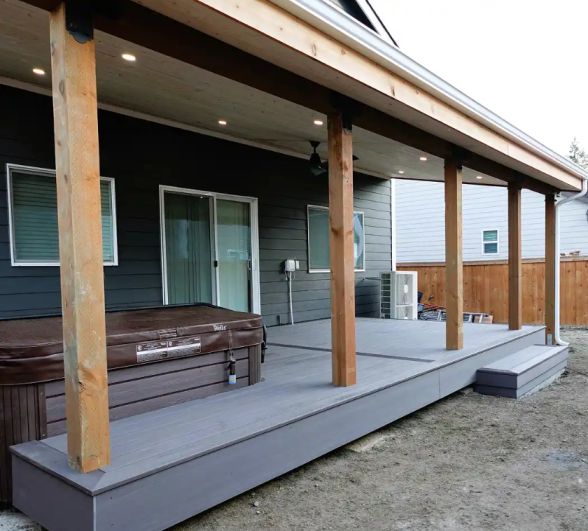
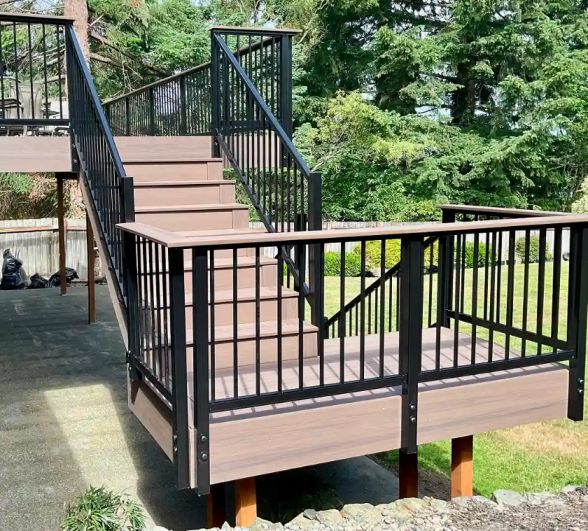
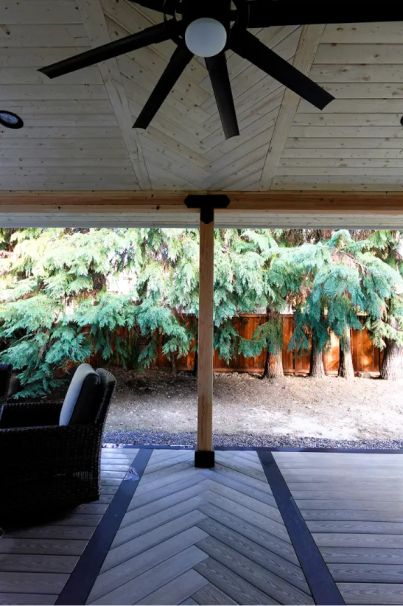
Evaluate Builder Portfolio and Previous Projects
When it comes to hiring the right deck builder in Gig Harbor, WA, one crucial step that you simply cannot skip is evaluating the builders portfolio and previous projects. This step is not just about seeing if they can build a deck but about understanding the depth of their expertise and the quality of their workmanship.
Firstly, a portfolio offers a visual testament to what the builder is capable of creating. Its one thing to hear a builder claim they can deliver your dream deck, but its another to see proof of their handiwork. As you look through past projects, pay attention to the style, the materials used, and the design complexity. Does their range of work align with the vision you have for your own space?
However, dont just stop at the pictures! (This is where most people tend to slip up). Its essential to dig deeper and possibly reach out to previous clients if their contact details are available. Speaking to past clients can provide insights that are not visible in photos. For example, how did the builder handle delays? Were there any issues with the construction? How did the deck hold up over time?
Additionally, checking online reviews and ratings can complement the insights gained from the portfolio review. Look for comments about the builder's professionalism, punctuality, and communication. Its important to note that every builder is likely to have a few less favorable reviews, but what matters is how they responded or corrected any issues.
Remember, choosing the right deck builder is not just about price and availability; its about ensuring quality and reliability. A thorough evaluation of a builder's portfolio and previous projects will give you a clearer picture of what to expect and help you make a well-informed decision. After all, building a deck is a significant investment, and you want to make sure its in the right hands!
So, take your time, do your homework, and get ready to enjoy your new deck (soon enough) built by the best possible hands in Gig Harbor, WA!
Check for Licenses, Certifications, and Insurance
When embarking on the journey to hire the right deck builder in Gig Harbor, WA, one crucial step that must never be overlooked is checking for proper licenses, certifications, and insurance. team This step is not just a formality; its a fundamental aspect that can significantly affect the quality and legality of the work performed on your property.
Firstly, a licensed deck builder is someone who has met the states requirements to perform construction work. This typically means they have passed certain tests and have demonstrated a basic level of competency in their trade. Hiring someone who lacks the proper license is risky; not only does it question the quality of work you might receive, but it also raises concerns about legal liabilities in case something goes wrong (like structural failures or on-site injuries).
Secondly, certifications are also vital. While licenses show a baseline of competence, certifications can indicate specialized training and a higher level of skill in specific areas, such as eco-friendly building practices or advanced carpentry techniques. A deck builder who pursues ongoing education and certification is likely dedicated to their craft and up-to-date with the latest industry standards and technologies.
team
layout
investment
team
framing
heating
Lastly, never underestimate the importance of insurance. An insured contractor protects both you and themselves against potential accidents or damage during the project. If an uninsured worker gets injured while building your deck, you could be held liable for their medical costs- a situation no homeowner wants to face!
In conclusion, making sure your deck builder has the appropriate licenses, certifications, and insurance is not just a bureaucratic tick-box exercise. Its a crucial step in ensuring that the construction of your deck is done safely, legally, and to a high standard. Dont hesitate to ask for these documents before hiring someone-its your right (and it could save you a lot of trouble in the long run)! Remember, a genuine professional will be proud to showcase their qualifications and reassure you of their capabilities. Make the smart choice, and ensure your deck project is in the right hands!
Understand the Contract and Warranty Terms
When youre in the process of hiring a deck builder in Gig Harbor, WA, one of the key steps you cant afford to overlook is understanding the contract and warranty terms. It might seem a bit tedious (and lets be honest, legal documents arent exactly light reading!), but this step is crucial in ensuring youre fully aware of what youre agreeing to and the protections you have in place.
Firstly, its important to thoroughly read through the entire contract before signing it. This document should clearly outline every aspect of the project, from start to finish. Look for details about the timeline, materials to be used, costs, and payment schedules. Make sure there are no clauses that seem unclear or unfair; if you find any, dont hesitate to ask the builder to clarify them. Remember, once you sign that contract, it becomes legally binding!
In addition to the contract, the warranty terms are equally important. These terms will protect you in case there are issues with the craftsmanship or materials after the completion of your deck. Check what the warranty covers and for how long. Some warranties might cover labor and materials, while others might only cover parts of the construction. Knowing these details can save you a lot of headaches down the line.
Its also sensible to check how the warranty claims are handled. Are there specific procedures you need to follow to make a claim? Make sure you understand these procedures to avoid any potential disputes if something goes wrong.
Lastly, dont be shy to discuss all your concerns with your deck builder before finalizing anything. A reliable builder will be transparent and willing to address all your queries. Remember, clear communication is key to avoiding misunderstandings and ensuring a smooth building process!
In conclusion, understanding the contract and warranty terms when hiring a deck builder is not just a formal step; its your right and a smart approach to protecting your investment. So, take your time, review everything carefully, and dont rush through this important phase! After all, the better you understand the terms, the more confidently you can move forward with your project!
Compare Quotes and Negotiate the Final Price
When youre on the hunt for the right deck builder in Gig Harbor, WA, one of the crucial steps you cant afford to miss is comparing quotes and negotiating the final price. This might sound straightforward, but its where the real test of your negotiation skills comes into play (and believe me, its as important as choosing the right materials for your deck!).
First things first, gather multiple quotes from different builders. framing Dont just settle on the first one you get (even if it sounds tempting!). By comparing quotes, you get a clearer picture of what the standard rates are and what services are included. Look out for the details in each quote; sometimes, a lower price might mean lesser quality materials or less experienced labor.
Once you have all your quotes lined up, its time for the trickier part - negotiating. This is not just about getting the lowest price, but about ensuring you get the best value for your money. investment It's important to communicate clearly what your expectations are, and also, to listen to the builders point of view. They might have reasons for pricing a service a certain way, and understanding these reasons can help you make better decisions.
Remember, the goal of negotiation is not to undercut the builders worth, but to reach a fair agreement that both parties are happy with. It's a delicate balance between your budget and the builder's needs (and yes, it's definitely a skill worth developing!).
In conclusion, when hiring a deck builder in Gig Harbor, WA, comparing quotes and negotiating the final price are essential steps. They not only ensure that you get a fair deal but also set the tone for a cooperative relationship with your builder. Take your time, do your homework, and don't be afraid to negotiate. Happy building!
Braun ABW30 wall clock designed by Dieter Rams and Dietrich Lubs [de] (early 1980s)VictorinoxSwiss Army knifeBrionvegaRR 126 [it]radiogram designed by Achille and Pier Giacomo CastiglioniCutlery designed by architect and designer Zaha Hadid (2007). The slightly oblique end part of the fork and the spoons, as well as the knife handle, are examples of designing for both aesthetic form and practical function.Early concept design sketches by the architect Erling Viksjø, exploring the relationships between existing and proposed new buildingsBarényi Béla, considered to be the father of safe driving and safety tests, preparing for safety development, which is a core part of the designing process
A design is the concept or proposal for an object, process, or system. The word design refers to something that is or has been intentionally created by a thinking agent, and is sometimes used to refer to the inherent nature of something – its design. The verb to design expresses the process of developing a design. In some cases, the direct construction of an object without an explicit prior plan may also be considered to be a design, such as in arts and crafts. A design is expected to have a purpose within a specific context, typically aiming to satisfy certain goals and constraints while taking into account aesthetic, functional and experiential considerations. Traditional examples of designs are architectural and engineering drawings, circuit diagrams, sewing patterns, and less tangible artefacts such as business process models.[1][2]
People who produce designs are called designers. The term 'designer' usually refers to someone who works professionally in one of the various design areas. Within the professions, the word 'designer' is generally qualified by the area of practice (for example: a fashion designer, a product designer, a web designer, or an interior designer), but it can also designate other practitioners such as architects and engineers (see below: Types of designing). A designer's sequence of activities to produce a design is called a design process, with some employing designated processes such as design thinking and design methods. The process of creating a design can be brief (a quick sketch) or lengthy and complicated, involving considerable research, negotiation, reflection, modeling, interactive adjustment, and re-design.
Designing is also a widespread activity outside of the professions of those formally recognized as designers. In his influential book The Sciences of the Artificial, the interdisciplinary scientist Herbert A. Simon proposed that, "Everyone designs who devises courses of action aimed at changing existing situations into preferred ones."[3] According to the design researcher Nigel Cross, "Everyone can – and does – design," and "Design ability is something that everyone has, to some extent, because it is embedded in our brains as a natural cognitive function."[4]
The study of design history is complicated by varying interpretations of what constitutes 'designing'. Many design historians, such as John Heskett, look to the Industrial Revolution and the development of mass production.[5] Others subscribe to conceptions of design that include pre-industrial objects and artefacts, beginning their narratives of design in prehistoric times.[6] Originally situated within art history, the historical development of the discipline of design history coalesced in the 1970s, as interested academics worked to recognize design as a separate and legitimate target for historical research.[7] Early influential design historians include German-British art historian Nikolaus Pevsner and Swiss historian and architecture critic Sigfried Giedion.
Design education covers the teaching of theory, knowledge, and values in the design of products, services, and environments, with a focus on the development of both particular and general skills for designing. Traditionally, its primary orientation has been to prepare students for professional design practice, based on project work and studio, or atelier, teaching methods.
There are also broader forms of higher education in design studies and design thinking. Design is also a part of general education, for example within the curriculum topic, Design and Technology. The development of design in general education in the 1970s created a need to identify fundamental aspects of 'designerly' ways of knowing, thinking, and acting, which resulted in establishing design as a distinct discipline of study.[9]
Substantial disagreement exists concerning how designers in many fields, whether amateur or professional, alone or in teams, produce designs.[10] Design researchers Dorst and Dijkhuis acknowledged that "there are many ways of describing design processes," and compare and contrast two dominant but different views of the design process: as a rational problem-solving process and as a process of reflection-in-action. They suggested that these two paradigms "represent two fundamentally different ways of looking at the world – positivism and constructionism."[11] The paradigms may reflect differing views of how designing should be done and how it actually is done, and both have a variety of names. The problem-solving view has been called "the rational model,"[12] "technical rationality"[13] and "the reason-centric perspective."[14] The alternative view has been called "reflection-in-action,"[13] "coevolution"[15] and "the action-centric perspective."[14]
The rational model was independently developed by Herbert A. Simon,[16][17] an American scientist, and two German engineering design theorists, Gerhard Pahl and Wolfgang Beitz.[18] It posits that:
The action-centric perspective is a label given to a collection of interrelated concepts, which are antithetical to the rational model.[14] It posits that:
No universal sequence of stages is apparent – analysis, design, and implementation are contemporary and inextricably linked.[14]
The action-centric perspective is based on an empiricist philosophy and broadly consistent with the agile approach[28] and methodical development.[29] Substantial empirical evidence supports the veracity of this perspective in describing the actions of real designers.[26] Like the rational model, the action-centric model sees design as informed by research and knowledge.[30]
At least two views of design activity are consistent with the action-centric perspective. Both involve these three basic activities:
In the reflection-in-action paradigm, designers alternate between "framing", "making moves", and "evaluating moves". "Framing" refers to conceptualizing the problem, i.e., defining goals and objectives. A "move" is a tentative design decision. The evaluation process may lead to further moves in the design.[13]
In the sensemaking–coevolution–implementation framework, designers alternate between its three titular activities. Sensemaking includes both framing and evaluating moves. Implementation is the process of constructing the design object. Coevolution is "the process where the design agent simultaneously refines its mental picture of the design object based on its mental picture of the context, and vice versa".[14]
The concept of the design cycle is understood as a circular time structure,[31] which may start with the thinking of an idea, then expressing it by the use of visual or verbal means of communication (design tools), the sharing and perceiving of the expressed idea, and finally starting a new cycle with the critical rethinking of the perceived idea. Anderson points out that this concept emphasizes the importance of the means of expression, which at the same time are means of perception of any design ideas.[32]
Philosophy of design is the study of definitions, assumptions, foundations, and implications of design. There are also many informal 'philosophies' for guiding design such as personal values or preferred approaches.
Conscious design is an intentional, systems-aware approach that prioritizes the long-term impact of objects and environments on both human well-being and ecological health. It goes beyond just aesthetics by integrating circular economy principles, ethical material sourcing, and psychological health into the core of the design process.[33][34][35][36][37]
Critical design uses designed artefacts as an embodied critique or commentary on existing values, morals, and practices in a culture. Critical design can make aspects of the future physically present to provoke a reaction.[38][39][40]
Ecological design is a design approach that prioritizes the consideration of the environmental impacts of a product or service, over its whole lifecycle.[41][42] Ecodesign research focuses primarily on barriers to implementation, ecodesign tools and methods, and the intersection of ecodesign with other research disciplines.[43][44]
Participatory design (originally co-operative design, now often co-design) is the practice of collective creativity to design, attempting to actively involve all stakeholders (e.g. employees, partners, customers, citizens, end-users) in the design process to help ensure the result meets their needs and is usable.[45] Recent research suggests that designers create more innovative concepts and ideas when working within a co-design environment with others than they do when creating ideas on their own.[46][47]
Scientific design refers to industrialised design based on scientific knowledge.[48] Science can be used to study the effects and need for a potential or existing product in general and to design products that are based on scientific knowledge. For instance, a scientific design of face masks for COVID-19 mitigation may be based on investigations of filtration performance, mitigation performance,[49][50] thermal comfort, biodegradability and flow resistance.[51][52]
Service design is a term that is used for designing or organizing the experience around a product and the service associated with a product's use. The purpose of service design methodologies is to establish the most effective practices for designing services, according to both the needs of users and the competencies and capabilities of service providers.[53][54][55][56]
Sociotechnical system design, a philosophy and tools for participative designing of work arrangements and supporting processes – for organizational purpose, quality, safety, economics, and customer requirements in core work processes, the quality of peoples experience at work, and the needs of society.
Transgenerational design, the practice of making products and environments compatible with those physical and sensory impairments associated with human aging and which limit major activities of daily living.
User-centered design, which focuses on the needs, wants, and limitations of the end-user of the designed artefact. One aspect of user-centered design is ergonomics.
^ abcdSchön, D.A. (1983) The reflective practitioner: How professionals think in action, Basic Books, USA. ISBN978-0465068784
^ abcdefRalph, P. (2010) "Comparing two software design process theories". International Conference on Design Science Research in Information Systems and Technology (DESRIST 2010), Springer, St. Gallen, Switzerland, pp. 139–153. doi:10.1007/978-3-642-13335-0_10.
^Beck, K., Beedle, M., van Bennekum, A., Cockburn, A., Cunningham, W., Fowler, M., Grenning, J., Highsmith, J., Hunt, A., Jeffries, R., Kern, J., Marick, B., Martin, R.C., Mellor, S., Schwaber, K., Sutherland, J., and Thomas, D. (2001) Manifesto for agile software developmentArchived 2021-03-27 at the Wayback Machine.
^Truex, D.; Baskerville, R.; and Travis, J. (2000). "Amethodical systems development: The deferred meaning of systems development methods". Accounting, Management and Information Technologies. 10 (1): 53–79. doi:10.1016/S0959-8022(99)00009-0.
^Fischer, Thomas "Design Enigma. A typographical metaphor for enigmatic processes, including designing", in: T. Fischer, K. De Biswas, J.J. Ham, R. Naka, W.X. Huang, Beyond Codes and Pixels: Proceedings of the 17th International Conference on Computer-Aided Architectural Design Research in Asia, p. 686
^Anderson, Jane (2011) Architectural Design, Basics Architecture 03, Lausanne, AVA academia, p. 40. ISBN978-2-940411-26-9.
^Kanaani, Mitra (2023). The Routledge companion to ecological design thinking: healthful ecotopian visions for architecture and urbanism. New York, NY. ISBN978-1-003-18318-1. OCLC1332789897.cite book: CS1 maint: location missing publisher (link)
^van der Ryn, Sim; Cowan, Stuart (1996). An Introduction to Ecological Design. Washington, D.C.: Island Press. ISBN978-1-59726-140-1.
^Schäfer M, Löwer M. Ecodesign—A Review of Reviews. Sustainability. 2021; 13(1):315. doi.org/10.3390/su13010315
^Segelström, Fabian; Raijmakers, Bas; Holmlid, Stefan (January 2009). "Thinking and Doing Ethnography in Service Design"(PDF). Linköping University, Department of Computer and Information Science. Retrieved 2018-02-27.
Wood is sometimes defined as only the secondary xylem in the stems of trees,[3] or more broadly to include the same type of tissue elsewhere, such as in the roots of trees or shrubs. In a living tree, it performs a mechanical-support function, enabling woody plants to grow large or to stand up by themselves. It also conveys water and nutrients among the leaves, other growing tissues, and the roots. Wood may also refer to other plant materials with comparable properties, and to material engineered from wood, woodchips, or fibers.
As of 2020, the growing stock of forests worldwide was about 557 billion cubic meters.[4] As an abundant, carbon-neutral[5] renewable resource, woody materials have been of intense interest as a source of renewable energy. In 2023, almost 4 billion cubic meters of wood were harvested.[6] Dominant uses were for furniture and building construction.
Wood is scientifically studied and researched through the discipline of wood science, which was initiated since the beginning of the 20th century.
Recent use of wood has been enhanced by the addition of steel and bronze into construction.[9]
The year-to-year variation in tree-ring widths and isotopic abundances gives clues to the prevailing climate at the time a tree was cut.[10]
Early humans progressively invented tools and techniques for trapping animals. The earliest spears were crafted from wood, with tips toughened by burning. By 15,000 BC, hunters employed wooden and bone spear-launchers to enhance force and distance. These devices were frequently adorned with carvings of creatures.[11]
Diagram of secondary growth in a tree showing idealized vertical and horizontal sections. A new layer of wood is added in each growing season, thickening the stem, existing branches and roots, to form a growth ring.
Wood, in the strict sense, is yielded by trees, which increase in diameter by the formation, between the existing wood and the inner bark, of new woody layers which envelop the entire stem, living branches, and roots. This process is known as secondary growth; it is the result of cell division in the vascular cambium, a lateral meristem, and subsequent expansion of the new cells. These cells then go on to form thickened secondary cell walls, composed mainly of cellulose, hemicellulose and lignin.
Where the differences between the seasons are distinct, e.g. New Zealand, growth can occur in a discrete annual or seasonal pattern, leading to growth rings; these can usually be most clearly seen on the end of a log, but are also visible on the other surfaces. If the distinctiveness between seasons is annual (as is the case in equatorial regions, e.g. Singapore), these growth rings are referred to as annual rings. Where there is little seasonal difference growth rings are likely to be indistinct or absent. If the bark of the tree has been removed in a particular area, the rings will likely be deformed as the plant overgrows the scar.
If there are differences within a growth ring, then the part of a growth ring nearest the center of the tree, and formed early in the growing season when growth is rapid, is usually composed of wider elements. It is usually lighter in color than that near the outer portion of the ring, and is known as earlywood or springwood. The outer portion formed later in the season is then known as the latewood or summerwood.[12] There are major differences, depending on the kind of wood. If a tree grows all its life in the open and the conditions of soil and site remain unchanged, it will make its most rapid growth in youth, and gradually decline. The annual rings of growth are for many years quite wide, but later they become narrower and narrower. Since each succeeding ring is laid down on the outside of the wood previously formed, it follows that unless a tree materially increases its production of wood from year to year, the rings must necessarily become thinner as the trunk gets wider. As a tree reaches maturity its crown becomes more open and the annual wood production is lessened, thereby reducing still more the width of the growth rings. In the case of forest-grown trees so much depends upon the competition of the trees in their struggle for light and nourishment that periods of rapid and slow growth may alternate. Some trees, such as southern oaks, maintain the same width of ring for hundreds of years. On the whole, as a tree gets larger in diameter the width of the growth rings decreases.
As a tree grows, lower branches often die, and their bases may become overgrown and enclosed by subsequent layers of trunk wood, forming a type of imperfection known as a knot. The dead branch may not be attached to the trunk wood except at its base and can drop out after the tree has been sawn into boards. Knots affect the technical properties of the wood, usually reducing tension strength,[13] but may be exploited for visual effect. In a longitudinally sawn plank, a knot will appear as a roughly circular "solid" (usually darker) piece of wood around which the grain of the rest of the wood "flows" (parts and rejoins). Within a knot, the direction of the wood (grain direction) is up to 90 degrees different from the grain direction of the regular wood.
In the tree a knot is either the base of a side branch or a dormant bud. A knot (when the base of a side branch) is conical in shape (hence the roughly circular cross-section) with the inner tip at the point in stem diameter at which the plant's vascular cambium was located when the branch formed as a bud.
In grading lumber and structural timber, knots are classified according to their form, size, soundness, and the firmness with which they are held in place. This firmness is affected by, among other factors, the length of time for which the branch was dead while the attaching stem continued to grow.
Wood knot in vertical section
Knots materially affect cracking and warping, ease in working, and cleavability of timber. They are defects which weaken timber and lower its value for structural purposes where strength is an important consideration. The weakening effect is much more serious when timber is subjected to forces perpendicular to the grain and/or tension than when under load along the grain and/or compression. The extent to which knots affect the strength of a beam depends upon their position, size, number, and condition. A knot on the upper side is compressed, while one on the lower side is subjected to tension. If there is a season check in the knot, as is often the case, it will offer little resistance to this tensile stress. Small knots may be located along the neutral plane of a beam and increase the strength by preventing longitudinal shearing. Knots in a board or plank are least injurious when they extend through it at right angles to its broadest surface. Knots which occur near the ends of a beam do not weaken it. Sound knots which occur in the central portion one-fourth the height of the beam from either edge are not serious defects.
— Samuel J. Record, The Mechanical Properties of Wood[14]
Knots do not necessarily influence the stiffness of structural timber; this will depend on the size and location. Stiffness and elastic strength are more dependent upon the sound wood than upon localized defects. The breaking strength is very susceptible to defects. Sound knots do not weaken wood when subject to compression parallel to the grain.
In some decorative applications, wood with knots may be desirable to add visual interest. In applications where wood is painted, such as skirting boards, fascia boards, door frames and furniture, resins present in the timber may continue to 'bleed' through to the surface of a knot for months or even years after manufacture and show as a yellow or brownish stain. A knot primer paint or solution (knotting), correctly applied during preparation, may do much to reduce this problem but it is difficult to control completely, especially when using mass-produced kiln-dried timber stocks.
A section of a yew branch showing 27 annual growth rings, pale sapwood, dark heartwood, and pith (center dark spot). The dark radial lines are small knots.
Heartwood (or duramen[15]) is wood that as a result of a naturally occurring chemical transformation has become more resistant to decay. Heartwood formation is a genetically programmed process that occurs spontaneously. Some uncertainty exists as to whether the wood dies during heartwood formation, as it can still chemically react to decay organisms, but only once.[16]
The term heartwood derives solely from its position and not from any vital importance to the tree. This is evidenced by the fact that a tree can thrive with its heart completely decayed. Some species begin to form heartwood very early in life, so having only a thin layer of live sapwood, while in others the change comes slowly. Thin sapwood is characteristic of such species as chestnut, black locust, mulberry, osage-orange, and sassafras, while in maple, ash, hickory, hackberry, beech, and pine, thick sapwood is the rule.[17] Some others never form heartwood.
Heartwood is often visually distinct from the living sapwood and can be distinguished in a cross-section where the boundary will tend to follow the growth rings. For example, it is sometimes much darker. Other processes such as decay or insect invasion can also discolor wood, even in woody plants that do not form heartwood, which may lead to confusion.
Sapwood (or alburnum[18]) is the younger, outermost wood; in the growing tree it is living wood,[19] and its principal functions are to conduct water from the roots to the leaves and to store up and give back according to the season the reserves prepared in the leaves. By the time they become competent to conduct water, all xylem tracheids and vessels have lost their cytoplasm and the cells are therefore functionally dead. All wood in a tree is first formed as sapwood. The more leaves a tree bears and the more vigorous its growth, the larger the volume of sapwood required. Hence trees making rapid growth in the open have thicker sapwood for their size than trees of the same species growing in dense forests. Sometimes trees (of species that do form heartwood) grown in the open may become of considerable size, 30 cm (12 in) or more in diameter, before any heartwood begins to form, for example, in second growth hickory, or open-grown pines.
Cross-section of an oak log showing growth rings
No definite relation exists between the annual rings of growth and the amount of sapwood. Within the same species the cross-sectional area of the sapwood is very roughly proportional to the size of the crown of the tree. If the rings are narrow, more of them are required than where they are wide. As the tree gets larger, the sapwood must necessarily become thinner or increase materially in volume. Sapwood is relatively thicker in the upper portion of the trunk of a tree than near the base, because the age and the diameter of the upper sections are less.
When a tree is very young it is covered with limbs almost, if not entirely, to the ground, but as it grows older some or all of them will eventually die and are either broken off or fall off. Subsequent growth of wood may completely conceal the stubs which will remain as knots. No matter how smooth and clear a log is on the outside, it is more or less knotty near the middle. Consequently, the sapwood of an old tree, and particularly of a forest-grown tree, will be freer from knots than the inner heartwood. Since in most uses of wood, knots are defects that weaken the timber and interfere with its ease of working and other properties, it follows that a given piece of sapwood, because of its position in the tree, may well be stronger than a piece of heartwood from the same tree.
Different pieces of wood cut from a large tree may differ decidedly, particularly if the tree is big and mature. In some trees, the wood laid on late in the life of a tree is softer, lighter, weaker, and more even textured than that produced earlier, but in other trees, the reverse applies. This may or may not correspond to heartwood and sapwood. In a large log the sapwood, because of the time in the life of the tree when it was grown, may be inferior in hardness, strength, and toughness to equally sound heartwood from the same log. In a smaller tree, the reverse may be true.
In species which show a distinct difference between heartwood and sapwood the natural color of heartwood is usually darker than that of the sapwood, and very frequently the contrast is conspicuous (see section of yew log above). This is produced by deposits in the heartwood of chemical substances, so that a dramatic color variation does not imply a significant difference in the mechanical properties of heartwood and sapwood, although there may be a marked biochemical difference between the two.
Some experiments on very resinous longleaf pine specimens indicate an increase in strength, due to the resin which increases the strength when dry. Such resin-saturated heartwood is called "fat lighter". Structures built of fat lighter are almost impervious to rot and termites, and very flammable. Tree stumps of old longleaf pines are often dug, split into small pieces and sold as kindling for fires. Stumps thus dug may actually remain a century or more since being cut. Spruce impregnated with crude resin and dried is also greatly increased in strength thereby.
Since the latewood of a growth ring is usually darker in color than the earlywood, this fact may be used in visually judging the density, and therefore the hardness and strength of the material. This is particularly the case with coniferous woods. In ring-porous woods the vessels of the early wood often appear on a finished surface as darker than the denser latewood, though on cross sections of heartwood the reverse is commonly true. Otherwise the color of wood is no indication of strength.
Abnormal discoloration of wood often denotes a diseased condition, indicating unsoundness. The black check in western hemlock is the result of insect attacks. The reddish-brown streaks so common in hickory and certain other woods are mostly the result of injury by birds. The discoloration is merely an indication of an injury, and in all probability does not of itself affect the properties of the wood. Certain rot-producing fungi impart to wood characteristic colors which thus become symptomatic of weakness. Ordinary sap-staining is due to fungal growth, but does not necessarily produce a weakening effect.
as free water in the cell cavities and spaces, especially of the xylem
Equilibrium moisture content in wood.
In heartwood it occurs only in the first and last forms. Wood that is thoroughly air-dried (in equilibrium with the moisture content of the air) retains 8–16% of the water in the cell walls, and none, or practically none, in the other forms. Even oven-dried wood retains a small percentage of moisture, but for all except chemical purposes, may be considered absolutely dry.
The general effect of the water content upon the wood substance is to render it softer and more pliable. A similar effect occurs in the softening action of water on rawhide, paper, or cloth. Within certain limits, the greater the water content, the greater its softening effect. The moisture in wood can be measured by several different moisture meters.
Drying produces a decided increase in the strength of wood, particularly in small specimens. An extreme example is the case of a completely dry spruce block 5 cm in section, which will sustain a permanent load four times as great as a green (undried) block of the same size will.
The greatest strength increase due to drying is in the ultimate crushing strength, and strength at elastic limit in endwise compression; these are followed by the modulus of rupture, and stress at elastic limit in cross-bending, while the modulus of elasticity is least affected.[14]
Magnified cross-section of black walnut, showing the vessels, rays (white lines) and annual rings: this is intermediate between diffuse-porous and ring-porous, with vessel size declining gradually
In coniferous or softwood species the wood cells are mostly of one kind, tracheids, and as a result the material is much more uniform in structure than that of most hardwoods. There are no vessels ("pores") in coniferous wood such as one sees so prominently in oak and ash, for example.
The structure of hardwoods is more complex.[21] The water conducting capability is mostly taken care of by vessels: in some cases (oak, chestnut, ash) these are quite large and distinct, in others (buckeye, poplar, willow) too small to be seen without a hand lens. In discussing such woods it is customary to divide them into two large classes, ring-porous and diffuse-porous.[22]
In ring-porous species, such as ash, black locust, catalpa, chestnut, elm, hickory, mulberry, and oak,[22] the larger vessels or pores (as cross sections of vessels are called) are localized in the part of the growth ring formed in spring, thus forming a region of more or less open and porous tissue. The rest of the ring, produced in summer, is made up of smaller vessels and a much greater proportion of wood fibers. These fibers are the elements which give strength and toughness to wood, while the vessels are a source of weakness.[23]
In diffuse-porous woods the pores are evenly sized so that the water conducting capability is scattered throughout the growth ring instead of being collected in a band or row. Examples of this kind of wood are alder,[22]basswood,[24]birch,[22] buckeye, maple, willow, and the Populus species such as aspen, cottonwood and poplar.[22] Some species, such as walnut and cherry, are on the border between the two classes, forming an intermediate group.[24]
Earlywood and latewood in a softwood; radial view, growth rings closely spaced in Rocky Mountain Douglas-fir
In temperate softwoods, there often is a marked difference between latewood and earlywood. The latewood will be denser than that formed early in the season. When examined under a microscope, the cells of dense latewood are seen to be very thick-walled and with very small cell cavities, while those formed first in the season have thin walls and large cell cavities. The strength is in the walls, not the cavities. Hence the greater the proportion of latewood, the greater the density and strength. In choosing a piece of pine where strength or stiffness is the important consideration, the principal thing to observe is the comparative amounts of earlywood and latewood. The width of ring is not nearly so important as the proportion and nature of the latewood in the ring.
If a heavy piece of pine is compared with a lightweight piece it will be seen at once that the heavier one contains a larger proportion of latewood than the other, and is therefore showing more clearly demarcated growth rings. In white pines there is not much contrast between the different parts of the ring, and as a result the wood is very uniform in texture and is easy to work. In hard pines, on the other hand, the latewood is very dense and is deep-colored, presenting a very decided contrast to the soft, straw-colored earlywood.
It is not only the proportion of latewood, but also its quality, that counts. In specimens that show a very large proportion of latewood it may be noticeably more porous and weigh considerably less than the latewood in pieces that contain less latewood. One can judge comparative density, and therefore to some extent strength, by visual inspection.
No satisfactory explanation can as yet be given for the exact mechanisms determining the formation of earlywood and latewood. Several factors may be involved. In conifers, at least, rate of growth alone does not determine the proportion of the two portions of the ring, for in some cases the wood of slow growth is very hard and heavy, while in others the opposite is true. The quality of the site where the tree grows undoubtedly affects the character of the wood formed, though it is not possible to formulate a rule governing it. In general, where strength or ease of working is essential, woods of moderate to slow growth should be chosen.
Earlywood and latewood in a ring-porous wood (ash) in a Fraxinus excelsior; tangential view, wide growth rings
In ring-porous woods, each season's growth is always well defined, because the large pores formed early in the season abut on the denser tissue of the year before.
In the case of the ring-porous hardwoods, there seems to exist a pretty definite relation between the rate of growth of timber and its properties. This may be briefly summed up in the general statement that the more rapid the growth or the wider the rings of growth, the heavier, harder, stronger, and stiffer the wood. This, it must be remembered, applies only to ring-porous woods such as oak, ash, hickory, and others of the same group, and is, of course, subject to some exceptions and limitations.
In ring-porous woods of good growth, it is usually the latewood in which the thick-walled, strength-giving fibers are most abundant. As the breadth of ring diminishes, this latewood is reduced so that very slow growth produces comparatively light, porous wood composed of thin-walled vessels and wood parenchyma. In good oak, these large vessels of the earlywood occupy from six to ten percent of the volume of the log, while in inferior material they may make up 25% or more. The latewood of good oak is dark colored and firm, and consists mostly of thick-walled fibers which form one-half or more of the wood. In inferior oak, this latewood is much reduced both in quantity and quality. Such variation is very largely the result of rate of growth.
Wide-ringed wood is often called "second-growth", because the growth of the young timber in open stands after the old trees have been removed is more rapid than in trees in a closed forest, and in the manufacture of articles where strength is an important consideration such "second-growth" hardwood material is preferred. This is particularly the case in the choice of hickory for handles and spokes. Here not only strength, but toughness and resilience are important.[14]
The results of a series of tests on hickory by the U.S. Forest Service show that:
"The work or shock-resisting ability is greatest in wide-ringed wood that has from 5 to 14 rings per inch (rings 1.8-5 mm thick), is fairly constant from 14 to 38 rings per inch (rings 0.7–1.8 mm thick), and decreases rapidly from 38 to 47 rings per inch (rings 0.5–0.7 mm thick). The strength at maximum load is not so great with the most rapid-growing wood; it is maximum with from 14 to 20 rings per inch (rings 1.3–1.8 mm thick), and again becomes less as the wood becomes more closely ringed. The natural deduction is that wood of first-class mechanical value shows from 5 to 20 rings per inch (rings 1.3–5 mm thick) and that slower growth yields poorer stock. Thus the inspector or buyer of hickory should discriminate against timber that has more than 20 rings per inch (rings less than 1.3 mm thick). Exceptions exist, however, in the case of normal growth upon dry situations, in which the slow-growing material may be strong and tough."[25]
The effect of rate of growth on the qualities of chestnut wood is summarized by the same authority as follows:
"When the rings are wide, the transition from spring wood to summer wood is gradual, while in the narrow rings the spring wood passes into summer wood abruptly. The width of the spring wood changes but little with the width of the annual ring, so that the narrowing or broadening of the annual ring is always at the expense of the summer wood. The narrow vessels of the summer wood make it richer in wood substance than the spring wood composed of wide vessels. Therefore, rapid-growing specimens with wide rings have more wood substance than slow-growing trees with narrow rings. Since the more the wood substance the greater the weight, and the greater the weight the stronger the wood, chestnuts with wide rings must have stronger wood than chestnuts with narrow rings. This agrees with the accepted view that sprouts (which always have wide rings) yield better and stronger wood than seedling chestnuts, which grow more slowly in diameter."[25]
In the diffuse-porous woods, the demarcation between rings is not always so clear and in some cases is almost (if not entirely) invisible to the unaided eye. Conversely, when there is a clear demarcation there may not be a noticeable difference in structure within the growth ring.
In diffuse-porous woods, as has been stated, the vessels or pores are even-sized, so that the water conducting capability is scattered throughout the ring instead of collected in the earlywood. The effect of rate of growth is, therefore, not the same as in the ring-porous woods, approaching more nearly the conditions in the conifers. In general, it may be stated that such woods of medium growth afford stronger material than when very rapidly or very slowly grown. In many uses of wood, total strength is not the main consideration. If ease of working is prized, wood should be chosen with regard to its uniformity of texture and straightness of grain, which will in most cases occur when there is little contrast between the latewood of one season's growth and the earlywood of the next.
Trunks of the coconut palm, a monocot, in Java. From this perspective these look not much different from trunks of a dicot or conifer
Structural material that resembles ordinary, "dicot" or conifer timber in its gross handling characteristics is produced by a number of monocot plants, and these also are colloquially called wood. Of these, bamboo, botanically a member of the grass family, has considerable economic importance, larger culms being widely used as a building and construction material and in the manufacture of engineered flooring, panels and veneer. Another major plant group that produces material that often is called wood are the palms. Of much less importance are plants such as Pandanus,Dracaena and Cordyline. With all this material, the structure and composition of the processed raw material is quite different from ordinary wood.
The single most revealing property of wood as an indicator of wood quality is specific gravity (Timell 1986),[26] as both pulp yield and lumber strength are determined by it. Specific gravity is the ratio of the mass of a substance to the mass of an equal volume of water; density is the ratio of a mass of a quantity of a substance to the volume of that quantity and is expressed in mass per unit substance, e.g., grams per milliliter (g/cm3 or g/ml). The terms are essentially equivalent as long as the metric system is used. Upon drying, wood shrinks and its density increases. Minimum values are associated with green (water-saturated) wood and are referred to as basic specific gravity (Timell 1986).[26]
The U.S. Forest Products Laboratory lists a variety of ways to define specific gravity (G) and density (ρ) for wood:[27]
Symbol
Mass basis
Volume basis
G0
Ovendry
Ovendry
Gb (basic)
Ovendry
Green
G12
Ovendry
12% MC
Gx
Ovendry
x% MC
ρ0
Ovendry
Ovendry
ρ12
12% MC
12% MC
ρx
x% MC
x% MC
The FPL has adopted Gb and G12 for specific gravity, in accordance with the ASTM D2555[28] standard. These are scientifically useful, but don't represent any condition that could physically occur. The FPL Wood Handbook also provides formulas for approximately converting any of these measurements to any other.
Wood density is determined by multiple growth and physiological factors compounded into "one fairly easily measured wood characteristic" (Elliott 1970).[29]
Age, diameter, height, radial (trunk) growth, geographical location, site and growing conditions, silvicultural treatment, and seed source all to some degree influence wood density. Variation is to be expected. The USDA Forest Service measured a coefficient of variation for the specific gravity of wood as 10%[30]. In other words, about 68% (a standard deviation) of samples will fall within ±10% of the average specific gravity for a given species. Within an individual tree, the variation in wood density is often as great as or even greater than that between different trees (Timell 1986).[26] Variation of specific gravity within the bole of a tree can occur in either the horizontal or vertical direction.
Because the specific gravity as defined above uses an unrealistic condition, woodworkers tend to use the "average dried weight", which is a density based on mass at 12% moisture content and volume at the same (ρ12). This condition occurs when the wood is at equilibrium moisture content with air at about 65% relative humidity and temperature at 30 °C (86 °F). This density is expressed in units of kg/m3 or lbs/ft3. If you know the specific gravity at 12% MC, G12 (from the Wood Handbook), then multiply by 1120 to get the average dried weight at 12% MC, ρ12, in kg/m3. For example, if G12 is 0.40, then average dried weight is ρ12 = 0.40 * 1120 = 448 kg/m3. You can also find values for dried weight in two other FPL publications, Hardwoods of North America[31] and Softwoods of North America.[32]
The following tables list the mechanical properties of wood and lumber plant species, including bamboo. See also Mechanical properties of tonewoods for additional properties.
At the left, text written deeply onto the wood. At the right, text written more lightly.
It is common to classify wood as either softwood or hardwood. The wood from conifers (e.g. pine) is called softwood, and the wood from dicotyledons (usually broad-leaved trees, e.g. oak) is called hardwood. These names are a bit misleading, as hardwoods are not necessarily hard, and softwoods are not necessarily soft. The well-known balsa (a hardwood) is actually softer than any commercial softwood. Conversely, some softwoods (e.g. yew) are harder than many hardwoods.
There is a strong relationship between the properties of wood and the properties of the particular tree that yielded it, at least for certain species. For example, in loblolly pine, wind exposure and stem position greatly affect the hardness of wood, as well as compression wood content.[36] The density of wood varies with species. The density of a wood correlates with its strength (mechanical properties). For example, mahogany is a medium-dense hardwood that is excellent for fine furniture crafting, whereas balsa is light, making it useful for model building. One of the densest woods is black ironwood.
Chemical structure of lignin, which makes up about 25% of wood dry matter and is responsible for many of its properties.
The chemical composition of wood varies from species to species, but is approximately 50% carbon, 42% oxygen, 6% hydrogen, 1% nitrogen, and 1% other elements (mainly calcium, potassium, sodium, magnesium, iron, and manganese) by weight.[37] Wood also contains sulfur, chlorine, silicon, phosphorus, and other elements in small quantity.
Aside from water, wood has three main components. Cellulose, a crystalline polymer derived from glucose, constitutes about 41–43%. Next in abundance is hemicellulose, which is around 20% in deciduous trees but near 30% in conifers. It is mainly five-carbon sugars that are linked in an irregular manner, in contrast to the cellulose. Lignin is the third component at around 27% in coniferous wood vs. 23% in deciduous trees. Lignin confers the hydrophobic properties reflecting the fact that it is based on aromatic rings. These three components are interwoven, and direct covalent linkages exist between the lignin and the hemicellulose. A major focus of the paper industry is the separation of the lignin from the cellulose, from which paper is made.
In chemical terms, the difference between hardwood and softwood is reflected in the composition of the constituent lignin. Hardwood lignin is primarily derived from sinapyl alcohol and coniferyl alcohol. Softwood lignin is mainly derived from coniferyl alcohol.[38]
Aside from the structural polymers, i.e. cellulose, hemicellulose and lignin (lignocellulose), wood contains a large variety of non-structural constituents, composed of low molecular weightorganic compounds, called extractives. These compounds are present in the extracellular space and can be extracted from the wood using different neutral solvents, such as acetone.[39] Analogous content is present in the so-called exudate produced by trees in response to mechanical damage or after being attacked by insects or fungi.[40] Unlike the structural constituents, the composition of extractives varies over wide ranges and depends on many factors.[41] The amount and composition of extractives differs between tree species, various parts of the same tree, and depends on genetic factors and growth conditions, such as climate and geography.[39] For example, slower growing trees and higher parts of trees have higher content of extractives. Generally, the softwood is richer in extractives than the hardwood. Their concentration increases from the cambium to the pith. Barks and branches also contain extractives. Although extractives represent a small fraction of the wood content, usually less than 10%, they are extraordinarily diverse and thus characterize the chemistry of the wood species.[42] Most extractives are secondary metabolites and some of them serve as precursors to other chemicals. Wood extractives display different activities, some of them are produced in response to wounds, and some of them participate in natural defense against insects and fungi.[43]
These compounds contribute to various physical and chemical properties of the wood, such as wood color, fragnance, durability, acoustic properties, hygroscopicity, adhesion, and drying.[42] Considering these impacts, wood extractives also affect the properties of pulp and paper, and importantly cause many problems in paper industry. Some extractives are surface-active substances and unavoidably affect the surface properties of paper, such as water adsorption, friction and strength.[39]Lipophilic extractives often give rise to sticky deposits during kraft pulping and may leave spots on paper. Extractives also account for paper smell, which is important when making food contact materials.
Global production of roundwood rose from 3.5 billion m³ in 2000 to 4 billion m³ in 2021. In 2021, wood fuel was the main product with a 49 percent share of the total (2 billion m³), followed by coniferous industrial roundwood with 30 percent (1.2 billion m³) and non-coniferous industrial roundwood with 21 percent (0.9 billion m³). Asia and the Americas are the two main producing regions, accounting for 29 and 28 percent of the total roundwood production, respectively; Africa and Europe have similar shares of 20–21 percent, while Oceania produces the remaining 2 percent.[49]
Wood has a long history of being used as fuel,[50] which continues to this day, mostly in rural areas of the world. Hardwood is preferred over softwood because it creates less smoke and burns longer. Adding a woodstove or fireplace to a home is often felt to add ambiance and warmth.
The Saitta House, Dyker Heights, Brooklyn, New York built in 1899 is made of and decorated in wood.[51]Map of importers and exporters of forest products including wood in 2021
Wood has been an important construction material since humans began building shelters, houses and boats. Nearly all boats were made out of wood until the late 19th century, and wood remains in common use today in boat construction. Elm in particular was used for this purpose as it resisted decay as long as it was kept wet (it also served for water pipe before the advent of more modern plumbing).
Wood to be used for construction work is commonly known as lumber in North America. Elsewhere, lumber usually refers to felled trees, and the word for sawn planks ready for use is timber.[52] In medieval Europe oak was the wood of choice for all wood construction, including beams, walls, doors, and floors. Today a wider variety of woods is used: solid wood doors are often made from poplar, small-knotted pine, and Douglas fir.
The churches of Kizhi, Russia are among a handful of World Heritage Sites built entirely of wood, without metal joints. See Kizhi Pogost for more details.
New domestic housing in many parts of the world today is commonly made from timber-framed construction. Engineered wood products are becoming a bigger part of the construction industry. They may be used in both residential and commercial buildings as structural and aesthetic materials.
In buildings made of other materials, wood will still be found as a supporting material, especially in roof construction, in interior doors and their frames, and as exterior cladding.
Wood is also commonly used as shuttering material to form the mold into which concrete is poured during reinforced concrete construction.
A solid wood floor is a floor laid with planks or battens created from a single piece of timber, usually a hardwood. Since wood is hydroscopic (it acquires and loses moisture from the ambient conditions around it) this potential instability effectively limits the length and width of the boards.
Solid hardwood flooring is usually cheaper than engineered timbers and damaged areas can be sanded down and refinished repeatedly, the number of times being limited only by the thickness of wood above the tongue.
Solid hardwood floors were originally used for structural purposes, being installed perpendicular to the wooden support beams of a building (the joists or bearers) and solid construction timber is still often used for sports floors as well as most traditional wood blocks, mosaics and parquetry.
Engineered wood products, glued building products "engineered" for application-specific performance requirements, are often used in construction and industrial applications. Glued engineered wood products are manufactured by bonding together wood strands, veneers, lumber or other forms of wood fiber with glue to form a larger, more efficient composite structural unit.[53]
These products include glued laminated timber (glulam), wood structural panels (including plywood, oriented strand board and composite panels), laminated veneer lumber (LVL) and other structural composite lumber (SCL) products, parallel strand lumber, and I-joists.[53] Approximately 100 million cubic meters of wood was consumed for this purpose in 1991.[54] The trends suggest that particle board and fiber board will overtake plywood.
Wood unsuitable for construction in its native form may be broken down mechanically (into fibers or chips) or chemically (into cellulose) and used as a raw material for other building materials, such as engineered wood, as well as chipboard, hardboard, and medium-density fiberboard (MDF). Such wood derivatives are widely used: wood fibers are an important component of most paper, and cellulose is used as a component of some synthetic materials. Wood derivatives can be used for kinds of flooring, for example laminate flooring.
Further developments include new lignin glue applications, recyclable food packaging, rubber tire replacement applications, anti-bacterial medical agents, and high strength fabrics or composites.[55] As scientists and engineers further learn and develop new techniques to extract various components from wood, or alternatively to modify wood, for example by adding components to wood, new more advanced products will appear on the marketplace. Moisture content electronic monitoring can also enhance next generation wood protection.[56]
Wood has long been used as an artistic medium. It has been used to make sculptures and carvings for millennia. Examples include the totem poles carved by North American indigenous people from conifer trunks, often Western Red Cedar (Thuja plicata).
Many other types of sports and recreation equipment, such as skis, ice hockey sticks, lacrosse sticks and archery bows, were commonly made of wood in the past, but have since been replaced with more modern materials such as aluminium, titanium or composite materials such as fiberglass and carbon fiber. One noteworthy example of this trend is the family of golf clubs commonly known as the woods, the heads of which were traditionally made of persimmon wood in the early days of the game of golf, but are now generally made of metal or (especially in the case of drivers) carbon-fiber composites.
^
Brinkman, Eddy (August 27, 2021). "Wood, a sustainable natural composite material". Betase BV. Retrieved November 3, 2025. "Wood is a natural composite material, with cellulose fibres embedded in a matrix of lignin and hemicelluloses – all three components composed of natural polymers. Lignin is the glue that holds the cellulose fibres together."
^"Global wood production is at record levels, at about 4 billion m³ per year". FAO Knowledge Repository. December 29, 2023. Retrieved November 3, 2025. 2023: World roundwood removals have amounted to about 4 billion m³ annually in recent years, around half of which has been used for fuel, either directly (as fuelwood) or in the production of charcoal and pellets.
^Everett, Alan; Barritt, C. M. H. (May 12, 2014). Materials. Routledge. p. 38. ISBN978-1-317-89327-1. Archived from the original on September 8, 2023. Retrieved March 20, 2023. "Knots, particularly edge and arris knots, reduce strength mainly in tension, but not in resistance to shear and splitting."
^Agriculture Handbook. U.S. Department of Agriculture. 1997. pp. 2–6. Archived from the original on September 8, 2023. Retrieved March 20, 2023.
^Jean-Pierre Barette; Claude Hazard et Jérôme Mayer (1996). Mémotech Bois et Matériaux Associés. Paris: Éditions Casteilla. p. 22. ISBN978-2-7135-1645-0.
^ abcdefghEk, Monica; Gellerstedt, Göran; Henriksson, Gunnar (2009). "Chapter 7: Wood extractives". Pulp and Paper Chemistry and Technology. Volume 1, Wood Chemistry and Wood Biotechnology. Berlin: Walter de Gruyter. ISBN978-3-11-021339-3.
^ abcdefghiSjöström, Eero (October 22, 2013). "Chapter 5: Extractives". Wood Chemistry: Fundamentals and Applications (Second ed.). San Diego: Elsevier Science. ISBN978-0-08-092589-9.
^Ansell, Martin P. (2015). "Chapter 11: Preservation, Protection and Modification of Wood Composites". Woodhead Publishing Series in Composites Science and Engineering: Number 54. Wood Composites. Cambridge, UK: Woodhead Publishing. ISBN978-1-78242-454-3.
^ abcHon, David N.-S.; Shiraishi, Nubuo (2001). "Chapter 6: Chemistry of Extractives". Wood and Cellulosic Chemistry (2nd, rev. and expanded ed.). New York: Marcel Dekker. ISBN0-8247-0024-4.
^Rowell, Roger M. (2013). "Chater 3: Cell Wall Chemistry". Handbook of Wood Chemistry and Wood Composites (2nd ed.). Boca Raton: Taylor & Francis. ISBN978-1-4398-5380-1.
^Mimms, Agneta; Michael J. Kuckurek; Jef A. Pyiatte; Elizabeth E. Wright (1993). Kraft Pulping. A Compilation of Notes. TAPPI Press. pp. 6–7. ISBN978-0-89852-322-5.
^Horst H. Nimz, Uwe Schmitt, Eckart Schwab, Otto Wittmann, Franz Wolf "Wood" in Ullmann's Encyclopedia of Industrial Chemistry 2005, Wiley-VCH, Weinheim. doi:10.1002/14356007.a28_305
A patio[a] (Spanish for 'courtyard, forecourt, yard, little garden') is an outdoor space generally used for dining or recreation that adjoins a structure and is typically paved.[3] In Australia, the term is expanded to include roofed structures such as a veranda, which provides protection from sun and rain.[4]
Patio is also a general term used for outdoor seating at restaurants, especially in Canadian English. While common in Europe even before 1900, eating outdoors at restaurants in North America was exotic until the 1940s. The Hotel St. Moritz in New York in the 1950s advertised itself as having the first true continental cafe with outdoor seating. The Toronto Star welcomed that city's first patio in the 1960s. In the United States, having a warmer and sunnier climate than Northern Europe, outdoor dining grew rapidly in the 1960s and today is a popular dining experience in the warmer parts of the mainland.[5]