What Is the Secret to Hiring the Right Deck Builder in Gig Harbor WA? Discover Trusted Tips Before You Choose Today!

What Is the Secret to Hiring the Right Deck Builder in Gig Harbor WA? Discover Trusted Tips Before You Choose Today!

experience

Assessing Experience and Expertise: Key Qualifications to Look for


When it comes to finding the right deck builder in Gig Harbor, WA, assessing a contractors experience and expertise is crucial. This goes beyond just checking if they have the necessary licenses and insurance (which are, of course, non-negotiable). It involves delving deeper into their track record, the complexity of projects theyve handled, and their standing in the local community.


Firstly, its important to look at how long the builder has been in the business. While every expert was once a beginner, when it comes to something as significant and permanent as building a deck, youll want someone who has seen and handled a variety of scenarios. Seasoned professionals usually have a portfolio that showcases their best work. Dont just skim through these photos; ask pointed questions about any projects that are similar to what you have in mind.


Secondly, expertise is not just about years in service but also about the scope of work they are accustomed to. Some builders might specialize in simple, straightforward decks, while others excel at more intricate, custom designs. Depending on what you need, you should verify that their expertise aligns with your project requirements. For example, if you want a multi-level deck with unique features like built-in lighting and seating, ensure the builder has successfully completed similar jobs.


Another key qualification to consider is reviews and referrals. What do past clients say about their work? Online reviews can be telling, but its even better to speak directly with former clients (if possible). This direct feedback can provide insights into the builder's work ethic, reliability, and ability to stick to a timeline and budget.


Lastly, dont underestimate the importance of a good rapport. You'll be working closely with this person, so it's crucial that you feel comfortable communicating with them. bench A trustworthy deck builder should be happy to answer your questions and transparent about their work process.
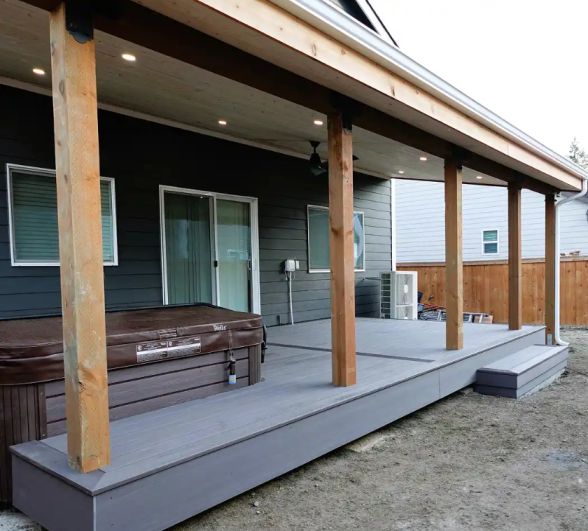

Remember, the secret to hiring the right deck builder lies in thorough vetting and not rushing the decision. Take your time to gather all necessary information, and surely, youll be on your way to enjoying a beautiful, well-built deck in no time!

Understanding the Importance of Local Knowledge and Compliance


When it comes to hiring the right deck builder in Gig Harbor, WA, understanding the importance of local knowledge and compliance cannot be overstated! It's not just about finding someone who can build a deck but finding someone who can navigate the local nuances that ensure your deck is built to last and meets all the necessary regulations.


stain

  • experience
  • fireplace
  • bench
  • stain
  • beforeafter
  • resurfacing

First off, local knowledge is crucial because each area has its specific climate, terrain, and environmental conditions that can significantly impact the construction process and materials needed. For example, Gig Harbor, known for its wet weather and beautiful, lush landscapes, will have different requirements for decking materials than a drier, more arid region. A local builder, familiar with these conditions, will recommend materials that resist mold and moisture damage better than someone who might not be as familiar with these local specifics.


Furthermore, compliance with local building codes and regulations is another area where local expertise plays a big part. Building codes can vary significantly not just from state to state but even from one county to another. A deck builder from Gig Harbor will be familiar with all the local building codes and zoning laws, ensuring that your deck not only stands the test of time but also is in compliance with all local regulations (which is crucial for avoiding fines or, worse, having to rebuild parts of or the entire deck).
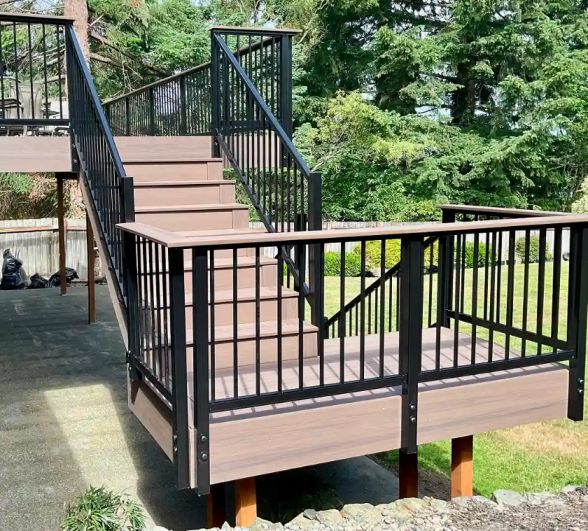

Also, hiring locally supports the Gig Harbor community, contributing to the local economy and fostering relationships within the community. This can be beneficial for homeowners as local builders have a reputation to maintain and are more likely to go the extra mile to ensure you're satisfied with your project.


In summary, when you're ready to add that beautiful deck to your Gig Harbor home, make sure you consider the builders local knowledge and their adherence to local codes. Its not just about the aesthetics or the immediate functionality; its about long-term satisfaction and compliance. Choose wisely, and you'll enjoy not just a deck, but a true extension of your home.

Evaluating Customer Reviews and Testimonials: Real Feedback Matters


When it comes to hiring the right deck builder in Gig Harbor WA, understanding the importance of real customer reviews and testimonials can make all the difference. For many homeowners, the deck isnt just an addition to their homes, its a place where memories are made (from sun-soaked brunches to cozy evening gatherings). Therefore, ensuring that you choose a reputable and skilled deck builder is paramount.
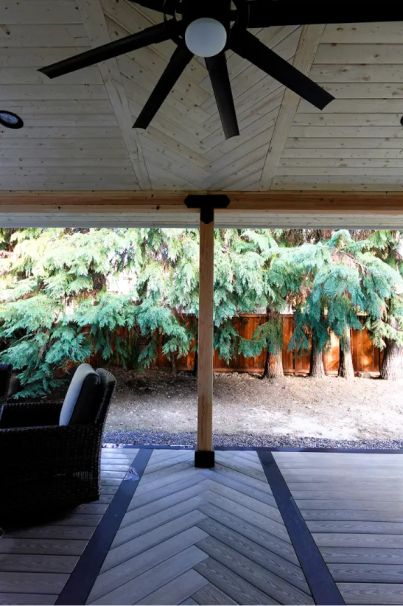

One secret to hiring the right contractor is to deep-dive into their customer feedback. But, heres the catch! Not all reviews and testimonials are created equal. Its crucial to evaluate whether the feedback youre reading is genuine. Sometimes, reviews can be biased or even fabricated. Therefore, looking for detailed reviews that discuss specific aspects of the builders work can be more beneficial than overly general or suspiciously positive reviews.


Another tip is to check the consistency of the reviews across different platforms. If a deck builder has consistently good reviews on multiple websites, its usually a good sign. However, if you notice stark differences in the tone and content of the reviews across different sites, it might be worth digging a little deeper.


Its also helpful to look at the before and after photos of the projects the builder has completed. Often, testimonials will include these images, which not only validate the review but also give you a visual confirmation of the builders craftsmanship.


Moreover, dont hesitate to reach out to the reviewers if possible. Some platforms allow you to contact those who leave reviews so you can ask more detailed questions about their experience. This can provide you with insights that you might not have considered and clarify any doubts about the builders reliability and quality of work.


Lastly, remember that a reputable deck builder in Gig Harbor WA will be transparent with their practices and happy to provide references upon request.

experience

  • planters
  • timber
  • cable
  • hardscape
They will appreciate your diligence in seeking out genuine feedback and see it as a sign that you value quality and reliability in your project!


In conclusion, evaluating customer reviews and testimonials is a critical step in hiring the right deck builder. Real, honest feedback matters and can significantly influence your decision. Take your time, do your homework, and dont rush the process. After all, building a deck is a significant investment and you want to be sure youre choosing the best professional for the job!

Finalizing Your Decision: Contracts and Communication Protocols


When it comes down to hiring the right deck builder in Gig Harbor, WA, finalizing your decision involves not just choosing a contractor, but understanding the intricate details of contracts and communication protocols. Its crucial (to say the least!) to get these elements right to ensure that your deck-building experience is as smooth and stress-free as possible.


Firstly, lets talk contracts. A well-drafted contract is not merely a formality; its your safeguard against potential misunderstandings or disputes. The contract should clearly outline the scope of the project, materials to be used, timelines, payment schedules, and warranties.

fireplace

  1. repair
  2. stairs
  3. sunroom
  4. patio
  5. wood
  6. GigHarbor
It's important that all these details are laid out clearly to avoid any ambiguities that might arise during the construction process. Sometimes, homeowners feel overwhelmed by the legal jargon, so dont hesitate to ask your builder to explain terms that arent clear to you. Remember, a question not asked today can become a problem tomorrow!


Communication protocols are equally vital. Consistent and clear communication is the cornerstone of any successful project. From the initial consultation through to the completion of your deck, it's essential that there is a clear line of communication between you and your builder. How often will they update you on progress? What's the best way to reach them if you have a concern or question (during business hours, and in cases of emergency, too)? What Is the Secret to Hiring the Right Deck Builder in Gig Harbor WA? Discover Expert Tips Before You Choose Today! . Establishing these protocols early on can help in maintaining a smooth workflow and in building a relationship based on mutual trust and respect.


Another key aspect to consider is how changes in the project scope are handled. Its not uncommon for homeowners to change their mind about certain aspects once they see their project coming to life. How will these changes be documented and priced? This should be something your contract addresses and something you discuss upfront.


Lastly, don't forget to check reviews and ask for references! Hearing about other homeowners experiences with the builder can give you invaluable insights and peace of mind.


In conclusion, when youre about to make your final decision on hiring a deck builder in Gig Harbor, WA, take your time to carefully review the contract and establish effective communication protocols. These steps are not just formalities; they are your tools to ensure that the project meets your expectations and that you and your builder are on the same page (every step of the way!). Happy building!

Deck Builder Gig Harbor WA

Read more here also:

https://www.google.com/maps/d/edit?mid=1Glkk4a390nfMhyfFP-VHdtOJDAstHxk&usp=sharing

https://earth.google.com/web/@47.1610225,-122.4636915,94.28171986a,15873.92248338d,30.00000082y,0h,0t,0r/data=CgRCAggBMigKJgokCiAxR2xrazRhMzkwbmZNaHlmRlAtVkhkdE9KREFzdEh4ayACOgMKATBCAggASggIp7KRiAYQAQ?utm_source=mymaps

https://lh3.googleusercontent.com/p/AF1QipPVHgG5yXXXzMim5L7jK438xenH72O6p4SFZXz8=s1360-w1360-h1020-rw

https://maps.app.goo.gl/FMTvEdmoe9wz6ggc9

https://www.google.com/search?kgmid=/g/11s0xlgfdp

https://www.google.com/maps/place/Fresh+View+Construction/@47.1656978,-122.4689362,3a,75y,90t/data=!3m8!1e2!3m6!1sCIHM0ogKEICAgICZ-uz0fQ!2e10!3e12!6shttps:%2F%2Flh3.googleusercontent.com%2Fgps-cs-s%2FAPNQkAEoA6Mx5v-PNRlR0-Xcq9nPZdSDAZBNrh3RRZh3SemBZWJ6zHvPIyU3B2RZHF-vQom2rS_E1ma03-ejAEoq87tmIe1pPW-4ZWCdVrQNaZ_ENmeDmalxwpwCRqFHhtYs1KyD6p8r%3Dw152-h86-k-no!7i1920!8i1080!4m7!3m6!1s0x8b0995605927fed1:0xd0b441cd041ba619!8m2!3d47.1659437!4d-122.4689698!10e5!16s%2Fg%2F11s0xlgfdp!5m1!1e1?entry=ttu&g_ep=EgoyMDI2MDQyNi4wIKXMDSoASAFQAw%3D%3D

https://www.google.com/maps/place/Fresh+View+Construction/@47.1656978,-122.4689362,3a,75y,90t/data=!3m8!1e2!3m6!1sAF1QipPHSPyfjq-A_mNqxTyO8B2EE7NK7n3OhWnb9mkT!2e10!3e12!6shttps:%2F%2Flh3.googleusercontent.com%2Fp%2FAF1QipPHSPyfjq-A_mNqxTyO8B2EE7NK7n3OhWnb9mkT%3Dw203-h114-k-no!7i1920!8i1080!4m7!3m6!1s0x8b0995605927fed1:0xd0b441cd041ba619!8m2!3d47.1659437!4d-122.4689698!10e5!16s%2Fg%2F11s0xlgfdp!5m1!1e1?entry=ttu&g_ep=EgoyMDI2MDQyNi4wIKXMDSoASAFQAw%3D%3D

https://www.google.com/maps/place/Fresh+View+Construction/@47.1656978,-122.4689362,3a,75y,90t/data=!3m8!1e2!3m6!1sAF1QipMb_7__zorTD8Yhj7rCyzkjoO0JlXPmkax4-Ly7!2e10!3e12!6shttps:%2F%2Flh3.googleusercontent.com%2Fp%2FAF1QipMb_7__zorTD8Yhj7rCyzkjoO0JlXPmkax4-Ly7%3Dw203-h270-k-no!7i3024!8i4032!4m7!3m6!1s0x8b0995605927fed1:0xd0b441cd041ba619!8m2!3d47.1659437!4d-122.4689698!10e5!16s%2Fg%2F11s0xlgfdp!5m1!1e1?entry=ttu&g_ep=EgoyMDI2MDQyNi4wIKXMDSoASAFQAw%3D%3D

Citations and other links


Construction site and equipment prepared for start of work in Cologne, Germany (2017)

Construction is the process involved in delivering buildings, infrastructure, industrial facilities, and associated activities through to the end of their life. It typically starts with planning, financing, and design that continues until the asset is built and ready for use. Construction also covers repairs and maintenance work, any work to expand, extend, and improve the asset, and its eventual demolition, dismantling, or decommissioning.

The construction industry contributes significantly to many countries' gross domestic products (GDP). Global expenditure on construction activities was about $4 trillion in 2012. In 2022, expenditure on the construction industry exceeded $11 trillion a year, equivalent to about 13 percent of global GDP. This spending was forecasted to rise to around $14.8 trillion in 2030.[1]

The construction industry promotes economic development and brings many non-monetary benefits to many countries, but it is one of the most hazardous industries. For example, about 20% (1,061) of US industry fatalities in 2019 happened in construction.[2]

Etymology

[edit]

"Construction" stems from the Latin word constructio (which comes from com- "together" and struere "to pile up") as well as Old French construction.[3] "To construct" is a verb: the act of building. The noun is "construction": how something is built or the nature of its structure.

History

[edit]
Bricklayers at work on a construction site during World War I

The first huts and shelters were constructed by hand or with simple tools. As cities grew during the Bronze Age, a class of professional craftsmen, like bricklayers and carpenters, appeared. Occasionally, slaves were used for construction work. In the Middle Ages, the artisan craftsmen were organized into craft guilds. In the 19th century, steam-powered machinery appeared, and later, diesel- and electric-powered vehicles such as cranes, excavators and bulldozers.

Fast-track construction has been increasingly popular in the 21st century. Some estimates suggest that 40% of construction projects are now fast-track construction.[4]

Construction industry sectors

[edit]
Industrial assemblage of a thermal oxidizer in the United States

Broadly, there are three sectors of construction: buildings, infrastructure and industrial:[5]

  • Building construction is usually further divided into residential and non-residential.
  • Infrastructure, also called 'heavy civil' or 'heavy engineering', includes large public works, dams, bridges, highways, railways, water or wastewater and utility distribution.
  • Industrial construction includes offshore construction (mainly of energy installations), mining and quarrying, refineries, chemical processing, mills and manufacturing plants.

The industry can also be classified into sectors or markets.[6] For example, Engineering News-Record (ENR), a US-based construction trade magazine, has compiled and reported data about the size of design and construction contractors. In 2014, it split the data into nine market segments: transportation, petroleum, buildings, power, industrial, water, manufacturing, sewage/waste, telecom, hazardous waste, and a tenth category for other projects.[7] ENR used data on transportation, sewage, hazardous waste and water to rank firms as heavy contractors.[8]

The Standard Industrial Classification and the newer North American Industry Classification System classify companies that perform or engage in construction into three subsectors: building construction, heavy and civil engineering construction, and specialty trade contractors. There are also categories for professional services firms (e.g., engineering, architecture, surveying, project management).[9][10]

Building construction

[edit]
Military residential unit construction by U.S. Navy personnel in Afghanistan

Building construction is the process of adding structures to areas of land, also known as real property sites. Typically, a project is instigated by or with the owner of the property (who may be an individual or an organisation); occasionally, land may be compulsorily purchased from the owner for public use.[11]

Residential construction

[edit]
Units under construction in Brighton, Victoria, Australia

Residential construction may be undertaken by individual land-owners (self-built), by specialist housebuilders, by property developers, by general contractors, or by providers of public or social housing (e.g.: local authorities, housing associations). Where local zoning or planning policies allow, mixed-use developments may comprise both residential and non-residential construction (e.g.: retail, leisure, offices, public buildings, etc.).

Residential construction practices, technologies, and resources must conform to local building authority's regulations and codes of practice. Materials readily available in the area generally dictate the construction materials used (e.g.: brick versus stone versus timber). Costs of construction on a per square meter (or per square foot) basis for houses can vary dramatically based on site conditions, access routes, local regulations, economies of scale (custom-designed homes are often more expensive to build) and the availability of skilled tradespeople.[12]

Non-residential construction

[edit]
Construction of the Federal Reserve building in Kansas City, Missouri

Depending upon the type of building, non-residential building construction can be procured by a wide range of private and public organisations, including local authorities, educational and religious bodies, transport undertakings, retailers, hoteliers, property developers, financial institutions and other private companies. Most construction in these sectors is undertaken by general contractors.

Infrastructure construction

[edit]
Shasta Dam under construction in June 1942

Civil engineering covers the design, construction, and maintenance of the physical and naturally built environment, including public works such as roads, bridges, canals, dams, tunnels, airports, water and sewerage systems, pipelines, and railways.[13][14] Some general contractors have expertise in civil engineering; civil engineering contractors are firms dedicated to work in this sector, and may specialise in particular types of infrastructure.

Industrial construction

[edit]
The National Cement Share Company of Ethiopia's new plant in Dire Dawa

Industrial construction includes offshore construction (mainly of energy installations: oil and gas platforms, wind power), mining and quarrying, refineries, food processing plants, breweries and distilleries, power stations, steel mills, warehouses and factories.[14]

Construction processes

[edit]

Some construction projects are small renovations or repair jobs, like repainting or fixing leaks, where the owner may act as designer, paymaster and laborer for the entire project. However, more complex or ambitious projects usually require additional multi-disciplinary expertise and manpower, so the owner may commission one or more specialist businesses to undertake detailed planning, design, construction and handover of the work. Often the owner will appoint one business to oversee the project (this may be a designer, a contractor, a construction manager, or other advisors); such specialists are normally appointed for their expertise in project delivery and construction management and will help the owner define the project brief, agree on a budget and schedule, liaise with relevant public authorities, and procure materials and the services of other specialists (the supply chain, comprising subcontractors and materials suppliers). Contracts are agreed for the delivery of services by all businesses, alongside other detailed plans aimed at ensuring legal, timely, on-budget and safe delivery of the specified works.

Design, finance, and legal aspects overlap and interrelate. The design must be not only structurally sound and appropriate for the use and location, but must also be financially possible to build, and legal to use. The financial structure must be adequate to build the design provided and must pay amounts that are legally owed. Legal structures integrate design with other activities and enforce financial and other construction processes.

These processes also affect procurement strategies. Clients may, for example, appoint a business to design the project, after which a competitive process is undertaken to appoint a lead contractor to construct the asset (design–bid–build); they may appoint a business to lead both design and construction (design-build); or they may directly appoint a designer, contractor and specialist subcontractors (construction management).[15] Some forms of procurement emphasize collaborative relationships (partnering, alliancing) between the client, the contractor, and other stakeholders within a construction project, seeking to ameliorate often highly competitive and adversarial industry practices. DfMA (design for manufacture and assembly) approaches also emphasize early collaboration with manufacturers and suppliers regarding products and components.

Construction or refurbishment work in a "live" environment (where residents or businesses remain living in or operating on the site) requires particular care, planning and communication.[16]

Planning

[edit]
Digging the foundation for a building construction in Jakarta, Indonesia

When applicable, a proposed construction project must comply with local land-use planning policies including zoning and building code requirements. A project will normally be assessed (by the 'authority having jurisdiction', AHJ, typically the municipality where the project will be located) for its potential impacts on neighbouring properties, and upon existing infrastructure (transportation, social infrastructure, and utilities including water supply, sewerage, electricity, telecommunications, etc.). Data may be gathered through site analysis, site surveys and geotechnical investigations. Construction normally cannot start until planning permission has been granted, and may require preparatory work to ensure relevant infrastructure has been upgraded before building work can commence. Preparatory works will also include surveys of existing utility lines to avoid damage-causing outages and other hazardous situations.

Some legal requirements come from malum in se considerations, or the desire to prevent indisputably bad phenomena, e.g. explosions or bridge collapses. Other legal requirements come from malum prohibitum considerations, or factors that are a matter of custom or expectation, such as isolating businesses from a business district or residences from a residential district. An attorney may seek changes or exemptions in the law that governs the land where the building will be built, either by arguing that a rule is inapplicable (the bridge design will not cause a collapse), or that the custom is no longer needed (acceptance of live-work spaces has grown in the community).[17]

During the construction of a building, a municipal building inspector usually inspects the ongoing work periodically to ensure that construction adheres to the approved plans and the local building code. Once construction is complete, any later changes made to a building or other asset that affect safety, including its use, expansion, structural integrity, and fire protection, usually require municipality approval.

Finance

[edit]

Depending on the type of project, mortgage bankers, accountants, and cost engineers may participate in creating an overall plan for the financial management of a construction project. The presence of the mortgage banker is highly likely, even in relatively small projects since the owner's equity in the property is the most obvious source of funding for a building project. Accountants act to study the expected monetary flow over the life of the project and to monitor the payouts throughout the process. Professionals including cost engineers, estimators and quantity surveyors apply expertise to relate the work and materials involved to a proper valuation.

Financial planning ensures adequate safeguards and contingency plans are in place before the project is started, and ensures that the plan is properly executed over the life of the project. Construction projects can suffer from preventable financial problems.[18] Underbids happen when builders ask for too little money to complete the project. Cash flow problems exist when the present amount of funding cannot cover the current costs for labour and materials; such problems may arise even when the overall budget is adequate, presenting a temporary issue. Cost overruns with government projects have occurred when the contractor identified change orders or project changes that increased costs, which are not subject to competition from other firms as they have already been eliminated from consideration after the initial bid.[19] Fraud is also an issue of growing significance within construction.[20]

Large projects can involve highly complex financial plans and often start with a conceptual cost estimate performed by a building estimator. As portions of a project are completed, they may be sold, supplanting one lender or owner for another, while the logistical requirements of having the right trades and materials available for each stage of the building construction project carry forward. Public–private partnerships (PPPs) or private finance initiatives (PFIs) may also be used to help deliver major projects. According to McKinsey in 2019, the "vast majority of large construction projects go over budget and take 20% longer than expected".[21]

[edit]
Construction along Ontario Highway 401, widening the road from six to twelve travel lanes

A construction project is a complex net of construction contracts and other legal obligations, each of which all parties must carefully consider. A contract is the exchange of a set of obligations between two or more parties, and provides structures to manage issues. For example, construction delays can be costly, so construction contracts set out clear expectations and clear paths to manage delays. Poorly drafted contracts can lead to confusion and costly disputes.

At the start of a project, legal advisors seek to identify ambiguities and other potential sources of trouble in the contract structures, and to present options for preventing problems. During projects, they work to avoid and resolve conflicts that arise. In each case, the lawyer facilitates an exchange of obligations that matches the reality of the project.

Apartment complex under construction in Daegu, South Korea

Procurement

[edit]

Traditional or design-bid-build

[edit]

Design-bid-build is the most common and well-established method of construction procurement. In this arrangement, the architect, engineer or builder acts for the client as the project coordinator. They design the works, prepare specifications and design deliverables (models, drawings, etc.), administer the contract, tender the works, and manage the works from inception to completion. In parallel, there are direct contractual links between the client and the main contractor, who, in turn, has direct contractual relationships with subcontractors. The arrangement continues until the project is ready for handover.

Design-build

[edit]

Design-build became more common from the late 20th century, and involves the client contracting a single entity to provide design and construction. In some cases, the design-build package can also include finding the site, arranging funding and applying for all necessary statutory consents. Typically, the client invites several Design & Build (D&B) contractors to submit proposals to meet the project brief and then selects a preferred supplier. Often this will be a consortium involving a design firm and a contractor (sometimes more than one of each). In the United States, departments of transportation usually use design-build contracts as a way of progressing projects where states lack the skills or resources, particularly for very large projects.[22]

Construction management

[edit]

In a construction management arrangement, the client enters into separate contracts with the designer (architect or engineer), a construction manager, and individual trade contractors. The client takes on the contractual role, while the construction or project manager provides the active role of managing the separate trade contracts, and ensuring that they complete all work smoothly and effectively together. This approach is often used to speed up procurement processes, to allow the client greater flexibility in design variation throughout the contract, to enable the appointment of individual work contractors, to separate contractual responsibility on each individual throughout the contract, and to provide greater client control.

Design

[edit]

In the industrialized world, construction usually involves the translation of designs into reality. Most commonly (i.e.: in a design-bid-build project), the design team is employed by (i.e. in contract with) the property owner. Depending upon the type of project, a design team may include architects, civil engineers, mechanical engineers, electrical engineers, structural engineers, fire protection engineers, planning consultants, architectural consultants, and archaeological consultants. A 'lead designer' will normally be identified to help coordinate different disciplinary inputs to the overall design. This may be aided by integration of previously separate disciplines (often undertaken by separate firms) into multi-disciplinary firms with experts from all related fields,[23] or by firms establishing relationships to support design-build processes.

The increasing complexity of construction projects creates the need for design professionals trained in all phases of a project's life-cycle and develop an appreciation of the asset as an advanced technological system requiring close integration of many sub-systems and their individual components, including sustainability. For buildings, building engineering is an emerging discipline that attempts to meet this new challenge.

Traditionally, design has involved the production of sketches, architectural and engineering drawings, and specifications. Until the late 20th century, drawings were largely hand-drafted; adoption of computer-aided design (CAD) technologies then improved design productivity, while the 21st-century introduction of building information modeling (BIM) processes has involved the use of computer-generated models that can be used in their own right or to generate drawings and other visualisations as well as capturing non-geometric data about building components and systems.

On some projects, work on-site will not start until design work is largely complete; on others, some design work may be undertaken concurrently with the early stages of on-site activity (for example, work on a building's foundations may commence while designers are still working on the detailed designs of the building's internal spaces). Some projects may include elements that are designed for off-site construction (see also prefabrication and modular building) and are then delivered to the site ready for erection, installation or assembly.

On-site construction

[edit]
Construction storage site with shipping containers, for the rebuilding of the Houses of Parliament in Cape Town CBD
On-site foundation construction

Once contractors and other relevant professionals have been appointed and designs are sufficiently advanced, work may commence on the project site. Some projects require preliminary works, such as land preparation and levelling, demolition of existing structures (see below), or laying foundations, and there are circumstances where this work may be contracted for in advance of finalising the contract and costs for the whole project.

Typically, a construction site will include a secure perimeter to restrict unauthorised access, site access control points, office and welfare accommodation for personnel from the main contractor and other firms involved in the project team, and storage areas for materials, machinery and equipment. According to the McGraw-Hill Dictionary of Architecture and Construction's definition, construction may be said to have started when the first feature of the permanent structure has been put in place, such as pile driving, or the pouring of slabs or footings.[24]

Commissioning and handover

[edit]

Commissioning is the process of verifying that all subsystems of a new building (or other assets) work as intended to achieve the owner's project requirements and as designed by the project's architects and engineers.

Defects liability period

[edit]

A period after handover (or practical completion) during which the owner may identify any shortcomings in relation to the building specification ('defects'), with a view to the contractor correcting the defect.[25]

Maintenance, repair and improvement

[edit]

Maintenance involves functional checks, servicing, repairing or replacing of necessary devices, equipment, machinery, building infrastructure, and supporting utilities in industrial, business, governmental, and residential installations.[26][27]

Demolition

[edit]

Demolition is the discipline of safely and efficiently tearing down buildings and other artificial structures. Demolition contrasts with deconstruction, which involves taking a building apart while carefully preserving valuable elements for reuse purposes (recycling – see also circular economy).

Industry scale and characteristics

[edit]

Economic activity

[edit]
Helicopter view of the Atacama Large Millimeter/submillimeter Array (ALMA) Operations Support Facility (OSF) construction site

The output of the global construction industry was worth an estimated $10.8 trillion in 2017, and in 2018 was forecast to rise to $12.9 trillion by 2022,[28] and to around $14.8 trillion in 2030.[1] As a sector, construction accounts for more than 10% of global GDP (in developed countries, construction comprises 6–9% of GDP),[29] and employs around 7% of the total employed workforce around the globe[30] (accounting for over 273 million full- and part-time jobs in 2014).[31] Since 2010,[32] China has been the world's largest single construction market.[33] The United States is the second largest construction market with a 2018 output of $1.581 trillion.[34]

  • In the United States in February 2020, around $1.4 trillion worth of construction work was in progress, according to the Census Bureau, of which just over $1.0 trillion was for the private sector (split roughly 55:45% between residential and nonresidential); the remainder was public sector, predominantly for state and local government.[35]
  • In Armenia, the construction sector experienced growth during the latter part of 2000s. Based on National Statistical Service, Armenia's construction sector generated approximately 20% of Armenia's GDP during the first and second quarters of 2007. In 2009, according to the World Bank, 30% of Armenia's economy was from construction sector.[36]
  • In Vietnam, the construction industry plays an important role in the national economy.[37][38][39] The Vietnamese construction industry has been one of the fastest growing in the Asia-Pacific region in recent years.[40][41] The market was valued at nearly $60 billion in 2021.[42] In the first half of 2022, Vietnam's construction industry growth rate reached 5.59%.[42][43][44] In 2022, Vietnam's construction industry accounted for more than 6% of the country's GDP, equivalent to over 589.7 billion Vietnamese dong.[45][46] The industry of industry and construction accounts for 38.26% of Vietnam's GDP.[47][48][49] At the same time, the industry is one of the most attractive industries for foreign direct investment (FDI) in recent years.[50][51][52]

Construction is a major source of employment in most countries; high reliance on small businesses, and under-representation of women are common traits. For example:

  • In the US, construction employed around 11.4m people in 2020, with a further 1.8m employed in architectural, engineering, and related professional services – equivalent to just over 8% of the total US workforce.[53] The construction workers were employed in over 843,000 organisations, of which 838,000 were privately held businesses.[54] In March 2016, 60.4% of construction workers were employed by businesses with fewer than 50 staff.[55] Women are substantially underrepresented (relative to their share of total employment), comprising 10.3% of the US construction workforce, and 25.9% of professional services workers, in 2019.[53]
  • The United Kingdom construction sector contributed £117 billion (6%) to UK GDP in 2018, and in 2019 employed 2.4m workers (6.6% of all jobs). These worked either for 343,000 'registered' construction businesses, or for 'unregistered' businesses, typically self-employed contractors;[56] just over one million small/medium-sized businesses, mainly self-employed individuals, worked in the sector in 2019, comprising about 18% of all UK businesses.[57] Women comprised 12.5% of the UK construction workforce.[58]

According to McKinsey research, productivity growth per worker in construction has lagged behind many other industries across different countries including in the United States and in European countries. In the United States, construction productivity per worker has declined by half since the 1960s.[59]

Construction GVA by country

[edit]
List of countries with the largest construction gross value added in 2018
Economy
Construction GVA in 2018 (billions in USD)
(01)  China
 
934.2
(02)  United States
 
839.1
(03)  Japan
 
275.5
(04)  India
 
201.2
(05)  Germany
 
180.5
(06)  United Kingdom
 
154.7
(07)  France
 
138.7
(08)  Canada
 
125.4
(09)  Russia
 
121.2
(10)  Australia
 
111.8
(11)  Indonesia
 
109.7
(12)  South Korea
 
93.0
(13)  Brazil
 
92.6
(14)  Mexico
 
89.0
(15)  Spain
 
80.0
(16)  Italy
 
78.9
(17)  Turkey
 
55.3
(18)  Saudi Arabia
 
40.2
(19)  Netherlands
 
39.5
(20)  Poland
 
39.4
(21)  Switzerland
 
36.3
(22)  United Arab Emirates
 
34.5
(23)  Sweden
 
33.3
(24)  Austria
 
27.2
(25)  Qatar
 
27.0

The twenty-five largest countries in the world by construction GVA (2018)[60]

Employment

[edit]
Ironworkers erecting the steel frame of a new building at Massachusetts General Hospital in Boston
A truck operator at Al Gamil, the largest construction company in Djibouti

Some workers may be engaged in manual labour[61] as unskilled or semi-skilled workers; they may be skilled tradespeople; or they may be supervisory or managerial personnel. Under safety legislation in the United Kingdom, for example, construction workers are defined as people "who work for or under the control of a contractor on a construction site";[62] in Canada, this can include people whose work includes ensuring conformance with building codes and regulations, and those who supervise other workers.[63]

Laborers comprise a large grouping in most national construction industries. In the United States, for example, in May 2023, the construction sector employed just over 7.9 million people, of whom 859,000 were laborers, while 3.7 million were construction trades workers (including 603,000 carpenters, 559,000 electricians, 385,000 plumbers, and 321,000 equipment operators).[64] Like most business sectors, there is also substantial white-collar employment in construction - out of 7.9 million US construction sector workers, 681,000 were recorded by the United States Department of Labor in May 2023 as in 'office and administrative support occupations', 620,000 in 'management occupations' and 480,000 in 'business and financial operations occupations'.[64]

Large-scale construction requires collaboration across multiple disciplines. A project manager normally manages the budget on the job, and a construction manager, design engineer, construction engineer or architect supervises it. Those involved with the design and execution must consider zoning requirements and legal issues, environmental impact of the project, scheduling, budgeting and bidding, construction site safety, availability and transportation of building materials, logistics, and inconvenience to the public, including those caused by construction delays.

Some models and policy-making organisations promote the engagement of local labour in construction projects as a means of tackling social exclusion and addressing skill shortages. In the UK, the Joseph Rowntree Foundation reported in 2000 on 25 projects which had aimed to offer training and employment opportunities for locally based school leavers and unemployed people.[65] The Foundation published "a good practice resource book" in this regard at the same time.[66] Use of local labour and local materials were specified for the construction of the Danish Storebaelt bridge, but there were legal issues which were challenged in court and addressed by the European Court of Justice in 1993. The court held that a contract condition requiring use of local labour and local materials was incompatible with EU treaty principles.[67] Later UK guidance noted that social and employment clauses, where used, must be compatible with relevant EU regulation.[68] Employment of local labour was identified as one of several social issues which could potentially be incorporated in a sustainable procurement approach, although the interdepartmental Sustainable Procurement Group recognised that "there is far less scope to incorporate [such] social issues in public procurement than is the case with environmental issues".[69]

There are many routes to the different careers within the construction industry. There are three main tiers of construction workers based on educational background and training, which vary by country:

Unskilled and semi-skilled workers

[edit]

Unskilled and semi-skilled workers provide general site labor, often have few or no construction qualifications, and may receive basic site training.

Skilled tradespeople

[edit]

Skilled tradespeople have typically served apprenticeships (sometimes in labor unions) or received technical training; this group also includes on-site managers who possess extensive knowledge and experience in their craft or profession. Skilled manual occupations include carpenters, electricians, plumbers, ironworkers, heavy equipment operators and masons, as well as those involved in project management. In the UK these require further education qualifications, often in vocational subject areas, undertaken either directly after completing compulsory education or through "on the job" apprenticeships.[70]

Professional, technical or managerial personnel

[edit]

Professional, technical and managerial personnel often have higher education qualifications, usually graduate degrees, and are trained to design and manage construction processes. These roles require more training as they demand greater technical knowledge, and involve more legal responsibility. Example roles (and qualification routes) include:

Safety

[edit]
At-risk workers without appropriate safety equipment

Construction is one of the most dangerous occupations in the world, incurring more occupational fatalities than any other sector in both the United States and in the European Union.[2][71] In the US in 2019, 1,061, or about 20%, of worker fatalities in private industry occurred in construction.[2] In 2017, more than a third of US construction fatalities (366 out of 971 total fatalities) were the result of falls;[72] in the UK, half of the average 36 fatalities per annum over a five-year period to 2021 were attributed to falls from height.[73] Proper safety equipment such as harnesses, hard hats and guardrails and procedures such as securing ladders and inspecting scaffolding can curtail the risk of occupational injuries in the construction industry.[74] Other major causes of fatalities in the construction industry include electrocution, transportation accidents, and trench cave-ins.[75]

Other safety risks for workers in construction include hearing loss due to high noise exposure, musculoskeletal injury, chemical exposure, and high levels of stress.[76] Besides that, the high turnover of workers in construction industry imposes a huge challenge of accomplishing the restructuring of work practices in individual workplaces or with individual workers.[77] Construction has been identified by the National Institute for Occupational Safety and Health (NIOSH) as a priority industry sector in the National Occupational Research Agenda (NORA) to identify and provide intervention strategies regarding occupational health and safety issues.[78][79] A study conducted in 2022 found “significant effect of air pollution exposure on construction-related injuries and fatalities”, especially with the exposure of nitrogen dioxide.[80]

Sustainability

[edit]

Sustainability is an aspect of "green building", defined by the United States Environmental Protection Agency (EPA) as "the practice of creating structures and using processes that are environmentally responsible and resource-efficient throughout a building's life-cycle from siting to design, construction, operation, maintenance, renovation and deconstruction."[81]

Decarbonising construction

[edit]

The construction industry may require transformation at pace and at scale if it is to successfully contribute to achieving the target set out in The Paris Agreement of limiting global temperature rise to 1.5C above industrial levels.[82][83] The World Green Building Council has stated the buildings and infrastructure around the world can reach 40% less embodied carbon emissions but that this can only be achieved through urgent transformation.[84][85]

Conclusions from industry leaders have suggested that the net zero transformation is likely to be challenging for the construction industry, but it does present an opportunity. Action is demanded from governments, standards bodies, the construction sector, and the engineering profession to meet the decarbonising targets.[86]

In 2021, the National Engineering Policy Centre published its report Decarbonising Construction: Building a new net zero industry,[86] which outlined key areas to decarbonise the construction sector and the wider built environment. This report set out around 20 different recommendations to transform and decarbonise the construction sector, including recommendations for engineers, the construction industry and decision makers, plus outlined six-overarching ‘system levers’ where action taken now will result in rapid decarbonisation of the construction sector.[86] These levels are:

  • Setting and stipulating progressive targets for carbon reduction
  • Embedding quantitative whole-life carbon assessment into public procurement
  • Increasing design efficiency, materials reuse and retrofit of buildings
  • Improving whole-life carbon performance
  • Improving skills for net zero
  • Adopting a joined up, systems approach to decarbonisation across the construction sector and with other sectors

Progress is being made internationally to decarbonise the sector including improvements to sustainable procurement practice such as the CO2 performance ladder in the Netherlands and the Danish Partnership for Green Public Procurement.[87][88] There are also now demonstrations of applying the principles of circular economy practices in practice such as Circl, ABN AMRO's sustainable pavilion and the Brighton Waste House.[89][90][91]

Construction magazines

[edit]

See also

[edit]

icon Architecture portal icon Engineering portal

Notes

[edit]
  1. ^ a b c In the UK, the Chartered Engineer qualification is controlled by the Engineering Council, and is often achieved through membership of the relevant professional institution (ICE, CIBSE, IStructE, etc).

References

[edit]
  1. ^ a b "Global Construction Report 2030". GCP DBA. Retrieved 28 October 2021.
  2. ^ a b c "Commonly Used Statistics: Worker fatalities". Occupational Safety and Health Administration. United States Department of Labor. Retrieved 1 March 2021.
  3. ^ "Construction". Online Etymology Dictionary http://www.etymonline.com/index.php?term=construction accessed 3/6/2014
  4. ^ Knecht B. Fast-track construction becomes the norm. Architectural Record.
  5. ^ Chitkara, pp. 9–10.
  6. ^ Halpin, pp. 15–16.
  7. ^ "The Top 250", Engineering News-Record, September 1, 2014, archived from the original on October 26, 2015, retrieved May 17, 2015
  8. ^ "The Top 400" (PDF), Engineering News-Record, May 26, 2014
  9. ^ US Census Bureau,NAICS Search 2012 NAICS Definition, Sector 23 – Construction
  10. ^ US Department of Labor (OSHA), Division C: Construction
  11. ^ Proctor, J., What is a Compulsory Purchase Order?, Bidwells, published 10 June 2018, accessed 26 November 2023
  12. ^ Marshall, Duncan; Worthing, Derek (2006). The Construction of Houses (4th ed.). London: EG Books. pp. 1–8. ISBN 978-0-08-097112-4.
  13. ^ "History and Heritage of Civil Engineering". ASCE. Archived from the original on 16 February 2007. Retrieved 8 August 2007.
  14. ^ a b "What is Civil Engineering". Institution of Civil Engineers. Retrieved 15 May 2017.
  15. ^ Mosey, David (2019). Collaborative Construction Procurement and Improved Value. John Wiley & Sons. ISBN 9781119151913.
  16. ^ Willmott Dixon, Working in live environments, accessed 6 May 2023
  17. ^ Mason, Jim (2016). Construction Law: From Beginner to Practitioner. Routledge. ISBN 9781317391777.
  18. ^ Tabei, Sayed Mohammad Amin; Bagherpour, Morteza; Mahmoudi, Amin (2019-03-19). "Application of Fuzzy Modelling to Predict Construction Projects Cash Flow". Periodica Polytechnica Civil Engineering. doi:10.3311/ppci.13402. ISSN 1587-3773. S2CID 116421818.
  19. ^ "North County News – San Diego Union Tribune". www.nctimes.com.
  20. ^ "Global construction industry faces growing threat of economic crime". pwc. Retrieved 16 September 2015.
  21. ^ Alsever, Jennifer (December 2019). "Bots Start Building". Fortune (Paper). New York, New York: Fortune Media (USA) Corporation. p. 36. ISSN 0015-8259.
  22. ^ Cronin, Jeff (2005). "S. Carolina Court to Decide Legality of Design-Build Bids". Construction Equipment Guide. Archived from the original on 2006-10-19. Retrieved 2008-01-04.
  23. ^ Dynybyl, VojtÄ›ch; Berka, Ondrej; Petr, Karel; Lopot, František; Dub, Martin (2015). The Latest Methods of Construction Design. Springer. ISBN 9783319227627.
  24. ^ McGraw-Hill Dictionary of Architecture and Construction, "Start of construction", accessed 8 September 2020
  25. ^ Designing Buildings Wiki, Defects liability period DLP, last updated 17 February 2022, accessed 16 May 2022
  26. ^ "Defense Logistics Agency". DLA.mil. Archived from the original on 2 May 2021. Retrieved 5 August 2016.
  27. ^ "European Federation of National Maintenance Societies". EFNMS.org. Retrieved 5 August 2016. All actions which have the objective of retaining or restoring an item in or to a state in which it can perform its required function. These include the combination of all technical and corresponding administrative, managerial, and supervision actions.
  28. ^ "Global construction set to rise to US$12.9 trillion by 2022, driven by Asia Pacific, Africa and the Middle East". Building Design and Construction. 8 October 2018. Retrieved 29 April 2020.
  29. ^ Chitkara, K. K. (1998), Construction Project Management, New Delhi: Tata McGraw-Hill Education, p. 4, ISBN 9780074620625, retrieved May 16, 2015
  30. ^ "Global Construction: insights (26 May 2017)". Potensis. Retrieved 30 April 2020.
  31. ^ "Construction Sector Employment in Low-Income Countries: Size of the Sector". ICED. Archived from the original on 14 August 2022. Retrieved 3 May 2020.
  32. ^ "Which countries are investing the most in construction?". PBC Today. 25 March 2019. Retrieved 30 April 2020.
  33. ^ Roumeliotis, Greg (3 March 2011). "Global construction growth to outpace GDP this decade – PwC". Reuters Economic News. Archived from the original on 6 November 2020. Retrieved 29 April 2020.
  34. ^ Global Construction Perspectives & Construction Economics (2019), Future of Consultancy: Global Export Strategy for UK Consultancy and Engineering, ACE, London.
  35. ^ Value of Construction Put in Place at a Glance. United States Census Bureau. Accessed: 29 April 2020. Also see Manufacturing & Construction Statistics for more information.
  36. ^ "Armenian Growth Still In Double Digits", Armenia Liberty (RFE/RL), September 20, 2007.
  37. ^ "Tầm quan trọng cá»§a ngành xây dá»±ng đối vá»›i sá»± phát triển cá»§a Vùng kinh tế trọng Ä‘iểm phía Nam". Tạp chí Kinh tế và Dá»± báo - Bá»™ Kế hoạch và Đầu tư (in Vietnamese). Retrieved 2024-02-01.
  38. ^ "Xây dá»±ng là lÄ©nh vá»±c quan trọng, mang tính chiến lược, có vai trò rất lá»›n trong phát triển kinh tế - xã há»™i". toquoc.vn (in Vietnamese). Retrieved 2024-02-01.
  39. ^ "Ngành Xây dá»±ng - hành trình 60 năm phát triển". Cục giám định nhà nước về chất lượng công trình xây dá»±ng (in Vietnamese). Retrieved 2024-02-01.
  40. ^ "Topic: Construction industry in Vietnam". Statista. Retrieved 2024-02-01.
  41. ^ "Kinh tế Việt Nam 2023: Nhiều Ä‘iểm sáng nổi bật". Vietnam Business Forum – Liên Ä‘oàn Thương mại và Công nghiệp Việt Nam-Kinh tế - Thị trường. 2023-04-12. Retrieved 2024-02-01.
  42. ^ a b "The Growth of the Construction Industry in Vietnam". www.researchinvietnam.com. Retrieved 2024-02-01.
  43. ^ "Tốc độ tăng trưởng ngành xây dá»±ng tăng 4,47% so vá»›i cùng kỳ". baochinhphu.vn (in Vietnamese). 2023-07-06. Retrieved 2024-02-01.
  44. ^ "9 tháng năm 2022, ngành Xây dá»±ng tăng trưởng 5%-5,6% so vá»›i cùng kỳ năm trước". Tạp chí Kinh tế và Dá»± báo - Bá»™ Kế hoạch và Đầu tư (in Vietnamese). Retrieved 2024-02-01.
  45. ^ "Topic: Construction industry in Vietnam". Statista. Retrieved 2024-02-01.
  46. ^ "Kinh tế Việt Nam năm 2022 và triển vọng năm 2023". www.mof.gov.vn. Retrieved 2024-02-01.
  47. ^ "World Bank Open Data". World Bank Open Data. Retrieved 2024-02-01.
  48. ^ Hoàng, Hiếu (2022-02-12). "Chuyển nhà Hà Ná»™i". kienvang.vn (in Vietnamese). Retrieved 2024-02-01.
  49. ^ Ngọc, Dương (2023-02-25). "Tăng trưởng GDP: Kết quả 2022, kỳ vọng 2023". Nhịp sống kinh tế Việt Nam & Thế giới (in Vietnamese). Retrieved 2024-02-01.
  50. ^ "Vietnam attracts over 39,100 FDI projects with registered capital of nearly 469 billion USD so far | Business | Vietnam+ (VietnamPlus)". VietnamPlus. 2024-01-15. Retrieved 2024-02-01.
  51. ^ "Đầu tư trá»±c tiếp nước ngoài và vấn đề phát triển kinh tế - xã há»™i ở Việt Nam". mof.gov.vn. Retrieved 2024-02-01.
  52. ^ "Đầu tư trá»±c tiếp nước ngoài vào lÄ©nh vá»±c xây dá»±ng và bất động sản - thá»±c trạng và những vấn đề đặt ra - Tạp chí Cá»™ng sản". tapchicongsan.org.vn. Retrieved 2024-02-01.
  53. ^ a b "Labor Force Statistics from the Current Population Survey". US Bureau of Labor Statistics. 2019. Retrieved 30 April 2020.
  54. ^ "Industries at a glance: Construction: NAICS 23". US Bureau of Labor Statistics.
  55. ^ "TED: The Economics Daily (March 3, 2017)". US Bureau of Labor Statistics. Retrieved 30 April 2020.
  56. ^ Rhodes, Chris (16 December 2019). Briefing Paper: Construction industry: statistics and policy. London: House of Commons Library.
  57. ^ Rhodes, Chris (16 December 2019). Briefing Paper: Business statistics. London: House of Commons Library.
  58. ^ "Construction industry just 12.5% women and 5.4% BAME". GMB Union. 24 October 2019. Retrieved 30 April 2020.
  59. ^ "The construction industry's productivity problem". The Economist. Retrieved 2017-08-21.
  60. ^ Source: National Accounts Estimates of Main Aggregates | United Nations Statistics Division. Gross Value Added by Kind of Economic Activity at current prices – US dollars. Retrieved 26 June 2020.
  61. ^ "Construction worker definition and meaning | Collins English Dictionary". www.collinsdictionary.com. Retrieved 2018-06-09.
  62. ^ "Are you a construction worker? Construction (Design and Management) Regulations 2015 (CDM 2015) – What you need to know". Health and Safety Executive. HSE. Retrieved 22 April 2022.
  63. ^ "Construction Worker – General". Canadian Centre for Occupational Health and Safety. CCOHS. Retrieved 22 April 2022.
  64. ^ a b "May 2023 National Industry-Specific Occupational Employment and Wage Estimates - Sector 23 - Construction". US Bureau of Labor Statistics. United States Department of Labor. Retrieved 7 January 2025.
  65. ^ Joseph Rowntree Foundation, Local labour in construction: tackling social exclusion and skill shortages, published November 2000, accessed 17 February 2024
  66. ^ Macfarlane, R., Using local labour in construction: A good practice resource book, The Policy Press/Joseph Rowntree Foundation, published 17 November 2000, accessed 17 February 2024
  67. ^ Heard, E., Evaluation and the audit trail, Bevan Brittan, published 8 June 2016, accessed 31 December 2023
  68. ^ Dawn Primarolo, Construction Industry: Treasury written question – answered at on 19 April 2004, TheyWorkForYou, accessed 29 April 2024
  69. ^ Sustainable Procurement Group, REPORT AND RECOMMENDATIONS OF THE SUSTAINABLE PROCUREMENT GROUP, January 2003, paragraph 8.4, accessed 29 April 2024
  70. ^ Wood, Hannah (17 January 2012). "UK Construction Careers, Certifications/Degrees and occupations". TH Services. Archived from the original on 4 March 2012. Retrieved 4 March 2012.
  71. ^ "Health and safety at work statistics". eurostat. European Commission. Retrieved 3 August 2012.
  72. ^ Garza, Elizabeth (10 April 2019). "Construction Fall Fatalities Still Highest Among All Industries: What more can we do? (April 10, 2019)". NIOSH Science blog. Centers for Disease Control and Prevention. Archived from the original on 30 July 2022. Retrieved 1 March 2021.
  73. ^ "Construction statistics in Great Britain, 2021" (PDF). HSE. Health & Safety Executive. Archived from the original (PDF) on 26 January 2022. Retrieved 19 April 2022.
  74. ^ "OSHA's Fall Prevention Campaign". Occupational Safety and Health Administration. Retrieved 6 August 2012.
  75. ^ "The Construction Chart Book: The US Construction Industry and its Workers" (PDF). CPWR, 2013. Archived from the original (PDF) on 2016-05-08. Retrieved 2014-04-08.
  76. ^ Swanson, Naomi; Tisdale-Pardi, Julie; MacDonald, Leslie; Tiesman, Hope M. (13 May 2013). "Women's Health at Work". National Institute for Occupational Safety and Health. Retrieved 21 January 2015.
  77. ^ Ayodele, Olabode Adekunle; Chang-Richards, Alice; González, Vicente (February 2020). "Factors Affecting Workforce Turnover in the Construction Sector: A Systematic Review". Journal of Construction Engineering and Management. 146 (2) 03119010. doi:10.1061/(ASCE)CO.1943-7862.0001725. ISSN 0733-9364.
  78. ^ "CDC – NIOSH Program Portfolio : Construction Program". www.cdc.gov. 2018-04-05. Retrieved 2018-04-07.
  79. ^ "CDC – NIOSH – NORA Construction Sector Council". www.cdc.gov. 2017-12-01. Retrieved 2018-04-07.
  80. ^ "Air pollution increases the likelihood of accidents in construction sites". London School of Economics Business Review. 6 Sep 2023. Retrieved 15 Sep 2023.
  81. ^ "Basic Information | Green Building |US EPA". archive.epa.gov. Retrieved 2018-12-11.
  82. ^ "The Paris Agreement". United Nations.
  83. ^ Donati, Angelica Krystle (February 6, 2023). "Decarbonisation And The Green Transition In Construction: Logical, Cost-Effective, And Inevitable". Forbes.
  84. ^ "Bringing embodied carbon upfront". World Green Building Council.
  85. ^ "Bringing embodied carbon upfront" (PDF). World Green Building Council.
  86. ^ a b c "Decarbonising construction". National Engineering Policy Centre.
  87. ^ "What is the Ladder". The CO2 Performance Ladder. 3 April 2025.
  88. ^ "Strategy for green public procurement". Economy Agency of Denmark.
  89. ^ "The Forum on Sustainable Procurement". Ministry of Environment Denmark. Archived from the original on 2023-05-24. Retrieved 2023-05-24.
  90. ^ Chua, Geraldine (May 4, 2018). "Designing the Dutch way". Architecture & Design.
  91. ^ Wainwright, Oliver (7 July 2014). "The house that 20,000 toothbrushes built". The Guardian.


USS William Ward Burrows on 6 July 1942. Her 3"/23 guns have been replaced with 3"/50 guns and the sponson in the forward well deck for the 50-foot motor launches has been removed. (The aft well deck is clearly visible forward of the poop.)

In traditional nautical use, well decks were decks lower than decks fore and aft, usually at the main deck level, so that breaks appear in the main deck profile, as opposed to a flush deck profile. The term goes back to the days of sail.[1] Late-20th-century commercial and military amphibious ships have applied the term to an entirely different type of hangar-like structure, evolving from exaggerated deep "well decks" of World War II amphibious vessels, that can be flooded for lighters or landing craft.

Traditional

[edit]
The USS Indianapolis being overhauled at the Mare Island Navy Yard, 19 April 1942. Closeup view of her well deck area, from the port side. Note her forward smokestack, catapults, and Curtiss SOC Seagull aircraft.

A well deck is an exposed deck (weather deck) lower than decks fore and aft.[2] In particular, it is one enclosed by bulwarks limiting flow of water and thus drainage so that design requirements are specific about drainage and maintenance of such drainage with that definition applying even to small vessels. The United States Coast Guard, Sector Upper Mississippi River, Small Passenger Vessel Information Package notes:

'Well deck' means a weather deck fitted with solid bulwarks that impede the drainage of water over the sides or an exposed recess in the weather deck extending 1/2 or more of the length of the vessel over the weather deck.[3]

Explicit requirements exist for drainage requirements on ships with well decks.[4] On many vessels the cargo hatches and cargo handling booms and winches were located on the well decks between a central superstructure and raised forecastle and stern.[5]

Naval vessels into the World War II era often had well decks between stacks with the space sometimes reserved for aircraft and catapults as seen in the photograph of the USS Indianapolis's well deck (note ladders down into the well deck from surrounding decks).

In commercial ship design categories, the "well deck ship" type the profile of the main deck line is broken rather than being flush or unbroken from bow to stern. The earliest cargo steamers were flush deck with openings below rimmed only with low casings. Later designs eliminated this design as dangerous with bulwarks and eventual evolution into the "three island" design[Note 1] with raised forecastle, central bridge and poop superstructures and well decks between.[6][7]

The well decks of passenger liners were often for the lowest class passengers' use, with the well deck of the Titanic reserved for third class passengers.[8] By the mid-20th century the concept of well deck design in passenger liners was "old fashioned", and newer ships were designed with flush decks.[9]

Modern military

[edit]
Overhead view of USS Ashland's well deck as she is moored pierside at Mare Island Navy Yard, 21 July 1943

In modern amphibious warfare usage, a well dock is a hangar-like deck located at the waterline in the stern of some amphibious warfare ships. By taking on water the ship can lower its stern, flooding the well deck and allowing boats, amphibious vehicles and landing craft to dock within the ship. In the United States Navy, this is referred to as a well deck, and officially termed a wet well when the well deck is flooded for operations,[10]

The structure on the latest naval amphibious ships does not precisely fit the traditional meaning of a weather, or open deck, that is lower than adjacent decks, surrounded by bulkheads and lacking proper drainage would form a catchment for water; however the structure has its origins in such an exaggerated deep deck on World War II era tank landing craft (TLC) the British forces were considering.[11]

In July 1941 Major R. E. Holloway, Royal Engineers, forwarded a design from a 1924 patent by Otto Popper of the Danube International Commission concerning a barge transporter for Danube barges. The application of that idea to TLCs evolved into the British "Tank Landing Craft carrier" and that would become the Dock Landing Ship (LSD) that had an open, very deep and special purpose well deck open to the elements and thus technically a "well deck" in the traditional definition.[12]

An LCU approaches the well deck of USS Essex.

The structure underwent an evolutionary change to become an enclosed structure, essentially a floodable compartment, for docking amphibious vehicles that in most modern versions has lost its weather deck character even as the more modern commercial ship designs have abandoned the traditional well deck structures that are not typically features of today's bulk cargo ships, container ships or passenger ships.

Commercial application

[edit]

Some commercial vessels have similar structures for purposes similar to the military versions. The German Baco Liner ships use bow doors. Previous barge carriers were of similar design to the military ships with a large stern well deck.[13][14] The increased use of containers and container port facilities has decreased the use of this type of commercial vessel with their main use serving regions with less well developed ports.[15][14]

Notes

[edit]
  1. ^ The "three island ship design goes back to the late age of sail as is seen in Preußen. The design can more clearly be seen in the photograph of the USS William Ward Burrows (AP-6) here.

References

[edit]
  1. ^ "Brief History of the U.S.S. Yantic". Michigan Tech Archives & Copper Country Historical Collections. Michigan Technological University. Retrieved 5 March 2012.
  2. ^ "Well Deck (definition)". Narciki – Naval Architecture Wiki Project. Retrieved 4 March 2012.[dead link]
  3. ^ "Small Passenger Vessel Information Package" (PDF). United States Coast Guard, Sector Upper Mississippi River. Retrieved 4 March 2012.
  4. ^ "46 C.F.R. § 171.150 Drainage of a vessel with a well deck". Justia. Retrieved 4 March 2012.
  5. ^ Marshall, Ian, "The Tramp Steamer", Sea History, no. 129, archived from the original on 16 November 2011, retrieved 4 March 2012
  6. ^ Carroll, Paul (2010). The Wexford: Elusive Shipwreck of the Great Storm, 1913 (citing British Admiralty Manual of Seamanship, Volume III, January 25, 1954). Natural Heritage Books, Dundurn Press. p. 268. ISBN 978-1-55488-736-1.
  7. ^ "John Oxley History". Sydney Maritime Museum Limited. Retrieved 5 March 2012.
  8. ^ "New Titanic Pictures Released for 25th Anniversary of Discovery (photo of Titanic wreck well deck)". Titanic Universe. 3 September 2010. Archived from the original on 12 July 2021. Retrieved 4 March 2012.
  9. ^ "Design of Queen Mary and Queen Elizabeth". Retrieved 5 March 2012.
  10. ^ U.S. Navy (29 June 1999). "WET WELL OPERATIONS MANUAL" (PDF). COMNAVSURFLANT/COMNAVSURFPAC INSTRUCTION 3340.3C. U.S. Navy. Retrieved 5 March 2012.[dead link]
  11. ^ Friedman, Norman (2002). U.S. Amphibious Ships And Craft: An Illustrated Design History. Annapolis, Maryland: Naval Institute Press. pp. 115–116. ISBN 1-55750-250-1.
  12. ^ Friedman, Norman (2002). U.S. Amphibious Ships And Craft: An Illustrated Design History. Annapolis, Maryland: Naval Institute Press. pp. 115–116. ISBN 1-55750-250-1.
  13. ^ "Barge Carrier Ships". GlobalSecurity.org. Retrieved 4 March 2012.
  14. ^ a b "Barge Carrier Variants". GlobalSecurity.org. Retrieved 4 March 2012.
  15. ^ JOC Sailings. "Barge Carrier". JOC Sailings. Retrieved 4 March 2012.
[edit]


Wood samples
 Pine 
 Spruce 
 Larch 
 Aspen 
 Birch 
 Alder 
 Beech 
 Oak 
 Elm 
 Cherry 
 Pear 
 Maple 
 Linden 
 Ash 

Wood is a structural tissue/material found as xylem in the stems and roots of trees and other woody plants. Being a natural material, it is characterized as an organic material – a natural composite of cellulosic fibers that are strong in tension and embedded in a matrix of lignin and hemicelluloses that resists compression.[1][2]

Wood is sometimes defined as only the secondary xylem in the stems of trees,[3] or more broadly to include the same type of tissue elsewhere, such as in the roots of trees or shrubs. In a living tree, it performs a mechanical-support function, enabling woody plants to grow large or to stand up by themselves. It also conveys water and nutrients among the leaves, other growing tissues, and the roots. Wood may also refer to other plant materials with comparable properties, and to material engineered from wood, woodchips, or fibers.

Wood has been used for thousands of years for fuel, as a construction material, for making tools and weapons, furniture and paper. More recently it emerged as a feedstock for the production of purified cellulose and its derivatives, such as cellophane and cellulose acetate.

As of 2020, the growing stock of forests worldwide was about 557 billion cubic meters.[4] As an abundant, carbon-neutral[5] renewable resource, woody materials have been of intense interest as a source of renewable energy. In 2023, almost 4 billion cubic meters of wood were harvested.[6] Dominant uses were for furniture and building construction.

Wood is scientifically studied and researched through the discipline of wood science, which was initiated since the beginning of the 20th century.

History

[edit]

A 2011 discovery in the Canadian province of New Brunswick yielded the earliest known plants to have grown wood, approximately 395 to 400 million years ago.[7][8]

Wood can be dated by carbon dating and in some species by dendrochronology to determine when a wooden object was created.

People have used wood for thousands of years for many purposes, including as a fuel or as a construction material for making houses, tools, weapons, furniture, packaging, artworks, and paper. Known constructions using wood date back ten thousand years. Buildings like the longhouses in Neolithic Europe were made primarily of wood.

Recent use of wood has been enhanced by the addition of steel and bronze into construction.[9]

The year-to-year variation in tree-ring widths and isotopic abundances gives clues to the prevailing climate at the time a tree was cut.[10]

Early humans progressively invented tools and techniques for trapping animals. The earliest spears were crafted from wood, with tips toughened by burning. By 15,000 BC, hunters employed wooden and bone spear-launchers to enhance force and distance. These devices were frequently adorned with carvings of creatures.[11]

Physical properties

[edit]
Diagram of secondary growth in a tree showing idealized vertical and horizontal sections. A new layer of wood is added in each growing season, thickening the stem, existing branches and roots, to form a growth ring.

Growth rings

[edit]

Wood, in the strict sense, is yielded by trees, which increase in diameter by the formation, between the existing wood and the inner bark, of new woody layers which envelop the entire stem, living branches, and roots. This process is known as secondary growth; it is the result of cell division in the vascular cambium, a lateral meristem, and subsequent expansion of the new cells. These cells then go on to form thickened secondary cell walls, composed mainly of cellulose, hemicellulose and lignin.

Where the differences between the seasons are distinct, e.g. New Zealand, growth can occur in a discrete annual or seasonal pattern, leading to growth rings; these can usually be most clearly seen on the end of a log, but are also visible on the other surfaces. If the distinctiveness between seasons is annual (as is the case in equatorial regions, e.g. Singapore), these growth rings are referred to as annual rings. Where there is little seasonal difference growth rings are likely to be indistinct or absent. If the bark of the tree has been removed in a particular area, the rings will likely be deformed as the plant overgrows the scar.

If there are differences within a growth ring, then the part of a growth ring nearest the center of the tree, and formed early in the growing season when growth is rapid, is usually composed of wider elements. It is usually lighter in color than that near the outer portion of the ring, and is known as earlywood or springwood. The outer portion formed later in the season is then known as the latewood or summerwood.[12] There are major differences, depending on the kind of wood. If a tree grows all its life in the open and the conditions of soil and site remain unchanged, it will make its most rapid growth in youth, and gradually decline. The annual rings of growth are for many years quite wide, but later they become narrower and narrower. Since each succeeding ring is laid down on the outside of the wood previously formed, it follows that unless a tree materially increases its production of wood from year to year, the rings must necessarily become thinner as the trunk gets wider. As a tree reaches maturity its crown becomes more open and the annual wood production is lessened, thereby reducing still more the width of the growth rings. In the case of forest-grown trees so much depends upon the competition of the trees in their struggle for light and nourishment that periods of rapid and slow growth may alternate. Some trees, such as southern oaks, maintain the same width of ring for hundreds of years. On the whole, as a tree gets larger in diameter the width of the growth rings decreases.

Knots

[edit]
A knot on a tree trunk

As a tree grows, lower branches often die, and their bases may become overgrown and enclosed by subsequent layers of trunk wood, forming a type of imperfection known as a knot. The dead branch may not be attached to the trunk wood except at its base and can drop out after the tree has been sawn into boards. Knots affect the technical properties of the wood, usually reducing tension strength,[13] but may be exploited for visual effect. In a longitudinally sawn plank, a knot will appear as a roughly circular "solid" (usually darker) piece of wood around which the grain of the rest of the wood "flows" (parts and rejoins). Within a knot, the direction of the wood (grain direction) is up to 90 degrees different from the grain direction of the regular wood.

In the tree a knot is either the base of a side branch or a dormant bud. A knot (when the base of a side branch) is conical in shape (hence the roughly circular cross-section) with the inner tip at the point in stem diameter at which the plant's vascular cambium was located when the branch formed as a bud.

In grading lumber and structural timber, knots are classified according to their form, size, soundness, and the firmness with which they are held in place. This firmness is affected by, among other factors, the length of time for which the branch was dead while the attaching stem continued to grow.

Wood knot in vertical section

Knots materially affect cracking and warping, ease in working, and cleavability of timber. They are defects which weaken timber and lower its value for structural purposes where strength is an important consideration. The weakening effect is much more serious when timber is subjected to forces perpendicular to the grain and/or tension than when under load along the grain and/or compression. The extent to which knots affect the strength of a beam depends upon their position, size, number, and condition. A knot on the upper side is compressed, while one on the lower side is subjected to tension. If there is a season check in the knot, as is often the case, it will offer little resistance to this tensile stress. Small knots may be located along the neutral plane of a beam and increase the strength by preventing longitudinal shearing. Knots in a board or plank are least injurious when they extend through it at right angles to its broadest surface. Knots which occur near the ends of a beam do not weaken it. Sound knots which occur in the central portion one-fourth the height of the beam from either edge are not serious defects.

— Samuel J. Record, The Mechanical Properties of Wood[14]

Knots do not necessarily influence the stiffness of structural timber; this will depend on the size and location. Stiffness and elastic strength are more dependent upon the sound wood than upon localized defects. The breaking strength is very susceptible to defects. Sound knots do not weaken wood when subject to compression parallel to the grain.

In some decorative applications, wood with knots may be desirable to add visual interest. In applications where wood is painted, such as skirting boards, fascia boards, door frames and furniture, resins present in the timber may continue to 'bleed' through to the surface of a knot for months or even years after manufacture and show as a yellow or brownish stain. A knot primer paint or solution (knotting), correctly applied during preparation, may do much to reduce this problem but it is difficult to control completely, especially when using mass-produced kiln-dried timber stocks.

Heartwood and sapwood

[edit]
A section of a yew branch showing 27 annual growth rings, pale sapwood, dark heartwood, and pith (center dark spot). The dark radial lines are small knots.

Heartwood (or duramen[15]) is wood that as a result of a naturally occurring chemical transformation has become more resistant to decay. Heartwood formation is a genetically programmed process that occurs spontaneously. Some uncertainty exists as to whether the wood dies during heartwood formation, as it can still chemically react to decay organisms, but only once.[16]

The term heartwood derives solely from its position and not from any vital importance to the tree. This is evidenced by the fact that a tree can thrive with its heart completely decayed. Some species begin to form heartwood very early in life, so having only a thin layer of live sapwood, while in others the change comes slowly. Thin sapwood is characteristic of such species as chestnut, black locust, mulberry, osage-orange, and sassafras, while in maple, ash, hickory, hackberry, beech, and pine, thick sapwood is the rule.[17] Some others never form heartwood.

Heartwood is often visually distinct from the living sapwood and can be distinguished in a cross-section where the boundary will tend to follow the growth rings. For example, it is sometimes much darker. Other processes such as decay or insect invasion can also discolor wood, even in woody plants that do not form heartwood, which may lead to confusion.

Sapwood (or alburnum[18]) is the younger, outermost wood; in the growing tree it is living wood,[19] and its principal functions are to conduct water from the roots to the leaves and to store up and give back according to the season the reserves prepared in the leaves. By the time they become competent to conduct water, all xylem tracheids and vessels have lost their cytoplasm and the cells are therefore functionally dead. All wood in a tree is first formed as sapwood. The more leaves a tree bears and the more vigorous its growth, the larger the volume of sapwood required. Hence trees making rapid growth in the open have thicker sapwood for their size than trees of the same species growing in dense forests. Sometimes trees (of species that do form heartwood) grown in the open may become of considerable size, 30 cm (12 in) or more in diameter, before any heartwood begins to form, for example, in second growth hickory, or open-grown pines.

Cross-section of an oak log showing growth rings

No definite relation exists between the annual rings of growth and the amount of sapwood. Within the same species the cross-sectional area of the sapwood is very roughly proportional to the size of the crown of the tree. If the rings are narrow, more of them are required than where they are wide. As the tree gets larger, the sapwood must necessarily become thinner or increase materially in volume. Sapwood is relatively thicker in the upper portion of the trunk of a tree than near the base, because the age and the diameter of the upper sections are less.

When a tree is very young it is covered with limbs almost, if not entirely, to the ground, but as it grows older some or all of them will eventually die and are either broken off or fall off. Subsequent growth of wood may completely conceal the stubs which will remain as knots. No matter how smooth and clear a log is on the outside, it is more or less knotty near the middle. Consequently, the sapwood of an old tree, and particularly of a forest-grown tree, will be freer from knots than the inner heartwood. Since in most uses of wood, knots are defects that weaken the timber and interfere with its ease of working and other properties, it follows that a given piece of sapwood, because of its position in the tree, may well be stronger than a piece of heartwood from the same tree.

Different pieces of wood cut from a large tree may differ decidedly, particularly if the tree is big and mature. In some trees, the wood laid on late in the life of a tree is softer, lighter, weaker, and more even textured than that produced earlier, but in other trees, the reverse applies. This may or may not correspond to heartwood and sapwood. In a large log the sapwood, because of the time in the life of the tree when it was grown, may be inferior in hardness, strength, and toughness to equally sound heartwood from the same log. In a smaller tree, the reverse may be true.

Color

[edit]
The wood of coast redwood is distinctively red.

In species which show a distinct difference between heartwood and sapwood the natural color of heartwood is usually darker than that of the sapwood, and very frequently the contrast is conspicuous (see section of yew log above). This is produced by deposits in the heartwood of chemical substances, so that a dramatic color variation does not imply a significant difference in the mechanical properties of heartwood and sapwood, although there may be a marked biochemical difference between the two.

Some experiments on very resinous longleaf pine specimens indicate an increase in strength, due to the resin which increases the strength when dry. Such resin-saturated heartwood is called "fat lighter". Structures built of fat lighter are almost impervious to rot and termites, and very flammable. Tree stumps of old longleaf pines are often dug, split into small pieces and sold as kindling for fires. Stumps thus dug may actually remain a century or more since being cut. Spruce impregnated with crude resin and dried is also greatly increased in strength thereby.

Since the latewood of a growth ring is usually darker in color than the earlywood, this fact may be used in visually judging the density, and therefore the hardness and strength of the material. This is particularly the case with coniferous woods. In ring-porous woods the vessels of the early wood often appear on a finished surface as darker than the denser latewood, though on cross sections of heartwood the reverse is commonly true. Otherwise the color of wood is no indication of strength.

Abnormal discoloration of wood often denotes a diseased condition, indicating unsoundness. The black check in western hemlock is the result of insect attacks. The reddish-brown streaks so common in hickory and certain other woods are mostly the result of injury by birds. The discoloration is merely an indication of an injury, and in all probability does not of itself affect the properties of the wood. Certain rot-producing fungi impart to wood characteristic colors which thus become symptomatic of weakness. Ordinary sap-staining is due to fungal growth, but does not necessarily produce a weakening effect.

Water content

[edit]

Water occurs in living wood in three locations, namely:

Equilibrium moisture content in wood.

In heartwood it occurs only in the first and last forms. Wood that is thoroughly air-dried (in equilibrium with the moisture content of the air) retains 8–16% of the water in the cell walls, and none, or practically none, in the other forms. Even oven-dried wood retains a small percentage of moisture, but for all except chemical purposes, may be considered absolutely dry.

The general effect of the water content upon the wood substance is to render it softer and more pliable. A similar effect occurs in the softening action of water on rawhide, paper, or cloth. Within certain limits, the greater the water content, the greater its softening effect. The moisture in wood can be measured by several different moisture meters.

Drying produces a decided increase in the strength of wood, particularly in small specimens. An extreme example is the case of a completely dry spruce block 5 cm in section, which will sustain a permanent load four times as great as a green (undried) block of the same size will.

The greatest strength increase due to drying is in the ultimate crushing strength, and strength at elastic limit in endwise compression; these are followed by the modulus of rupture, and stress at elastic limit in cross-bending, while the modulus of elasticity is least affected.[14]

Structure

[edit]
Magnified cross-section of black walnut, showing the vessels, rays (white lines) and annual rings: this is intermediate between diffuse-porous and ring-porous, with vessel size declining gradually

Wood is a heterogeneous, hygroscopic, cellular and anisotropic (or more specifically, orthotropic) material. It consists of cells, and the cell walls are composed of micro-fibrils of cellulose (40–50%) and hemicellulose (15–25%) impregnated with lignin (15–30%).[20]

In coniferous or softwood species the wood cells are mostly of one kind, tracheids, and as a result the material is much more uniform in structure than that of most hardwoods. There are no vessels ("pores") in coniferous wood such as one sees so prominently in oak and ash, for example.

The structure of hardwoods is more complex.[21] The water conducting capability is mostly taken care of by vessels: in some cases (oak, chestnut, ash) these are quite large and distinct, in others (buckeye, poplar, willow) too small to be seen without a hand lens. In discussing such woods it is customary to divide them into two large classes, ring-porous and diffuse-porous.[22]

In ring-porous species, such as ash, black locust, catalpa, chestnut, elm, hickory, mulberry, and oak,[22] the larger vessels or pores (as cross sections of vessels are called) are localized in the part of the growth ring formed in spring, thus forming a region of more or less open and porous tissue. The rest of the ring, produced in summer, is made up of smaller vessels and a much greater proportion of wood fibers. These fibers are the elements which give strength and toughness to wood, while the vessels are a source of weakness.[23]

In diffuse-porous woods the pores are evenly sized so that the water conducting capability is scattered throughout the growth ring instead of being collected in a band or row. Examples of this kind of wood are alder,[22] basswood,[24] birch,[22] buckeye, maple, willow, and the Populus species such as aspen, cottonwood and poplar.[22] Some species, such as walnut and cherry, are on the border between the two classes, forming an intermediate group.[24]

Earlywood and latewood

[edit]

In softwood

[edit]
Earlywood and latewood in a softwood; radial view, growth rings closely spaced in Rocky Mountain Douglas-fir

In temperate softwoods, there often is a marked difference between latewood and earlywood. The latewood will be denser than that formed early in the season. When examined under a microscope, the cells of dense latewood are seen to be very thick-walled and with very small cell cavities, while those formed first in the season have thin walls and large cell cavities. The strength is in the walls, not the cavities. Hence the greater the proportion of latewood, the greater the density and strength. In choosing a piece of pine where strength or stiffness is the important consideration, the principal thing to observe is the comparative amounts of earlywood and latewood. The width of ring is not nearly so important as the proportion and nature of the latewood in the ring.

If a heavy piece of pine is compared with a lightweight piece it will be seen at once that the heavier one contains a larger proportion of latewood than the other, and is therefore showing more clearly demarcated growth rings. In white pines there is not much contrast between the different parts of the ring, and as a result the wood is very uniform in texture and is easy to work. In hard pines, on the other hand, the latewood is very dense and is deep-colored, presenting a very decided contrast to the soft, straw-colored earlywood.

It is not only the proportion of latewood, but also its quality, that counts. In specimens that show a very large proportion of latewood it may be noticeably more porous and weigh considerably less than the latewood in pieces that contain less latewood. One can judge comparative density, and therefore to some extent strength, by visual inspection.

No satisfactory explanation can as yet be given for the exact mechanisms determining the formation of earlywood and latewood. Several factors may be involved. In conifers, at least, rate of growth alone does not determine the proportion of the two portions of the ring, for in some cases the wood of slow growth is very hard and heavy, while in others the opposite is true. The quality of the site where the tree grows undoubtedly affects the character of the wood formed, though it is not possible to formulate a rule governing it. In general, where strength or ease of working is essential, woods of moderate to slow growth should be chosen.

In ring-porous woods

[edit]
Earlywood and latewood in a ring-porous wood (ash) in a Fraxinus excelsior; tangential view, wide growth rings

In ring-porous woods, each season's growth is always well defined, because the large pores formed early in the season abut on the denser tissue of the year before.

In the case of the ring-porous hardwoods, there seems to exist a pretty definite relation between the rate of growth of timber and its properties. This may be briefly summed up in the general statement that the more rapid the growth or the wider the rings of growth, the heavier, harder, stronger, and stiffer the wood. This, it must be remembered, applies only to ring-porous woods such as oak, ash, hickory, and others of the same group, and is, of course, subject to some exceptions and limitations.

In ring-porous woods of good growth, it is usually the latewood in which the thick-walled, strength-giving fibers are most abundant. As the breadth of ring diminishes, this latewood is reduced so that very slow growth produces comparatively light, porous wood composed of thin-walled vessels and wood parenchyma. In good oak, these large vessels of the earlywood occupy from six to ten percent of the volume of the log, while in inferior material they may make up 25% or more. The latewood of good oak is dark colored and firm, and consists mostly of thick-walled fibers which form one-half or more of the wood. In inferior oak, this latewood is much reduced both in quantity and quality. Such variation is very largely the result of rate of growth.

Wide-ringed wood is often called "second-growth", because the growth of the young timber in open stands after the old trees have been removed is more rapid than in trees in a closed forest, and in the manufacture of articles where strength is an important consideration such "second-growth" hardwood material is preferred. This is particularly the case in the choice of hickory for handles and spokes. Here not only strength, but toughness and resilience are important.[14]

The results of a series of tests on hickory by the U.S. Forest Service show that:

"The work or shock-resisting ability is greatest in wide-ringed wood that has from 5 to 14 rings per inch (rings 1.8-5 mm thick), is fairly constant from 14 to 38 rings per inch (rings 0.7–1.8 mm thick), and decreases rapidly from 38 to 47 rings per inch (rings 0.5–0.7 mm thick). The strength at maximum load is not so great with the most rapid-growing wood; it is maximum with from 14 to 20 rings per inch (rings 1.3–1.8 mm thick), and again becomes less as the wood becomes more closely ringed. The natural deduction is that wood of first-class mechanical value shows from 5 to 20 rings per inch (rings 1.3–5 mm thick) and that slower growth yields poorer stock. Thus the inspector or buyer of hickory should discriminate against timber that has more than 20 rings per inch (rings less than 1.3 mm thick). Exceptions exist, however, in the case of normal growth upon dry situations, in which the slow-growing material may be strong and tough."[25]

The effect of rate of growth on the qualities of chestnut wood is summarized by the same authority as follows:

"When the rings are wide, the transition from spring wood to summer wood is gradual, while in the narrow rings the spring wood passes into summer wood abruptly. The width of the spring wood changes but little with the width of the annual ring, so that the narrowing or broadening of the annual ring is always at the expense of the summer wood. The narrow vessels of the summer wood make it richer in wood substance than the spring wood composed of wide vessels. Therefore, rapid-growing specimens with wide rings have more wood substance than slow-growing trees with narrow rings. Since the more the wood substance the greater the weight, and the greater the weight the stronger the wood, chestnuts with wide rings must have stronger wood than chestnuts with narrow rings. This agrees with the accepted view that sprouts (which always have wide rings) yield better and stronger wood than seedling chestnuts, which grow more slowly in diameter."[25]

In diffuse-porous woods

[edit]

In the diffuse-porous woods, the demarcation between rings is not always so clear and in some cases is almost (if not entirely) invisible to the unaided eye. Conversely, when there is a clear demarcation there may not be a noticeable difference in structure within the growth ring.

In diffuse-porous woods, as has been stated, the vessels or pores are even-sized, so that the water conducting capability is scattered throughout the ring instead of collected in the earlywood. The effect of rate of growth is, therefore, not the same as in the ring-porous woods, approaching more nearly the conditions in the conifers. In general, it may be stated that such woods of medium growth afford stronger material than when very rapidly or very slowly grown. In many uses of wood, total strength is not the main consideration. If ease of working is prized, wood should be chosen with regard to its uniformity of texture and straightness of grain, which will in most cases occur when there is little contrast between the latewood of one season's growth and the earlywood of the next.

Monocots

[edit]
Trunks of the coconut palm, a monocot, in Java. From this perspective these look not much different from trunks of a dicot or conifer

Structural material that resembles ordinary, "dicot" or conifer timber in its gross handling characteristics is produced by a number of monocot plants, and these also are colloquially called wood. Of these, bamboo, botanically a member of the grass family, has considerable economic importance, larger culms being widely used as a building and construction material and in the manufacture of engineered flooring, panels and veneer. Another major plant group that produces material that often is called wood are the palms. Of much less importance are plants such as Pandanus, Dracaena and Cordyline. With all this material, the structure and composition of the processed raw material is quite different from ordinary wood.

Specific gravity

[edit]

The single most revealing property of wood as an indicator of wood quality is specific gravity (Timell 1986),[26] as both pulp yield and lumber strength are determined by it. Specific gravity is the ratio of the mass of a substance to the mass of an equal volume of water; density is the ratio of a mass of a quantity of a substance to the volume of that quantity and is expressed in mass per unit substance, e.g., grams per milliliter (g/cm3 or g/ml). The terms are essentially equivalent as long as the metric system is used. Upon drying, wood shrinks and its density increases. Minimum values are associated with green (water-saturated) wood and are referred to as basic specific gravity (Timell 1986).[26]

The U.S. Forest Products Laboratory lists a variety of ways to define specific gravity (G) and density (ρ) for wood:[27]

Symbol Mass basis Volume basis
G0 Ovendry Ovendry
Gb (basic) Ovendry Green
G12 Ovendry 12% MC
Gx Ovendry x% MC
ρ0 Ovendry Ovendry
ρ12 12% MC 12% MC
ρx x% MC x% MC

The FPL has adopted Gb and G12 for specific gravity, in accordance with the ASTM D2555[28] standard. These are scientifically useful, but don't represent any condition that could physically occur. The FPL Wood Handbook also provides formulas for approximately converting any of these measurements to any other.

Density

[edit]

Wood density is determined by multiple growth and physiological factors compounded into "one fairly easily measured wood characteristic" (Elliott 1970).[29]

Age, diameter, height, radial (trunk) growth, geographical location, site and growing conditions, silvicultural treatment, and seed source all to some degree influence wood density. Variation is to be expected. The USDA Forest Service measured a coefficient of variation for the specific gravity of wood as 10%[30]. In other words, about 68% (a standard deviation) of samples will fall within ±10% of the average specific gravity for a given species. Within an individual tree, the variation in wood density is often as great as or even greater than that between different trees (Timell 1986).[26] Variation of specific gravity within the bole of a tree can occur in either the horizontal or vertical direction.

Because the specific gravity as defined above uses an unrealistic condition, woodworkers tend to use the "average dried weight", which is a density based on mass at 12% moisture content and volume at the same (ρ12). This condition occurs when the wood is at equilibrium moisture content with air at about 65% relative humidity and temperature at 30 °C (86 °F). This density is expressed in units of kg/m3 or lbs/ft3. If you know the specific gravity at 12% MC, G12 (from the Wood Handbook), then multiply by 1120 to get the average dried weight at 12% MC, ρ12, in kg/m3. For example, if G12 is 0.40, then average dried weight is ρ12 = 0.40 * 1120 = 448 kg/m3. You can also find values for dried weight in two other FPL publications, Hardwoods of North America[31] and Softwoods of North America.[32]

Tables

[edit]

The following tables list the mechanical properties of wood and lumber plant species, including bamboo. See also Mechanical properties of tonewoods for additional properties.

Wood properties:[33][34]

Common name Scientific name Moisture content Density (kg/m3) Compressive strength (megapascals) Flexural strength (megapascals)
Red Alder Alnus rubra Green 370 20.4 45
Red Alder Alnus rubra 12.00% 410 40.1 68
Black Ash Fraxinus nigra Green 450 15.9 41
Black Ash Fraxinus nigra 12.00% 490 41.2 87
Blue Ash Fraxinus quadrangulata Green 530 24.8 66
Blue Ash Fraxinus quadrangulata 12.00% 580 48.1 95
Green Ash Fraxinus pennsylvanica Green 530 29 66
Green Ash Fraxinus pennsylvanica 12.00% 560 48.8 97
Oregon Ash Fraxinus latifolia Green 500 24.2 52
Oregon Ash Fraxinus latifolia 12.00% 550 41.6 88
White Ash Fraxinus americana Green 550 27.5 66
White Ash Fraxinus americana 12.00% 600 51.1 103
Bigtooth Aspen Populus grandidentata Green 360 17.2 37
Bigtooth Aspen Populus grandidentata 12.00% 390 36.5 63
Quaking Aspen Populus tremuloides Green 350 14.8 35
Quaking Aspen Populus tremuloides 12.00% 380 29.3 58
American Basswood Tilia americana Green 320 15.3 34
American Basswood Tilia americana 12.00% 370 32.6 60
American Beech Fagus grandifolia Green 560 24.5 59
American Beech Fagus grandifolia 12.00% 640 50.3 103
Paper Birch Betula papyrifera Green 480 16.3 44
Paper Birch Betula papyrifera 12.00% 550 39.2 85
Sweet Birch Betula lenta Green 600 25.8 65
Sweet Birch Betula lenta 12.00% 650 58.9 117
Yellow Birch Betula alleghaniensis Green 550 23.3 57
Yellow Birch Betula alleghaniensis 12.00% 620 56.3 114
Butternut Juglans cinerea Green 360 16.7 37
Butternut Juglans cinerea 12.00% 380 36.2 56
Black Cherry Prunus serotina Green 470 24.4 55
Blach Cherry Prunus serotina 12.00% 500 49 85
American Chestnut Castanea dentata Green 400 17 39
American Chestnut Castanea dentata 12.00% 430 36.7 59
Balsam Poplar Cottonwood Populus balsamifera Green 310 11.7 27
Balsam Poplar Cottonwood Populus balsamifera 12.00% 340 27.7 47
Black Cottonwood Populus trichocarpa Green 310 15.2 34
Black Cottonwood Populus trichocarpa 12.00% 350 31 59
Eastern Cottonwood Populus deltoides Green 370 15.7 37
Eastern Cottonwood Populus deltoides 12.00% 400 33.9 59
American elm Ulmus americana Green 460 20.1 50
American elm Ulmus americana 12.00% 500 38.1 81
Rock Elm Ulmus thomasii Green 570 26.1 66
Rock Elm Ulmus thomasii 12.00% 630 48.6 102
Slippery Elm Ulmus rubra Green 480 22.9 55
Slippery Elm Ulmus rubra 12.00% 530 43.9 90
Hackberry Celtis occidentalis Green 490 18.3 45
Hackberry Celtis occidentalis 12.00% 530 37.5 76
Bitternut Hickory Carya cordiformis Green 600 31.5 71
Bitternut Hickory Carya cordiformis 12.00% 660 62.3 118
Nutmeg Hickory Carya myristiciformis Green 560 27.4 63
Nutmeg Hickory Carya myristiciformis 12.00% 600 47.6 114
Pecan Hickory Carya illinoinensis Green 600 27.5 68
Pecan Hickory Carya illinoinensis 12.00% 660 54.1 94
Water Hickory Carya aquatica Green 610 32.1 74
Water Hickory Carya aquatica 12.00% 620 59.3 123
Mockernut Hickory Carya tomentosa Green 640 30.9 77
Mockernut Hickory Carya tomentosa 12.00% 720 61.6 132
Pignut Hickory Carya glabra Green 660 33.2 81
Pignut Hickory Carya glabra 12.00% 750 63.4 139
Shagbark Hickory Carya ovata Green 640 31.6 76
Shagbark Hickory Carya ovata 12.00% 720 63.5 139
Shellbark Hickory Carya laciniosa Green 620 27 72
Shellbark Hickory Carya laciniosa 12.00% 690 55.2 125
Honeylocust Gleditsia triacanthos Green 600 30.5 70
Honeylocust Gleditsia triacanthos 12.00% 600 51.7 101
Black Locust Robinia pseudoacacia Green 660 46.9 95
Black Locust Robinia pseudoacacia 12.00% 690 70.2 134
Cucumber Tree Magnolia Magnolia acuminata Green 440 21.6 51
Cucumber Tree Magnolia Magnolia acuminata 12.00% 480 43.5 85
Southern Magnolia Magnolia grandiflora Green 460 18.6 47
Southern Magnolia Magnolia grandiflora 12.00% 500 37.6 77
Bigleaf Maple Acer macrophyllum Green 440 22.3 51
Bigleaf Maple Acer macrophyllum 12.00% 480 41 74
Black Maple Acer nigrum Green 520 22.5 54
Black Maple Acer nigrum 12.00% 570 46.1 92
Red Maple Acer rubrum Green 490 22.6 53
Red Maple Acer rubrum 12.00% 540 45.1 92
Silver Maple Acer saccharinum Green 440 17.2 40
Silver Maple Acer saccharinum 12.00% 470 36 61
Sugar Maple Acer saccharum Green 560 27.7 65
Sugar Maple Acer saccharum 12.00% 630 54 109
Black Red Oak Quercus velutina Green 560 23.9 57
Black Red Oak Quercus velutina 12.00% 610 45 96
Cherrybark Red Oak Quercus pagoda Green 610 31.9 74
Cherrybark Red Oak Quercus pagoda 12.00% 680 60.3 125
Laurel Red Oak Quercus hemisphaerica Green 560 21.9 54
Laurel Red Oak Quercus hemisphaerica 12.00% 630 48.1 87
Northern Red Oak Quercus rubra Green 560 23.7 57
Northern Red Oak Quercus rubra 12.00% 630 46.6 99
Pin Red Oak Quercus palustris Green 580 25.4 57
Pin Red Oak Quercus palustris 12.00% 630 47 97
Scarlet Red Oak Quercus coccinea Green 600 28.2 72
Scarlet Red Oak Quercus coccinea 12.00% 670 57.4 120
Southern Red Oak Quercus falcata Green 520 20.9 48
Southern Red Oak Quercus falcata 12.00% 590 42 75
Water Red Oak Quercus nigra Green 560 25.8 61
Water Red Oak Quercus nigra 12.00% 630 46.7 106
Willow Red Oak Quercus phellos Green 560 20.7 51
Willow Red Oak Quercus phellos 12.00% 690 48.5 100
Bur White Oak Quercus macrocarpa Green 580 22.7 50
Bur White Oak Quercus macrocarpa 12.00% 640 41.8 71
Chestnut White Oak Quercus montana Green 570 24.3 55
Chestnut White Oak Quercus montana 12.00% 660 47.1 92
Live White Oak Quercus virginiana Green 800 37.4 82
Live White Oak Quercus virginiana 12.00% 880 61.4 127
Overcup White Oak Quercus lyrata Green 570 23.2 55
Overcup White Oak Quercus lyrata 12.00% 630 42.7 87
Post White Oak Quercus stellata Green 600 24 56
Post White Oak Quercus stellata 12.00% 670 45.3 91
Swamp Chestnut White Oak Quercus michauxii Green 600 24.4 59
Swamp Chestnut White Oak Quercus michauxii 12.00% 670 50.1 96
Swamp White Oak Quercus bicolor Green 640 30.1 68
Swamp White Oak Quercus bicolor 12.00% 720 59.3 122
White Oak Quercus alba Green 600 24.5 57
White Oak Quercus alba 12.00% 680 51.3 105
Sassafras Sassafras albidum Green 420 18.8 41
Sassafras Sassafras albidum 12.00% 460 32.8 62
Sweetgum Liquidambar styraciflua Green 460 21 49
Sweetgum Liquidambar styraciflua 12.00% 520 43.6 86
American Sycamore Platanus occidentalis Green 460 20.1 45
American Sycamore Platanus occidentalis 12.00% 490 37.1 69
Tanoak Notholithocarpus densiflorus Green 580 32.1 72
Tanoak Notholithocarpus densiflorus 12.00% 580 32.1 72
Black Tupelo Nyssa sylvatica Green 460 21 48
Black Tupelo Nyssa sylvatica 12.00% 500 38.1 66
Water Tupelo Nyssa aquatica Green 460 23.2 50
Water Tupelo Nyssa aquatica 12.00% 500 40.8 66
Black Walnut Juglans nigra Green 510 29.6 66
Black Walnut Juglans nigra 12.00% 550 52.3 101
Black Willow Salix nigra Green 360 14.1 33
Black Willow Salix nigra 12.00% 390 28.3 54
Yellow Poplar Liriodendron tulipifera Green 400 18.3 41
Yellow Poplar Liriodendron tulipifera 12.00% 420 38.2 70
Baldcypress Taxodium distichum Green 420 24.7 46
Baldcypress Taxodium distichum 12.00% 460 43.9 73
Atlantic White Cedar Chamaecyparis thyoides Green 310 16.5 32
Atlantic White Cedar Chamaecyparis thyoides 12.00% 320 32.4 47
Eastern Redcedar Juniperus virginiana Green 440 24.6 48
Eastern Redcedar Juniperus virginiana 12.00% 470 41.5 61
Incense Cedar Calocedrus decurrens Green 350 21.7 43
Incense Cedar Calocedrus decurrens 12.00% 370 35.9 55
Northern White Cedar Thuja occidentalis Green 290 13.7 29
Northern White Cedar Thuja occidentalis 12.00% 310 27.3 45
Port Orford Cedar Chamaecyparis lawsoniana Green 390 21.6 45
Port Orford Cedar Chamaecyparis lawsoniana 12.00% 430 43.1 88
Western Redcedar Thuja plicata Green 310 19.1 35.9
Western Redcedar Thuja plicata 12.00% 320 31.4 51.7
Yellow Cedar Cupressus nootkatensis Green 420 21 44
Yellow Cedar Cupressus nootkatensis 12.00% 440 43.5 77
Coast Douglas Fir Pseudotsuga menziesii var. menziesii Green 450 26.1 53
Coast Douglas Fir Pseudotsuga menziesii var. menziesii 12.00% 480 49.9 85
Interior West Douglas Fir Pseudotsuga Menziesii Green 460 26.7 53
Interior West Douglas Fir Pseudotsuga Menziesii 12.00% 500 51.2 87
Interior North Douglas Fir Pseudotsuga menziesii var. glauca Green 450 23.9 51
Interior North Douglas Fir Pseudotsuga menziesii var. glauca 12.00% 480 47.6 90
Interior South Douglas Fir Pseudotsuga lindleyana Green 430 21.4 47
Interior South Douglas Fir Pseudotsuga lindleyana 12.00% 460 43 82
Balsam Fir Abies balsamea Green 330 18.1 38
Balsam Fir Abies balsamea 12.00% 350 36.4 63
California Red Fir Abies magnifica Green 360 19 40
California Red Fir Abies magnifica 12.00% 380 37.6 72.4
Grand Fir Abies grandis Green 350 20.3 40
Grand Fir Abies grandis 12.00% 370 36.5 61.4
Noble Fir Abies procera Green 370 20.8 43
Noble Fir Abies procera 12.00% 390 42.1 74
Pacific Silver Fir Abies amabilis Green 400 21.6 44
Pacific Silver Fir Abies amabilis 12.00% 430 44.2 75
Subalpine Fir Abies lasiocarpa Green 310 15.9 34
Subalpine Fir Abies lasiocarpa 12.00% 320 33.5 59
White Fir Abies concolor Green 370 20 41
White Fir Abies concolor 12.00% 390 40 68
Eastern Hemlock Tsuga canadensis Green 380 21.2 44
Eastern Hemlock Tsuga canadensis 12.00% 400 37.3 61
Mountain Hemlock Tsuga mertensiana Green 420 19.9 43
Mountain Hemlock Tsuga mertensiana 12.00% 450 44.4 79
Western Hemlock Tsuga heterophylla Green 420 23.2 46
Western Hemlock Tsuga heterophylla 12.00% 450 49 78
Western Larch Larix occidentalis Green 480 25.9 53
Western Larch Larix occidentalis 12.00% 520 52.5 90
Eastern white pine Pinus strobus Green 340 16.8 34
Eastern white pine Pinus strobus 12.00% 350 33.1 59
Jack Pine Pinus banksiana Green 400 20.3 41
Jack Pine Pinus banksiana 12.00% 430 39 68
Loblolly Pine Pinus taeda Green 470 24.2 50
Loblolly Pine Pinus taeda 12.00% 510 49.2 88
Lodgepole Pine Pinus contorta Green 380 18 38
Lodgepole Pine Pinus contorta 12.00% 410 37 65
Longleaf Pine Pinus palustris Green 540 29.8 59
Longleaf Pine Pinus palustris 12.00% 590 58.4 100
Pitch Pine Pinus rigida Green 470 20.3 47
Pitch Pine Pinus rigida 12.00% 520 41 74
Pond Pine Pinus serotina Green 510 25.2 51
Pond Pine Pinus serotina 12.00% 560 52 80
Ponderosa Pine Pinus ponderosa Green 380 16.9 35
Ponderosa Pine Pinus ponderosa 12.00% 400 36.7 65
Red Pine Pinus resinosa Green 410 18.8 40
Red Pine Pinus resinosa 12.00% 460 41.9 76
Sand Pine Pinus clausa Green 460 23.7 52
Sand Pine Pinus clausa 12.00% 480 47.7 80
Shortleaf Pine Pinus echinata Green 470 24.3 51
Shortleaf Pine Pinus echinata 12.00% 510 50.1 90
Slash Pine Pinus elliottii Green 540 26.3 60
Slash Pine Pinus elliottii 12.00% 590 56.1 112
Spruce Pine Pinus glabra Green 410 19.6 41
Spruce Pine Pinus glabra 12.00% 440 39 72
Sugar Pine Pinus lambertiana Green 340 17 34
Sugar Pine Pinus lambertiana 12.00% 360 30.8 57
Virginia Pine Pinus virginiana Green 450 23.6 50
Virginia Pine Pinus virginiana 12.00% 480 46.3 90
Western White Pine Pinus monticola Green 360 16.8 32
Western White Pine Pinus monticola 12.00% 380 34.7 67
Redwood Old Growth Sequoia sempervirens Green 380 29 52
Redwood Old Growth Sequoia sempervirens 12.00% 400 42.4 69
Redwood New Growth Sequoia sempervirens Green 340 21.4 41
Redwood New Growth Sequoia sempervirens 12.00% 350 36 54
Black Spruce Picea mariana Green 380 19.6 42
Black Spruce Picea mariana 12.00% 460 41.1 74
Engelmann Spruce Picea engelmannii Green 330 15 32
Engelmann Spruce Picea engelmannii 12.00% 350 30.9 64
Red Spruce Picea rubens Green 370 18.8 41
Red Spruce Picea rubens 12.00% 400 38.2 74
Sitka Spruce Picea sitchensis Green 330 16.2 34
Sitka Spruce Picea sitchensis 12.00% 360 35.7 65
White Spruce Picea glauca Green 370 17.7 39
White Spruce Picea glauca 12.00% 400 37.7 68
Tamarack Spruce Larix laricina Green 490 24 50
Tamarack Spruce Larix laricina 12.00% 530 49.4 80

Bamboo properties:[35][34]

Common name Scientific name Moisture content Density (kg/m3) Compressive strength (megapascals) Flexural strength (megapascals)
Balku bans Bambusa balcooa green   45 73.7
Balku bans Bambusa balcooa air dry   54.15 81.1
Balku bans Bambusa balcooa 8.5 820 69 151
Indian thorny bamboo Bambusa bambos 9.5 710 61 143
Indian thorny bamboo Bambusa bambos     43.05 37.15
Nodding Bamboo Bambusa nutans 8 890 75 52.9
Nodding Bamboo Bambusa nutans 87   46 52.4
Nodding Bamboo Bambusa nutans 12   85 67.5
Nodding Bamboo Bambusa nutans 88.3   44.7 88
Nodding Bamboo Bambusa nutans 14   47.9 216
Clumping Bamboo Bambusa pervariabilis     45.8  
Clumping Bamboo Bambusa pervariabilis 5   79 80
Clumping Bamboo Bambusa pervariabilis 20   35 37
Burmese bamboo Bambusa polymorpha 95.1   32.1 28.3
  Bambusa spinosa air dry   57 51.77
Indian timber bamboo Bambusa tulda 73.6   40.7 51.1
Indian timber bamboo Bambusa tulda 11.9   68 66.7
Indian timber bamboo Bambusa tulda 8.6 910 79 194
dragon bamboo Dendrocalamus giganteus 8 740 70 193
Hamilton's bamboo Dendrocalamus hamiltonii 8.5 590 70 89
White bamboo Dendrocalamus membranaceus 102   40.5 26.3
String Bamboo Gigantochloa apus 54.3   24.1 102
String Bamboo Gigantochloa apus 15.1   37.95 87.5
Java Black Bamboo Gigantochloa atroviolacea 54   23.8 92.3
Java Black Bamboo Gigantochloa atroviolacea 15   35.7 94.1
Giant Atter Gigantochloa atter 72.3   26.4 98
Giant Atter Gigantochloa atter 14.4   31.95 122.7
  Gigantochloa macrostachya 8 960 71 154
American Narrow-Leaved Bamboo Guadua angustifolia     42 53.5
American Narrow-Leaved Bamboo Guadua angustifolia     63.6 144.8
American Narrow-Leaved Bamboo Guadua angustifolia     86.3 46
American Narrow-Leaved Bamboo Guadua angustifolia     77.5 82
American Narrow-Leaved Bamboo Guadua angustifolia 15   56 87
American Narrow-Leaved Bamboo Guadua angustifolia     63.3  
American Narrow-Leaved Bamboo Guadua angustifolia     28  
American Narrow-Leaved Bamboo Guadua angustifolia     56.2  
American Narrow-Leaved Bamboo Guadua angustifolia     38  
Berry Bamboo Melocanna baccifera 12.8   69.9 57.6
Japanese timber bamboo Phyllostachys bambusoides     51  
Japanese timber bamboo Phyllostachys bambusoides 8 730 63  
Japanese timber bamboo Phyllostachys bambusoides 64   44  
Japanese timber bamboo Phyllostachys bambusoides 61   40  
Japanese timber bamboo Phyllostachys bambusoides 9   71  
Japanese timber bamboo Phyllostachys bambusoides 9   74  
Japanese timber bamboo Phyllostachys bambusoides 12   54  
Tortoise shell bamboo Phyllostachys edulis     44.6  
Tortoise shell bamboo Phyllostachys edulis 75   67  
Tortoise shell bamboo Phyllostachys edulis 15   71  
Tortoise shell bamboo Phyllostachys edulis 6   108  
Tortoise shell bamboo Phyllostachys edulis 0.2   147  
Tortoise shell bamboo Phyllostachys edulis 5   117 51
Tortoise shell bamboo Phyllostachys edulis 30   44 55
Tortoise shell bamboo Phyllostachys edulis 12.5 603 60.3  
Tortoise shell bamboo Phyllostachys edulis 10.3 530   83
Early Bamboo Phyllostachys praecox 28.5 827 79.3  
Oliveri Thyrsostachys oliveri 53   46.9 61.9
Oliveri Thyrsostachys oliveri 7.8   58 90

Hard versus soft

[edit]
At the left, text written deeply onto the wood. At the right, text written more lightly.

It is common to classify wood as either softwood or hardwood. The wood from conifers (e.g. pine) is called softwood, and the wood from dicotyledons (usually broad-leaved trees, e.g. oak) is called hardwood. These names are a bit misleading, as hardwoods are not necessarily hard, and softwoods are not necessarily soft. The well-known balsa (a hardwood) is actually softer than any commercial softwood. Conversely, some softwoods (e.g. yew) are harder than many hardwoods.

There is a strong relationship between the properties of wood and the properties of the particular tree that yielded it, at least for certain species. For example, in loblolly pine, wind exposure and stem position greatly affect the hardness of wood, as well as compression wood content.[36] The density of wood varies with species. The density of a wood correlates with its strength (mechanical properties). For example, mahogany is a medium-dense hardwood that is excellent for fine furniture crafting, whereas balsa is light, making it useful for model building. One of the densest woods is black ironwood.

Chemistry

[edit]
Chemical structure of lignin, which makes up about 25% of wood dry matter and is responsible for many of its properties.

The chemical composition of wood varies from species to species, but is approximately 50% carbon, 42% oxygen, 6% hydrogen, 1% nitrogen, and 1% other elements (mainly calcium, potassium, sodium, magnesium, iron, and manganese) by weight.[37] Wood also contains sulfur, chlorine, silicon, phosphorus, and other elements in small quantity.

Aside from water, wood has three main components. Cellulose, a crystalline polymer derived from glucose, constitutes about 41–43%. Next in abundance is hemicellulose, which is around 20% in deciduous trees but near 30% in conifers. It is mainly five-carbon sugars that are linked in an irregular manner, in contrast to the cellulose. Lignin is the third component at around 27% in coniferous wood vs. 23% in deciduous trees. Lignin confers the hydrophobic properties reflecting the fact that it is based on aromatic rings. These three components are interwoven, and direct covalent linkages exist between the lignin and the hemicellulose. A major focus of the paper industry is the separation of the lignin from the cellulose, from which paper is made.

In chemical terms, the difference between hardwood and softwood is reflected in the composition of the constituent lignin. Hardwood lignin is primarily derived from sinapyl alcohol and coniferyl alcohol. Softwood lignin is mainly derived from coniferyl alcohol.[38]

Extractives

[edit]

Aside from the structural polymers, i.e. cellulose, hemicellulose and lignin (lignocellulose), wood contains a large variety of non-structural constituents, composed of low molecular weight organic compounds, called extractives. These compounds are present in the extracellular space and can be extracted from the wood using different neutral solvents, such as acetone.[39] Analogous content is present in the so-called exudate produced by trees in response to mechanical damage or after being attacked by insects or fungi.[40] Unlike the structural constituents, the composition of extractives varies over wide ranges and depends on many factors.[41] The amount and composition of extractives differs between tree species, various parts of the same tree, and depends on genetic factors and growth conditions, such as climate and geography.[39] For example, slower growing trees and higher parts of trees have higher content of extractives. Generally, the softwood is richer in extractives than the hardwood. Their concentration increases from the cambium to the pith. Barks and branches also contain extractives. Although extractives represent a small fraction of the wood content, usually less than 10%, they are extraordinarily diverse and thus characterize the chemistry of the wood species.[42] Most extractives are secondary metabolites and some of them serve as precursors to other chemicals. Wood extractives display different activities, some of them are produced in response to wounds, and some of them participate in natural defense against insects and fungi.[43]

Forchem tall oil refinery in Rauma, Finland

These compounds contribute to various physical and chemical properties of the wood, such as wood color, fragnance, durability, acoustic properties, hygroscopicity, adhesion, and drying.[42] Considering these impacts, wood extractives also affect the properties of pulp and paper, and importantly cause many problems in paper industry. Some extractives are surface-active substances and unavoidably affect the surface properties of paper, such as water adsorption, friction and strength.[39] Lipophilic extractives often give rise to sticky deposits during kraft pulping and may leave spots on paper. Extractives also account for paper smell, which is important when making food contact materials.

Most wood extractives are lipophilic and only a little part is water-soluble.[40] The lipophilic portion of extractives, which is collectively referred as wood resin, contains fats and fatty acids, sterols and steryl esters, terpenes, terpenoids, resin acids, and waxes.[44] The heating of resin, i.e. distillation, vaporizes the volatile terpenes and leaves the solid component – rosin. The concentrated liquid of volatile compounds extracted during steam distillation is called essential oil. Distillation of oleoresin obtained from many pines provides rosin and turpentine.[45]

Most extractives can be categorized into three groups: aliphatic compounds, terpenes and phenolic compounds.[39] The latter are more water-soluble and usually are absent in the resin.

Uses

[edit]
Main global producers of roundwood by type.
World production of roundwood by type

Production

[edit]

Global production of roundwood rose from 3.5 billion m³ in 2000 to 4 billion m³ in 2021. In 2021, wood fuel was the main product with a 49 percent share of the total (2 billion m³), followed by coniferous industrial roundwood with 30 percent (1.2 billion m³) and non-coniferous industrial roundwood with 21 percent (0.9 billion m³). Asia and the Americas are the two main producing regions, accounting for 29 and 28 percent of the total roundwood production, respectively; Africa and Europe have similar shares of 20–21 percent, while Oceania produces the remaining 2 percent.[49]

Fuel

[edit]

Wood has a long history of being used as fuel,[50] which continues to this day, mostly in rural areas of the world. Hardwood is preferred over softwood because it creates less smoke and burns longer. Adding a woodstove or fireplace to a home is often felt to add ambiance and warmth.

Pulpwood

[edit]

Pulpwood is wood that is raised specifically for use in making paper.

Construction

[edit]
The Saitta House, Dyker Heights, Brooklyn, New York built in 1899 is made of and decorated in wood.[51]
Map of importers and exporters of forest products including wood in 2021

Wood has been an important construction material since humans began building shelters, houses and boats. Nearly all boats were made out of wood until the late 19th century, and wood remains in common use today in boat construction. Elm in particular was used for this purpose as it resisted decay as long as it was kept wet (it also served for water pipe before the advent of more modern plumbing).

Wood to be used for construction work is commonly known as lumber in North America. Elsewhere, lumber usually refers to felled trees, and the word for sawn planks ready for use is timber.[52] In medieval Europe oak was the wood of choice for all wood construction, including beams, walls, doors, and floors. Today a wider variety of woods is used: solid wood doors are often made from poplar, small-knotted pine, and Douglas fir.

The churches of Kizhi, Russia are among a handful of World Heritage Sites built entirely of wood, without metal joints. See Kizhi Pogost for more details.

New domestic housing in many parts of the world today is commonly made from timber-framed construction. Engineered wood products are becoming a bigger part of the construction industry. They may be used in both residential and commercial buildings as structural and aesthetic materials.

In buildings made of other materials, wood will still be found as a supporting material, especially in roof construction, in interior doors and their frames, and as exterior cladding.

Wood is also commonly used as shuttering material to form the mold into which concrete is poured during reinforced concrete construction.

Flooring

[edit]
Wood can be cut into straight planks and made into a wood flooring.

A solid wood floor is a floor laid with planks or battens created from a single piece of timber, usually a hardwood. Since wood is hydroscopic (it acquires and loses moisture from the ambient conditions around it) this potential instability effectively limits the length and width of the boards.

Solid hardwood flooring is usually cheaper than engineered timbers and damaged areas can be sanded down and refinished repeatedly, the number of times being limited only by the thickness of wood above the tongue.

Solid hardwood floors were originally used for structural purposes, being installed perpendicular to the wooden support beams of a building (the joists or bearers) and solid construction timber is still often used for sports floors as well as most traditional wood blocks, mosaics and parquetry.

Engineered products

[edit]

Engineered wood products, glued building products "engineered" for application-specific performance requirements, are often used in construction and industrial applications. Glued engineered wood products are manufactured by bonding together wood strands, veneers, lumber or other forms of wood fiber with glue to form a larger, more efficient composite structural unit.[53]

These products include glued laminated timber (glulam), wood structural panels (including plywood, oriented strand board and composite panels), laminated veneer lumber (LVL) and other structural composite lumber (SCL) products, parallel strand lumber, and I-joists.[53] Approximately 100 million cubic meters of wood was consumed for this purpose in 1991.[54] The trends suggest that particle board and fiber board will overtake plywood.

Wood unsuitable for construction in its native form may be broken down mechanically (into fibers or chips) or chemically (into cellulose) and used as a raw material for other building materials, such as engineered wood, as well as chipboard, hardboard, and medium-density fiberboard (MDF). Such wood derivatives are widely used: wood fibers are an important component of most paper, and cellulose is used as a component of some synthetic materials. Wood derivatives can be used for kinds of flooring, for example laminate flooring.

Furniture and utensils

[edit]

Wood has always been used extensively for furniture, such as chairs and beds. It is also used for tool handles and cutlery, such as chopsticks, toothpicks, and other utensils, like the wooden spoon and pencil.

Other

[edit]

Further developments include new lignin glue applications, recyclable food packaging, rubber tire replacement applications, anti-bacterial medical agents, and high strength fabrics or composites.[55] As scientists and engineers further learn and develop new techniques to extract various components from wood, or alternatively to modify wood, for example by adding components to wood, new more advanced products will appear on the marketplace. Moisture content electronic monitoring can also enhance next generation wood protection.[56]

Art

[edit]
Prayer Bead with the Adoration of the Magi and the Crucifixion, Gothic boxwood miniature

Wood has long been used as an artistic medium. It has been used to make sculptures and carvings for millennia. Examples include the totem poles carved by North American indigenous people from conifer trunks, often Western Red Cedar (Thuja plicata).

Other uses of wood in the arts include:

Sports and recreational equipment

[edit]

Many types of sports equipment are made of wood, or were constructed of wood in the past. For example, cricket bats are typically made of white willow. The baseball bats which are legal for use in Major League Baseball are frequently made of ash wood or hickory, and in recent years have been constructed from maple even though that wood is somewhat more fragile. National Basketball Association courts have been traditionally made out of parquetry.

Many other types of sports and recreation equipment, such as skis, ice hockey sticks, lacrosse sticks and archery bows, were commonly made of wood in the past, but have since been replaced with more modern materials such as aluminium, titanium or composite materials such as fiberglass and carbon fiber. One noteworthy example of this trend is the family of golf clubs commonly known as the woods, the heads of which were traditionally made of persimmon wood in the early days of the game of golf, but are now generally made of metal or (especially in the case of drivers) carbon-fiber composites.

Bacterial degradation

[edit]

Little is known about the bacteria that degrade cellulose. Symbiotic bacteria in Xylophaga may play a role in the degradation of sunken wood. Alphaproteobacteria, Flavobacteria, Actinomycetota, Clostridia, and Bacteroidota have been detected in wood submerged for over a year.[57]

See also

[edit]

Sources

[edit]

 This article incorporates text from a free content work. Licensed under CC BY-SA IGO 3.0 (license statement/permission). Text taken from World Food and Agriculture – Statistical Yearbook 2023​, FAO.

References

[edit]
  1. ^ Brinkman, Eddy (August 27, 2021). "Wood, a sustainable natural composite material". Betase BV. Retrieved November 3, 2025. "Wood is a natural composite material, with cellulose fibres embedded in a matrix of lignin and hemicelluloses – all three components composed of natural polymers. Lignin is the glue that holds the cellulose fibres together."
  2. ^ Rowell, Roger M., ed. (September 6, 2012). Handbook of Wood Chemistry and Wood Composites. CRC Press. doi:10.1201/b12487. ISBN 978-0-429-10909-6.
  3. ^ Hickey, M.; King, C. (2001). The Cambridge Illustrated Glossary of Botanical Terms. Cambridge University Press.
  4. ^ FAO. 2020. Global Forest Resources Assessment 2020: Main report Archived November 5, 2022, at the Wayback Machine. Rome.
  5. ^ "The EPA Declared That Burning Wood is Carbon Neutral. It's Actually a Lot More Complicated". Archived from the original on June 30, 2021. Retrieved June 3, 2022.
  6. ^ "Global wood production is at record levels, at about 4 billion m³ per year". FAO Knowledge Repository. December 29, 2023. Retrieved November 3, 2025. 2023: World roundwood removals have amounted to about 4 billion m³ annually in recent years, around half of which has been used for fuel, either directly (as fuelwood) or in the production of charcoal and pellets.
  7. ^ "N.B. fossils show origins of wood". CBC.ca. August 12, 2011. Archived from the original on August 13, 2011. Retrieved August 12, 2011.
  8. ^ Philippe Gerrienne; et al. (August 12, 2011). "A Simple Type of Wood in Two Early Devonian Plants". Science. 333 (6044): 837. Bibcode:2011Sci...333..837G. doi:10.1126/science.1208882. hdl:2268/97121. PMID 21836008. S2CID 23513139.[permanent dead link]
  9. ^ Woods, Sarah (July 18, 2016). "A History of Wood from the Stone Age to the 21st Century". EcoBUILDING. A Publication of The American Institute of Architects. Archived from the original on March 29, 2017. Retrieved March 28, 2017.
  10. ^ Briffa, K.; Shishov, V.V.; Melvin, T.M.; Vaganov, E.A.; Grudd, H.; Hantemirov (2008). "Trends in recent temperature and radial tree growth spanning 2000 years across northwest Eurasia". Philosophical Transactions of the Royal Society B: Biological Sciences. 363 (1501): 2271–2284. doi:10.1098/rstb.2007.2199. PMC 2606779. PMID 18048299.
  11. ^ Branigan, Keith (1996). Stone age people - p 29. London : Two-can in assoc. with Franklin Watts. ISBN 1-85434-365-3.
  12. ^ Wood growth and structure Archived December 12, 2009, at the Wayback Machine www.farmforestline.com.au
  13. ^ Everett, Alan; Barritt, C. M. H. (May 12, 2014). Materials. Routledge. p. 38. ISBN 978-1-317-89327-1. Archived from the original on September 8, 2023. Retrieved March 20, 2023. "Knots, particularly edge and arris knots, reduce strength mainly in tension, but not in resistance to shear and splitting."
  14. ^ a b c Record, Samuel J (1914). The Mechanical Properties of Wood. J. Wiley & Sons. p. 165. ASIN B000863N3W. Archived from the original on October 18, 2020. Retrieved August 28, 2020.
  15. ^ "Duramen" . Encyclopædia Britannica. Vol. 8 (11th ed.). 1911. p. 692.
  16. ^ Shigo, Alex. (1986) A New Tree Biology Dictionary. Shigo and Trees, Associates. ISBN 0-943563-12-7
  17. ^ Record, Samuel James (1914). The Mechanical Properties of Wood: Including a Discussion of the Factors Affecting the Mechanical Properties, and Methods of Timber Testing. J. Wiley & Sons, Incorporated. p. 51. The term heartwood derives solely from its position and not from any vital importance to the tree as a tree can thrive with heart completely decayed.
  18. ^ "Alburnum" . Encyclopædia Britannica. Vol. 1 (11th ed.). 1911. p. 516.
  19. ^ Capon, Brian (2005), Botany for Gardeners (2nd ed.), Portland, OR: Timber Publishing, p. 65 ISBN 0-88192-655-8
  20. ^ "Wood Properties Growth and Structure 2015". treetesting.com. Archived from the original on March 13, 2016.
  21. ^ "Timber Plus Toolbox, Selecting timber, Characteristics of timber, Structure of hardwoods". nationalvetcontent.edu.au. Archived from the original on August 10, 2014.
  22. ^ a b c d e Sperry, John S.; Nichols, Kirk L.; Sullivan, June E.; Eastlack, Sondra E. (1994). "Xylem Embolism in ring-porous, diffuse-porous, and coniferous trees of Northern Utah and Interior Alaska" (PDF). Ecology. 75 (6): 1736–1752. Bibcode:1994Ecol...75.1736S. doi:10.2307/1939633. JSTOR 1939633. Archived from the original (PDF) on August 10, 2017. Retrieved November 30, 2018.
  23. ^ Record, Samuel James (1914). The Mechanical Properties of Wood, Including a Discussion of the Factors Affecting the Mechanical Properties, and Methods of Timber Testing. J. Wiley & sons, Incorporated. Archived from the original on September 8, 2023. Retrieved March 20, 2023.
  24. ^ a b Samuel James Record (1914). The mechanical properties of wood, including a discussion of the factors affecting the mechanical properties, and methods of timber testing. J. Wiley & sons, inc. pp. 44–.
  25. ^ a b U.S. Department of Agriculture, Forest Products Laboratory. The Wood Handbook: Wood as an engineering material Archived March 15, 2007, at the Wayback Machine. General Technical Report 113. Madison, WI.
  26. ^ a b c Timell, T.E. 1986. Compression wood in gymnosperms. Springer-Verlag, Berlin. 2150 p.
  27. ^ "Wood Handbook: Chapter 4: Moisture Relations and Physical Properties of Wood" (PDF). U.S. Forest Products Laboratory. Archived (PDF) from the original on December 30, 2023. Retrieved September 10, 2023.
  28. ^ "Standard Practice for Establishing Clear Wood Strength Values". www.astm.org. Archived from the original on April 1, 2023. Retrieved September 9, 2023.
  29. ^ Elliott, G.K. 1970. Wood density in conifers. Commonwealth For. Bureau, Oxford, U.K., Tech. Commun. 8. 44 p.
  30. ^ Ross, Robert (2021). "Wood handbook: Wood as an engineering material". FPL-GTR-282. 282: 5–26, Table 5-6.
  31. ^ Alden, Harry A. (September 1995). Hardwoods of North America, General Technical Report FPL-GTR-83 (PDF). Forest Products Laboratory, United States Department of Agriculture.
  32. ^ Alden, Harry A. (September 1997). Softwoods of North America, General Technical Report FPL-GTR-102 (PDF). Forest Products Laboratory, United States Department of Agriculture.
  33. ^ Green, D.W.; Winandy, J.E.; Kretschmann, D.E. (1999). "4. Mechanical Properties of Wood" (PDF). Wood handbook: Wood as an engineering material (Technical report). U.S. Department of Agriculture, Forest Service, Forest Products Laboratory. p. 463. doi:10.2737/FPL-GTR-113. hdl:2027/mdp.39015000158041. FPL–GTR–113.
  34. ^ a b "PFAF". pfaf.org. Archived from the original on October 24, 2019. Retrieved November 3, 2019.
  35. ^ "What are the mechanical properties of bamboo". www.DoorStain.com. August 22, 2023. Archived from the original on August 22, 2023. Retrieved August 22, 2023.
  36. ^ Agriculture Handbook. U.S. Department of Agriculture. 1997. pp. 2–6. Archived from the original on September 8, 2023. Retrieved March 20, 2023.
  37. ^ Jean-Pierre Barette; Claude Hazard et Jérôme Mayer (1996). Mémotech Bois et Matériaux Associés. Paris: Éditions Casteilla. p. 22. ISBN 978-2-7135-1645-0.
  38. ^ W. Boerjan; J. Ralph; M. Baucher (June 2003). "Lignin biosynthesis". Annu. Rev. Plant Biol. 54 (1): 519–549. Bibcode:2003AnRPB..54..519B. doi:10.1146/annurev.arplant.54.031902.134938. PMID 14503002.
  39. ^ a b c d e f g h Ek, Monica; Gellerstedt, Göran; Henriksson, Gunnar (2009). "Chapter 7: Wood extractives". Pulp and Paper Chemistry and Technology. Volume 1, Wood Chemistry and Wood Biotechnology. Berlin: Walter de Gruyter. ISBN 978-3-11-021339-3.
  40. ^ a b c d e f g h i Sjöström, Eero (October 22, 2013). "Chapter 5: Extractives". Wood Chemistry: Fundamentals and Applications (Second ed.). San Diego: Elsevier Science. ISBN 978-0-08-092589-9.
  41. ^ Ansell, Martin P. (2015). "Chapter 11: Preservation, Protection and Modification of Wood Composites". Woodhead Publishing Series in Composites Science and Engineering: Number 54. Wood Composites. Cambridge, UK: Woodhead Publishing. ISBN 978-1-78242-454-3.
  42. ^ a b c Hon, David N.-S.; Shiraishi, Nubuo (2001). "Chapter 6: Chemistry of Extractives". Wood and Cellulosic Chemistry (2nd, rev. and expanded ed.). New York: Marcel Dekker. ISBN 0-8247-0024-4.
  43. ^ Rowell, Roger M. (2013). "Chater 3: Cell Wall Chemistry". Handbook of Wood Chemistry and Wood Composites (2nd ed.). Boca Raton: Taylor & Francis. ISBN 978-1-4398-5380-1.
  44. ^ Mimms, Agneta; Michael J. Kuckurek; Jef A. Pyiatte; Elizabeth E. Wright (1993). Kraft Pulping. A Compilation of Notes. TAPPI Press. pp. 6–7. ISBN 978-0-89852-322-5.
  45. ^ Fiebach, Klemens; Grimm, Dieter (2000). "Resins, Natural". Ullmann's Encyclopedia of Industrial Chemistry. doi:10.1002/14356007.a23_073. ISBN 978-3-527-30673-2.
  46. ^ Sperelakis, Nicholas; Sperelakis, Nick (January 11, 2012). "Chapter 4: Ionophores in Planar Lipid Bilayers". Cell physiology sourcebook: essentials of membrane biophysics (Fourth ed.). London, UK. ISBN 978-0-12-387738-3. Archived from the original on June 28, 2020. Retrieved September 27, 2020.cite book: CS1 maint: location missing publisher (link)
  47. ^ Saniewski, Marian; Horbowicz, Marcin; Kanlayanarat, Sirichai (September 10, 2014). "The Biological Activities of Troponoids and Their Use in Agriculture A Review". Journal of Horticultural Research. 22 (1): 5–19. doi:10.2478/johr-2014-0001. S2CID 33834249.
  48. ^ Bentley, Ronald (2008). "A fresh look at natural tropolonoids". Nat. Prod. Rep. 25 (1): 118–138. doi:10.1039/b711474e. PMID 18250899.
  49. ^ World Food and Agriculture – Statistical Yearbook 2023. FAO. November 29, 2023. doi:10.4060/cc8166en. ISBN 978-92-5-138262-2.
  50. ^ Sterrett, Frances S. (October 12, 1994). Alternative Fuels and the Environment. CRC Press. ISBN 978-0-87371-978-0. Archived from the original on December 30, 2023. Retrieved October 6, 2020.
  51. ^ "Saitta House – Report Part 1 Archived December 16, 2008, at the Wayback Machine",DykerHeightsCivicAssociation.com
  52. ^ Binggeli, Corky (2013). Materials for Interior Environments. John Wiley & Sons. ISBN 978-1-118-42160-4. Archived from the original on December 30, 2023. Retrieved October 6, 2020.
  53. ^ a b "APA – The Engineered Wood Association" (PDF). apawood.org. Archived (PDF) from the original on June 27, 2006.
  54. ^ Horst H. Nimz, Uwe Schmitt, Eckart Schwab, Otto Wittmann, Franz Wolf "Wood" in Ullmann's Encyclopedia of Industrial Chemistry 2005, Wiley-VCH, Weinheim. doi:10.1002/14356007.a28_305
  55. ^ "FPInnovations" (PDF). forintek.ca. Archived from the original (PDF) on March 19, 2009.
  56. ^ "System for remotely monitoring moisture content on wooden elements" I Arakistain, O Munne EP Patent EPO1382108.0
  57. ^ Christina Bienhold; Petra Pop Ristova; Frank Wenzhöfer; Thorsten Dittmar; Antje Boetius (January 2, 2013). "How Deep-Sea Wood Falls Sustain Chemosynthetic Life". PLOS ONE. 8 (1) e53590. Bibcode:2013PLoSO...853590B. doi:10.1371/journal.pone.0053590. PMC 3534711. PMID 23301092.
[edit]


About Fresh View Construction

Driving Directions in Pierce County


Deck Builder Gig Harbor WA
47.144748353006, -122.50884337102
Starting Point
Fresh View Construction, 10109 Sales Rd S, Tacoma, WA 98444, USA
Destination
Open in Google Maps
Deck Builders Gig Harbor WA
47.163629920347, -122.45784140938
Starting Point
Fresh View Construction, 10109 Sales Rd S, Tacoma, WA 98444, USA
Destination
Open in Google Maps
Deck Builder in Gig Harbor WA
47.192903437051, -122.41995754319
Starting Point
Fresh View Construction, 10109 Sales Rd S, Tacoma, WA 98444, USA
Destination
Open in Google Maps
Patio Cover Gig Harbor WA
47.190482615237, -122.4740447296
Starting Point
Fresh View Construction, 10109 Sales Rd S, Tacoma, WA 98444, USA
Destination
Open in Google Maps
Composite Deck Gig Harbor
47.176111124634, -122.49711059256
Starting Point
Fresh View Construction, 10109 Sales Rd S, Tacoma, WA 98444, USA
Destination
Open in Google Maps
Gig Harbor Deck Contractor
47.201940967552, -122.49367782516
Starting Point
Fresh View Construction, 10109 Sales Rd S, Tacoma, WA 98444, USA
Destination
Open in Google Maps
Deck Company Gig Harbor WA
47.120103622607, -122.43611661048
Starting Point
Fresh View Construction, 10109 Sales Rd S, Tacoma, WA 98444, USA
Destination
Open in Google Maps
Deck Builder Gig Harbor
47.171019099257, -122.43900272906
Starting Point
Fresh View Construction, 10109 Sales Rd S, Tacoma, WA 98444, USA
Destination
Open in Google Maps
Composite Deck in Gig Harbor
47.125636243652, -122.5152435731
Starting Point
Fresh View Construction, 10109 Sales Rd S, Tacoma, WA 98444, USA
Destination
Open in Google Maps
Gig Harbor Outdoor Living Contractor
47.190062438107, -122.41213884106
Starting Point
Fresh View Construction, 10109 Sales Rd S, Tacoma, WA 98444, USA
Destination
Open in Google Maps
Google Maps Location
https://www.google.com/maps/place/Fresh+View+Construction/@47.168109196801,-122.53020606251,25.2z/data=!4m6!3m5!1s0x8b0995605927fed1:0xd0b441cd041ba619!8m2!3d47.1659437!4d-122.4689698!16s%2F
Click below to open this location on Google Maps
Google Maps Location
https://www.google.com/maps/place/Fresh+View+Construction/@47.178585262253,-122.48757032836,25.2z/data=!4m6!3m5!1s0x8b0995605927fed1:0xd0b441cd041ba619!8m2!3d47.1659437!4d-122.4689698!16s%2F
Click below to open this location on Google Maps
Google Maps Location
https://www.google.com/maps/place/Fresh+View+Construction/@47.157583556227,-122.45578663446,25.2z/data=!4m6!3m5!1s0x8b0995605927fed1:0xd0b441cd041ba619!8m2!3d47.1659437!4d-122.4689698!16s%2F
Click below to open this location on Google Maps
Google Maps Location
https://www.google.com/maps/place/Fresh+View+Construction/@47.17331858277,-122.50949760017,25.2z/data=!4m6!3m5!1s0x8b0995605927fed1:0xd0b441cd041ba619!8m2!3d47.1659437!4d-122.4689698!16s%2F
Click below to open this location on Google Maps
Google Maps Location
https://www.google.com/maps/place/Fresh+View+Construction/@47.120624788518,-122.46780728098,25.2z/data=!4m6!3m5!1s0x8b0995605927fed1:0xd0b441cd041ba619!8m2!3d47.1659437!4d-122.4689698!16s%2F
Click below to open this location on Google Maps
Google Maps Location
https://www.google.com/maps/place/Fresh+View+Construction/@47.145717319568,-122.39898358727,25.2z/data=!4m6!3m5!1s0x8b0995605927fed1:0xd0b441cd041ba619!8m2!3d47.1659437!4d-122.4689698!16s%2F
Click below to open this location on Google Maps
Google Maps Location
https://www.google.com/maps/place/Fresh+View+Construction/@47.122109668315,-122.42714203687,25.2z/data=!4m6!3m5!1s0x8b0995605927fed1:0xd0b441cd041ba619!8m2!3d47.1659437!4d-122.4689698!16s%2F
Click below to open this location on Google Maps
Google Maps Location
https://www.google.com/maps/place/Fresh+View+Construction/@47.192208783196,-122.50763057439,25.2z/data=!4m6!3m5!1s0x8b0995605927fed1:0xd0b441cd041ba619!8m2!3d47.1659437!4d-122.4689698!16s%2F
Click below to open this location on Google Maps
Google Maps Location
https://www.google.com/maps/place/Fresh+View+Construction/@47.190398143256,-122.39828155234,25.2z/data=!4m6!3m5!1s0x8b0995605927fed1:0xd0b441cd041ba619!8m2!3d47.1659437!4d-122.4689698!16s%2F
Click below to open this location on Google Maps
Google Maps Location
https://www.google.com/maps/place/Fresh+View+Construction/@47.167752413531,-122.39169020929,25.2z/data=!4m6!3m5!1s0x8b0995605927fed1:0xd0b441cd041ba619!8m2!3d47.1659437!4d-122.4689698!16s%2F
Click below to open this location on Google Maps
Google Maps Location
https://www.google.com/maps/dir/?api=1&origin=47.192903437051,-122.41995754319&destination=Fresh+View+Construction%2C+10109+Sales+Rd+S%2C+Tacoma%2C+WA+98444%2C+USA&destination_place_id=ChIJ0f4nWWCVCYsRGaYbBM1BtNA&travelmode=walking&query=Deck+Builder+in+Gig+Harbor+WA
Click below to open this location on Google Maps
Google Maps Location
https://www.google.com/maps/dir/?api=1&origin=47.144748353006,-122.50884337102&destination=Fresh+View+Construction%2C+10109+Sales+Rd+S%2C+Tacoma%2C+WA+98444%2C+USA&destination_place_id=ChIJ0f4nWWCVCYsRGaYbBM1BtNA&travelmode=walking&query=Deck+Builder+Gig+Harbor+WA
Click below to open this location on Google Maps
Google Maps Location
https://www.google.com/maps/dir/?api=1&origin=47.190062438107,-122.41213884106&destination=Fresh+View+Construction%2C+10109+Sales+Rd+S%2C+Tacoma%2C+WA+98444%2C+USA&destination_place_id=ChIJ0f4nWWCVCYsRGaYbBM1BtNA&travelmode=driving&query=Gig+Harbor+Outdoor+Living+Contractor
Click below to open this location on Google Maps
Google Maps Location
https://www.google.com/maps/dir/?api=1&origin=47.125636243652,-122.5152435731&destination=Fresh+View+Construction%2C+10109+Sales+Rd+S%2C+Tacoma%2C+WA+98444%2C+USA&destination_place_id=ChIJ0f4nWWCVCYsRGaYbBM1BtNA&travelmode=bicycling&query=Composite+Deck+in+Gig+Harbor
Click below to open this location on Google Maps
Google Maps Location
https://www.google.com/maps/dir/?api=1&origin=47.201940967552,-122.49367782516&destination=Fresh+View+Construction%2C+10109+Sales+Rd+S%2C+Tacoma%2C+WA+98444%2C+USA&destination_place_id=ChIJ0f4nWWCVCYsRGaYbBM1BtNA&travelmode=transit&query=Gig+Harbor+Deck+Contractor
Click below to open this location on Google Maps
Google Maps Location
https://www.google.com/maps/dir/?api=1&origin=47.190482615237,-122.4740447296&destination=Fresh+View+Construction%2C+10109+Sales+Rd+S%2C+Tacoma%2C+WA+98444%2C+USA&destination_place_id=ChIJ0f4nWWCVCYsRGaYbBM1BtNA&travelmode=walking&query=Patio+Cover+Gig+Harbor+WA
Click below to open this location on Google Maps
Google Maps Location
https://www.google.com/maps/dir/?api=1&origin=47.120103622607,-122.43611661048&destination=Fresh+View+Construction%2C+10109+Sales+Rd+S%2C+Tacoma%2C+WA+98444%2C+USA&destination_place_id=ChIJ0f4nWWCVCYsRGaYbBM1BtNA&travelmode=driving&query=Deck+Company+Gig+Harbor+WA
Click below to open this location on Google Maps
Google Maps Location
https://www.google.com/maps/dir/?api=1&origin=47.171019099257,-122.43900272906&destination=Fresh+View+Construction%2C+10109+Sales+Rd+S%2C+Tacoma%2C+WA+98444%2C+USA&destination_place_id=ChIJ0f4nWWCVCYsRGaYbBM1BtNA&travelmode=transit&query=Deck+Builder+Gig+Harbor
Click below to open this location on Google Maps
Google Maps Location
https://www.google.com/maps/dir/?api=1&origin=47.163629920347,-122.45784140938&destination=Fresh+View+Construction%2C+10109+Sales+Rd+S%2C+Tacoma%2C+WA+98444%2C+USA&destination_place_id=ChIJ0f4nWWCVCYsRGaYbBM1BtNA&travelmode=driving&query=Deck+Builders+Gig+Harbor+WA
Click below to open this location on Google Maps
Google Maps Location
https://www.google.com/maps/dir/?api=1&origin=47.176111124634,-122.49711059256&destination=Fresh+View+Construction%2C+10109+Sales+Rd+S%2C+Tacoma%2C+WA+98444%2C+USA&destination_place_id=ChIJ0f4nWWCVCYsRGaYbBM1BtNA&travelmode=bicycling&query=Composite+Deck+Gig+Harbor
Click below to open this location on Google Maps