
In the United States, only less than 1% of degrees awarded by colleges and universities are ever revoked. It is not a widespread practice, and only the most serious cases involving cheating, plagiarism, falsification or other academic misconduct warrant such action.
Despite these unfortunate realities, it is still possible to exercise your rights and to see them rewarded in the form of equal treatment, respect and opportunity. In the broader context of society, this includes a safe and affordable place to live, education that will help you reach your full potential, a good job and decent pay, and access to public and private services like health care, transportation, and public safety.
As a result, it is essential to have an attorney who understands the rules surrounding retaliation claims. This type of defense can be difficult to navigate without an experienced attorney who is familiar with the intricacies of the retaliation statute.
If the school decides not to impose sanctions, they must give both parties notice in writing of the reasons for their decision and a right to appeal it. Sanctions can include a suspension, which can be very detrimental to your future and could affect your ability to continue your studies or get into another college or university.
Title IX is a federal civil rights law that prohibits discrimination on the basis of sex in any educational program or activity that receives federal funding. This includes schools and colleges, as well as many private institutions.
A Title IX investigation and disciplinary process is often complex and involves multiple parties, such as an investigator, a disciplinary board, a student panel, the school president, and more. It can be stressful and overwhelming to deal with a Title IX accusation, but it is important to remember that you are protected by the laws of Connecticut.
Many professional licensing boards are interested in learning about any issues of academic integrity that may have arisen during the course of obtaining his or her degrees, and this can be an important concern if the student is hoping to earn a license in a field such as law, medicine, accounting, financial advising or other fields in which a lack of integrity could harm their reputation.
Title IX Lawyer Connecticut
However, these kinds of interactions can easily lead to a retaliation claim against the accused student, which could then lead to additional disciplinary charges and possible sanctions under the school's handbook. This is why it is so important that all students and parents understand their school's policies on sexual misconduct and no-contact orders. Moreover, the sooner the accused student consults with an experienced Connecticut retaliation lawyer, the better their chances of defending themselves in a hearing.
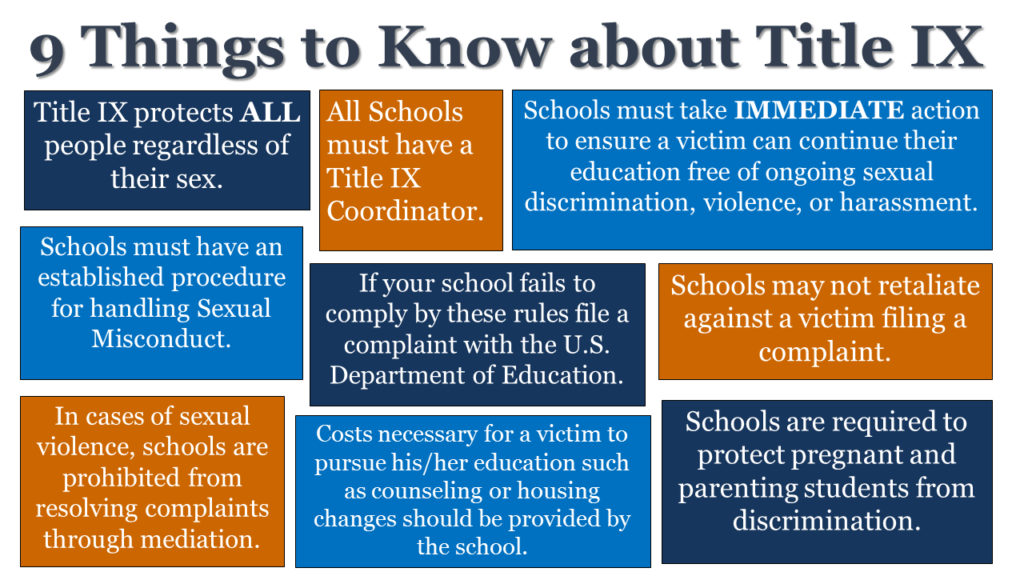
In addition, a recipient of federal funding is required to provide an assurance that it will comply with Title IX for the period during which the funding is extended. The assurance obligates the recipient to maintain a program or activity free of discrimination based on sex and requires it to notify all persons involved in the operation of the program or activity of its compliance with the statute.
Students should also take their charges seriously, especially if they involve a form of dishonesty such as cheating, plagiarism or falsification. These forms of misconduct are a clear indication that a student may have a serious character issue and a lack of integrity.
Appeals
Similarly, school employees can bring retaliation claims against institutions just like students can, as long as the retaliatory acts are related to their exercise of their rights under the law. These can include negative employee evaluations, schedules or transfers designed to punish, spreading false rumors, abuse, harassment, threats, unreasonable demands, undeserved reprimands, cuts in pay or hours, or termination.
Title IX Attorney Connecticut
What are my rights?
The law is enforced by the Department of Education (ED) and by agencies that fund entities that operate an educational program or activity. For example, the National Aeronautics and Space Administration and the Environmental Protection Agency have Title IX delegation agreements with ED that make these agencies responsible for investigating allegations of Title IX violation under their authority.
It also protects student-athletes and athletics programs. It addresses sexual harassment, sexual violence, and other gender-based discrimination that may prevent a person from taking advantage of their rights and accessing the benefits and opportunities available to them in the educational setting.
When it comes to the disciplinary process, it is best to stay calm and focused on your educational goals. Use your time off from school wisely to take online classes, obtain a job or internship, and apply for graduate programs that you are interested in.
When an institution receives federal financial assistance, it must be in compliance with the requirements of Title IX. This applies to schools, colleges and universities, as well as state and local educational agencies.
It is especially common for retaliation to occur against an accused student who has violated a no-contact order with the complainant, despite their best efforts to reconcile. This can be a tricky situation to navigate, as students often try to get back in touch with the complainant to clarify the accusation or apologize for the behavior.
A Title IX attorney is a vital part of your legal team, allowing you to focus on the facts and evidence that support your claim while they work on the legal side of things. This can reduce stress and anxiety that is often associated with a Title IX hearing or investigation.